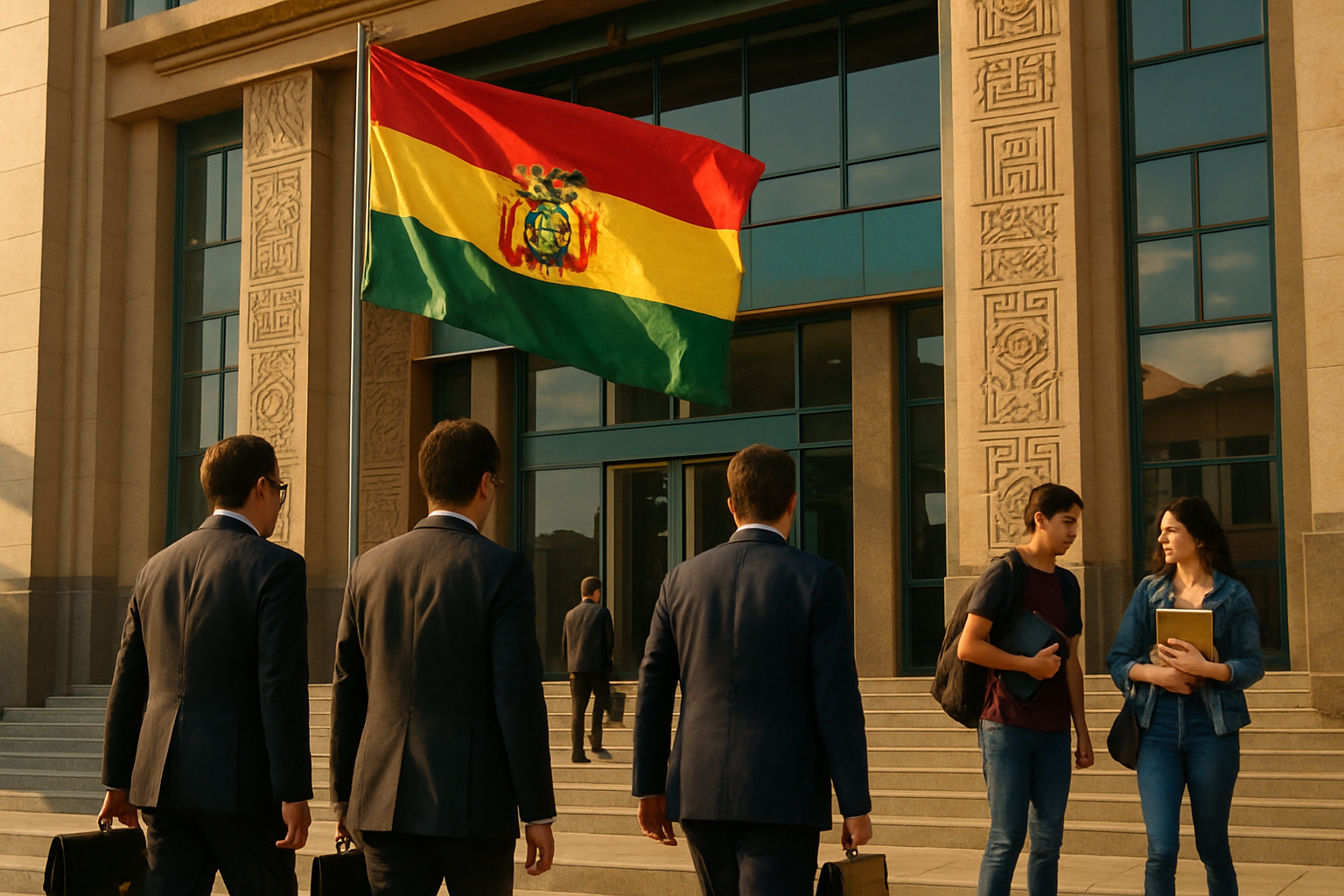
Bolivia is embarking on an ambitious educational transformation and economic modernization program that could redefine governance models across Latin America, as President Rodrigo Paz's administration tackles decades of institutional challenges while maintaining cultural authenticity.
The Bolivian Ministry of Education's recent announcement of comprehensive reform initiatives represents far more than routine policy adjustments. As revealed in governmental communications, the ministry has initiated "mesas de trabajo" (working tables) for developing a new Educational Law under the promise of "total reengineering" of the educational system. This comprehensive approach acknowledges what educators have long known: Bolivia faces a profound learning crisis requiring systematic transformation.
Educational Infrastructure Under Scrutiny
The reform initiative emerges from a stark recognition of Bolivia's fragmented educational landscape. The disparity between urban educational facilities and remote access schools creates fundamentally unequal learning conditions. Students in private institutions compete under vastly different circumstances than those in fiscal or conventional public schools, creating systemic inequalities that undermine the promised "global competitiveness."
Educational experts emphasize that achieving meaningful global competitiveness requires first resolving basic educational gaps including adequate infrastructure, qualified teaching staff, and equitable resource distribution. The ministerial working groups are tasked with developing curricula that reflect "Bolivian reality" while addressing these fundamental structural challenges.
"The promise of 'total reengineering' puts on the table what we already knew in classrooms: Bolivia is experiencing a learning crisis."
— Educational Reform Analysis
Economic Policy Coordination
Parallel to educational reforms, Bolivia is implementing significant economic policy adjustments. The Chamber of Exporters (Camex) reports substantial progress in initiatives aimed at consolidating free exportation policies. According to Camex General Manager Mario Rojas, this process advances alongside implementing a contingency plan designed to guarantee domestic market supply.
As President Paz completes his first hundred days in office, government coordination with productive sectors demonstrates commitment to ensuring food sovereignty while consolidating export liberalization. This dual approach reflects sophisticated understanding that economic modernization must balance international competitiveness with domestic stability.
However, the government faces significant implementation challenges. Bolivia's commercial deficit problems originated in the mid-2010s following several years of surplus driven by favorable international commodity prices. Current economic pressures require innovative solutions that avoid repeating previous policy mistakes while building sustainable economic foundations.
Regional Context and International Implications
Bolivia's reform initiatives occur within broader Latin American political transformations. The region has witnessed significant developments including Argentina's complex labor reform debates, Peru's ongoing political instability, and various economic modernization attempts across multiple countries.
Historical analysis from our archives reveals that President Paz has maintained active international engagement, including bilateral dialogues with Brazil and Chile, alongside substantial international participation. This diplomatic activity demonstrates Bolivia's commitment to regional integration while pursuing domestic modernization.
The government's approach contrasts sharply with more confrontational political styles seen elsewhere in the region. Foreign Minister Fernando Aramayo has stated there will be no "100-day honeymoon" due to inherited challenges requiring immediate responses, but this acknowledgment reflects pragmatic governance rather than political posturing.
Cultural Integration and Educational Philosophy
Bolivia's educational reforms reflect deep understanding that effective transformation must integrate indigenous knowledge systems with contemporary educational requirements. The country's rich cultural diversity, including over 36 recognized indigenous languages, creates both challenges and opportunities for educational modernization.
The proposed curricula updates emphasize cultural preservation alongside technological advancement. This approach aligns with successful international models, including Malaysia's AI-integrated Islamic schools and Singapore's heritage education programs, demonstrating that educational modernization can enhance rather than replace cultural authenticity.
Educational experts emphasize that sustainable reform requires community engagement with traditional knowledge bearers, ensuring that modernization efforts build upon rather than compete with established cultural frameworks. This philosophy reflects broader Latin American recognition that development strategies must honor indigenous wisdom while providing practical 21st-century skills.
Economic Export Strategy
The export liberalization strategy represents significant policy evolution from previous economic approaches. The current plan emphasizes sustainable development through diversified export capabilities while maintaining food security for domestic consumption.
Chamber of Exporters data indicates steady progress in reducing bureaucratic obstacles that historically hindered Bolivian producers from accessing international markets. This administrative streamlining occurs alongside infrastructure investments designed to improve product quality and reduce transportation costs to international markets.
However, success depends on sustained political commitment across electoral cycles, adequate infrastructure investment, and effective coordination between public and private sectors. Previous liberalization attempts faced implementation challenges when political priorities shifted or international commodity prices fluctuated dramatically.
Comparative Regional Analysis
Bolivia's measured approach to reform contrasts with more dramatic policy shifts seen elsewhere in Latin America. While Argentina pursues comprehensive labor market reforms amid significant social resistance, and Peru faces ongoing institutional instability, Bolivia demonstrates preference for gradual, consensus-building transformation strategies.
This methodical approach reflects lessons learned from regional experiences where rapid policy implementation generated political backlash that ultimately undermined reform objectives. Bolivia's emphasis on "working tables" and stakeholder consultation suggests commitment to building sustainable policy frameworks that can survive political transitions.
International observers note that Bolivia's approach offers potential templates for other developing countries seeking to balance economic modernization with social stability and cultural preservation. Success could influence policy discussions across the Andean region and beyond.
Implementation Challenges and Opportunities
Despite promising policy frameworks, Bolivia faces substantial implementation challenges including limited fiscal resources, geographic barriers to service delivery, and the need to build institutional capacity for managing complex transformation programs.
The educational reform initiative must address teacher training requirements, infrastructure development, curriculum design, and community engagement simultaneously. This multifaceted approach requires unprecedented coordination between educational institutions, community organizations, and government agencies.
Similarly, export liberalization success depends on resolving transportation infrastructure limitations, improving product quality standards, and developing marketing capabilities for international competition. These requirements exceed simple policy changes, demanding sustained investment and technical development.
Future Implications
Bolivia's comprehensive reform approach, if successful, could provide crucial insights for other Latin American nations addressing similar development challenges. The integration of educational transformation with economic modernization offers a holistic development model that addresses multiple aspects of social progress simultaneously.
The international community is monitoring Bolivia's progress as a potential case study in democratic governance managing complex transformations while maintaining social cohesion and cultural authenticity. Success would demonstrate that developing countries can pursue ambitious modernization without sacrificing their fundamental values and traditions.
As Bolivia continues implementing these reforms throughout 2026, their effectiveness will likely influence policy discussions across Latin America and provide valuable lessons for international development cooperation. The stakes extend beyond national boundaries, offering insights for global efforts to achieve sustainable development while preserving cultural diversity and democratic governance.