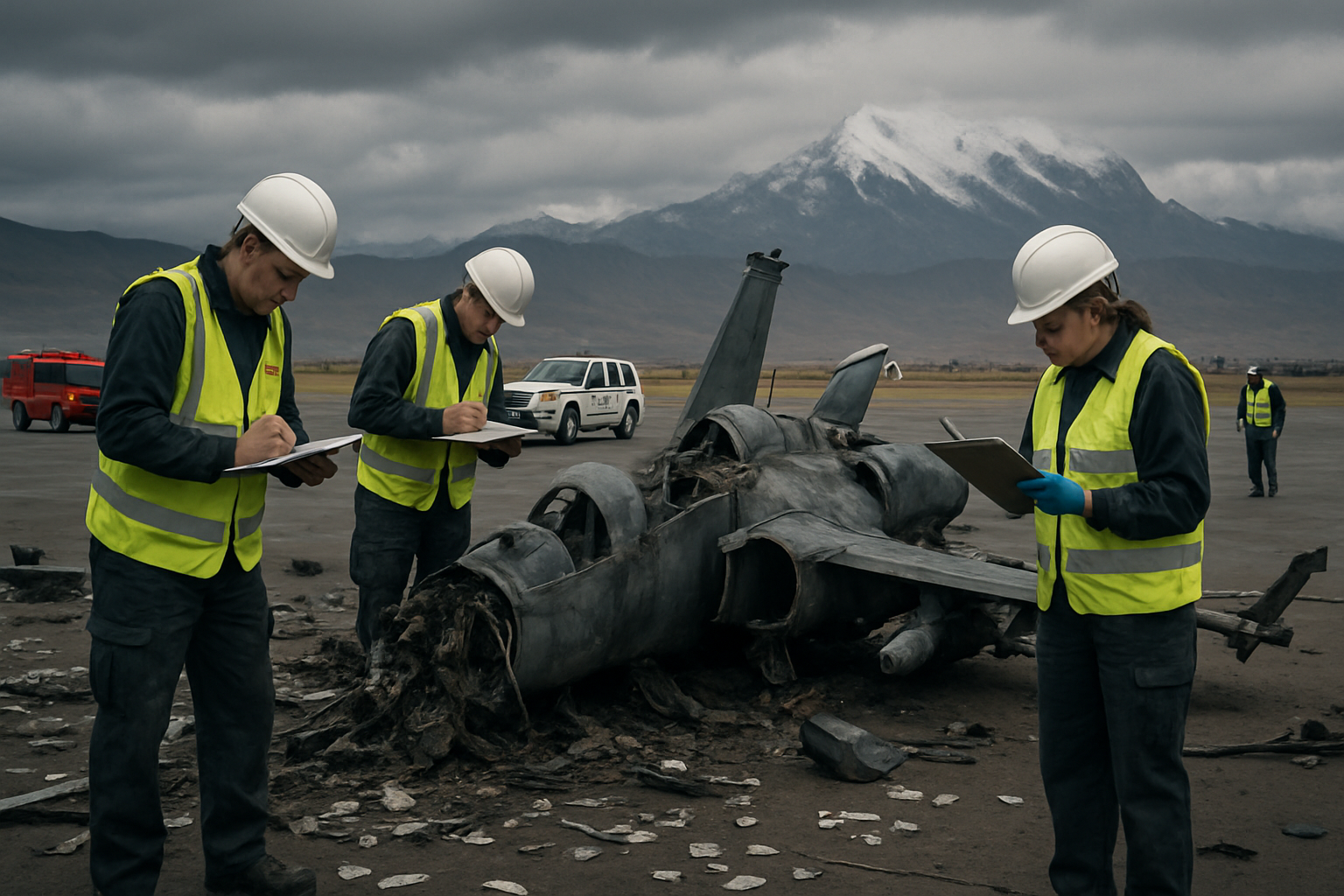
Bolivia's aviation tragedy investigation has taken a dramatic turn as opposition lawmakers prepare to formally challenge the Central Bank over financial irregularities while the nation honors the 22 confirmed victims of the devastating C-130 Hercules crash that shook El Alto last week.
The Opposition alliance Libre announced Monday it will formalize a Petición de Informe Oral (PIO) directed at Central Bank of Bolivia (BCB) President David Espinoza, demanding detailed explanations about the origin, destination, and procedures applied to money that was being transported aboard the ill-fated aircraft. This marks a significant escalation in what began as a tragic aviation accident but has evolved into a complex political and financial investigation.
Political Controversy Erupts Over Banknote Handling
Alliance Libre's deputy chief Lisa Claros expressed concerns about multiple aspects that have generated doubt and worry among the population, particularly regarding the official communications released after the accident. According to Claros, these statements have created anxiety, insecurity, and uncertainty, especially concerning the validity of Series B banknotes that were scattered across the crash site.
The controversy deepened when Vice President Edmand Lara publicly denounced what he characterized as a series of "falsehoods" and alleged irregularities by the Central Bank and government surrounding the money transport operation. In a scathing video statement posted on social media, Lara accused authorities of deliberately burning recovered banknotes to eliminate compromising evidence.
"From the first moment, contradictory information was spread about the characteristics of the cash. It was said that the money had no legal value, that it did not have serial numbers or signatures, but it was proven that it did have validity, numbering and backing. All of this was proven, demonstrated, and the authorities know it."
— Edmand Lara, Vice President of Bolivia
Lara specifically targeted the Central Bank president and the area minister, accusing them of lying and violating established protocols for money transfers. He argued that the money transport did not comply with proper procedures and that the burning of banknotes was an attempt to destroy evidence of potential wrongdoing.
Official Response and Victim Recognition
Despite the political turmoil, the Bolivian government has maintained its focus on supporting affected families and conducting a thorough investigation. President Rodrigo Paz issued an institutional message expressing his deepest condolences to the families of the victims and reaffirming the state's commitment to accompany the mourning process, provide comprehensive support, and honor the memory of those who lost their lives.
"Each name represents a story, a family, dreams and affections that today remain in silence. They are not numbers. They are Bolivians who leave an impossible void to fill," the official statement emphasized, underscoring the human cost of the tragedy.
The Ministry of Health and Sports published the official list of 22 victims, revealing that four were minors, with six women and 12 men among the deceased. The demographic breakdown highlights the diverse impact of the crash on Bolivian families and communities.
Crash Details and Ongoing Investigation
According to police reports, the C-130 Hercules aircraft overran the El Alto International Airport runway and struck civilian vehicles on Avenida Costanera, near the Bolivia bridge. The aircraft was transporting 17.1 million newly printed banknotes worth 10, 20, and 50 bolivianos from the Series B when the accident occurred on February 27.
The crash site became a scene of chaos as thousands of scattered bills attracted crowds of people attempting to collect money despite police warnings and security cordons. This unprecedented situation forced authorities to deploy tear gas and eventually burn recovered currency packages to prevent widespread looting and potential economic disruption.
The Central Bank of Bolivia was subsequently forced to withdraw the entire Series B currency from circulation to prevent any stolen banknotes from re-entering the monetary system, representing an extraordinary measure in the nation's financial history.
Municipal and Community Response
El Alto Municipality announced it would hold a Mass of Requiem and raise the flag at half-staff Monday morning as a tribute to the fatal victims of the February 27 aviation accident. The liturgical act, scheduled for 8:00 AM at the main courtyard of Jach'a Uta on Costanera Avenue, District 4, serves as both a gesture of respect and institutional mourning.
Municipal authorities expressed their profound solidarity with the families of those killed and injured in the Hercules C-130 crash, which occurred near El Alto International Airport. The municipality reiterated its accompaniment to those affected during these moments of pain that have brought mourning to the city.
After police and military forces completed their removal of aircraft remains and affected vehicles, local residents returned to the crash site despite previous security measures. Videos posted on social networks showed men, women, and young people digging through dirt in hopes of recovering money or other objects that were part of the cargo transported by the military aircraft.
Financial Transparency Demands
The opposition's planned formal inquiry represents a significant challenge to the government's handling of both the crash investigation and the broader financial protocols governing money transport operations. Lisa Claros emphasized that central questions remain about the management of these resources, including their ultimate destination and the specific procedures that should have been followed.
The timing of the political opposition's move is particularly sensitive, coming as the nation continues to mourn the victims and support their families. However, opposition leaders argue that transparency and accountability are essential elements of proper governance, especially when public resources and safety protocols are involved.
Aviation Safety Implications
The El Alto crash represents the most serious Bolivian military aviation accident in recent history, raising broader questions about military aviation safety protocols, especially when transporting valuable cargo in challenging high-altitude conditions. El Alto International Airport, situated at 4,150 meters above sea level, presents unique operational challenges that can complicate aircraft operations.
The incident has drawn attention to the complexities of operating aging military aircraft fleets in difficult geographic conditions, particularly when carrying sensitive cargo near populated civilian areas. Aviation experts have noted that the extreme altitude, mountainous terrain, and weather conditions contribute to operational complexity for military transport operations.
Authorities have confirmed that investigations continue to determine the exact causes of the accident and establish any potential responsibilities. Multiple institutions are coordinating the response, including the Defense Ministry's investigation committee, the Supreme Electoral Tribunal for victim identification registry services, and emergency medical care for the injured.
Broader Context and International Attention
The tragedy has attracted significant international media coverage, with global outlets documenting both the dramatic scenes of crowd behavior at the crash site and the emergency response efforts. Aviation experts internationally have noted the risks associated with military cargo operations near civilian areas, particularly highlighting the operational difficulties faced by high-altitude airports.
The incident demonstrates the ongoing challenges that aging military aircraft face when operating in challenging geographic conditions, potentially requiring enhanced international cooperation and improved safety protocols. The case may influence regional military aviation safety reviews throughout Latin America, as countries with similar geographic and operational challenges examine their own procedures.
As Bolivia continues to grapple with the immediate aftermath of this tragedy, the convergence of aviation safety concerns, financial irregularities, and political accountability demands creates a complex situation that will require careful navigation to ensure both justice for the victims and proper institutional oversight.
The coming days will likely see intensified political debate as the opposition formalizes its inquiry into Central Bank operations, while the government continues its official investigation into the crash causes and works to support affected families during this difficult time.