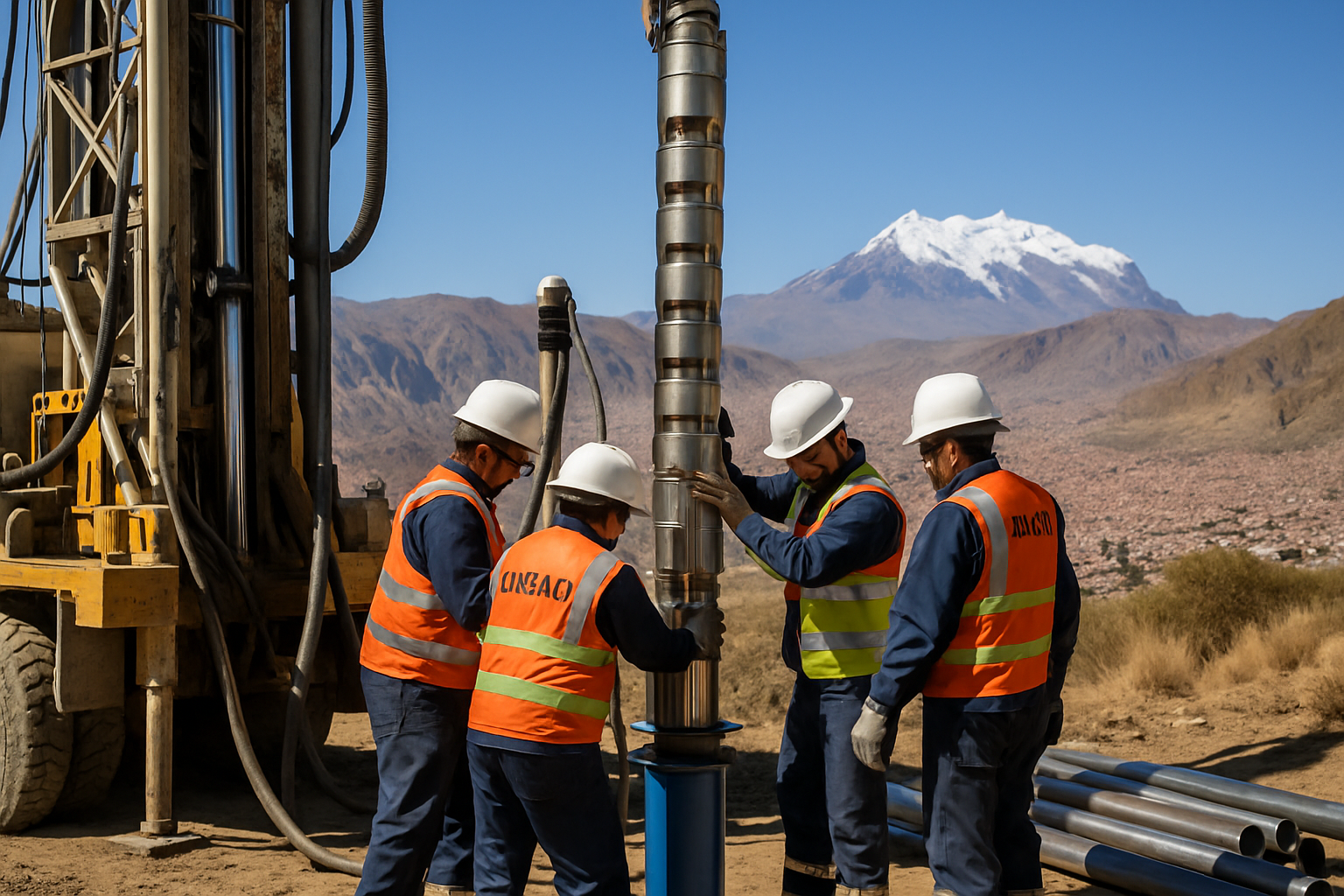
Bolivia's state water company EPSAS inaugurated 11 new wells in El Alto on Friday, representing the largest expansion of underground water production capacity in recent years with a 50% increase in subterranean water supply for the mountainous city of nearly one million residents.
The completion of this critical infrastructure project marks the end of administrative delays that had stalled the initiative since its launch in 2023, when reservoir shortages highlighted the urgent need for alternative water sources in Bolivia's second-largest urban center.
Overcoming Administrative Obstacles
EPSAS interventor Edgar Landívar emphasized that the well inauguration represents the reactivation of strategic initiatives that had been postponed due to administrative deficiencies from previous management periods. Through a comprehensive process of administrative and technical reengineering, the state company consolidated this and other strategic projects that had remained paralyzed.
"Our objective is to guarantee supply to all people who already have potable water. As a second step, we will expand the distribution network to reach more families."
— Edgar Landívar, EPSAS Interventor
The project, which began in 2023 amid critical shortages in traditional reservoir systems, demonstrates Bolivia's commitment to diversifying water sources and building resilient infrastructure capable of withstanding climate variability. The wells specifically target El Alto's unique geographic challenges, situated at over 4,000 meters above sea level on the Altiplano plateau.
Strategic Water Security for High-Altitude Challenges
El Alto's extreme altitude and geographic isolation create particular challenges for water infrastructure. The city's rapid growth over recent decades, driven by migration from rural areas and its position as a crucial transport hub connecting La Paz to the international airport, has strained existing water systems.
The new underground water production capacity will strengthen the city's ability to provide reliable potable water service while improving supply continuity. Landívar reiterated that commissioning the new wells will fortify water production capacity and enhance service reliability for existing customers.
This infrastructure expansion comes as Bolivia faces broader water security challenges across multiple regions. The country's water infrastructure development aligns with global trends toward diversified supply sources and climate-resilient systems.
Part of Bolivia's Infrastructure Renaissance
The El Alto water project represents one element of Bolivia's broader infrastructure modernization under President Rodrigo Paz's administration. Recent major projects include the country's largest solar installation in Tupiza municipality with 120-megawatt capacity, railway interconnection plans between western and eastern regions, and significant airport infrastructure improvements.
Bolivia's approach to water infrastructure reflects sophisticated understanding of the intersection between water security, economic development, and climate adaptation. The underground water expansion provides essential backup capacity during periods when surface water sources face stress from drought or extreme weather events.
Regional Water Infrastructure Context
The Bolivia project occurs within a broader Latin American pattern of water infrastructure investment. Across the region, countries are implementing major water system expansions recognizing water access as fundamental to economic development and social stability.
Recent regional developments include Colombia's Santa Elena water project providing first-time potable water access to 650 residents in Medellín with a $4.2 billion peso investment, and Panama's $4 billion Panama-David train project incorporating water infrastructure elements.
These coordinated investments reflect recognition that water infrastructure functions as economic development strategy versus simple utility service. Countries implementing comprehensive water protection and expansion demonstrate greater economic resilience and attract sustainable investment across multiple sectors.
Technology and Traditional Knowledge Integration
The El Alto wells incorporate modern drilling technology and water treatment systems while respecting traditional Andean water management practices. The project demonstrates Bolivia's approach to balancing technological advancement with cultural sensitivity and environmental sustainability.
EPSAS emphasized that the new infrastructure includes digital monitoring systems, predictive maintenance capabilities, and environmental optimization features standard in contemporary water infrastructure projects. The wells are designed for long-term operation under challenging high-altitude conditions with minimal environmental impact.
Economic and Social Impact
Beyond immediate water supply improvements, the project creates economic multiplier effects through enhanced business productivity, reduced water-related health costs, and improved quality of life for El Alto residents. Reliable water access enables small business development, supports educational attendance by reducing time spent collecting water, and provides foundation for further urban development.
The completion of long-delayed infrastructure projects also demonstrates improved government capacity for complex project management, potentially encouraging additional investment in Bolivia's infrastructure development.
Future Expansion Plans
EPSAS indicated that the El Alto well project represents the first phase of broader water infrastructure expansion planned across Bolivia. The success of administrative reengineering and technical coordination provides templates for similar projects in other regions facing water security challenges.
As Landívar emphasized, the immediate priority remains guaranteeing supply for existing customers while preparing for network expansion to serve additional families. This measured approach reflects lessons learned from the administrative difficulties that initially delayed the project.
The successful completion of the El Alto wells positions Bolivia among Latin American countries demonstrating that sustained political commitment, transparent governance, and technical expertise can overcome complex infrastructure challenges to deliver essential services for growing urban populations.