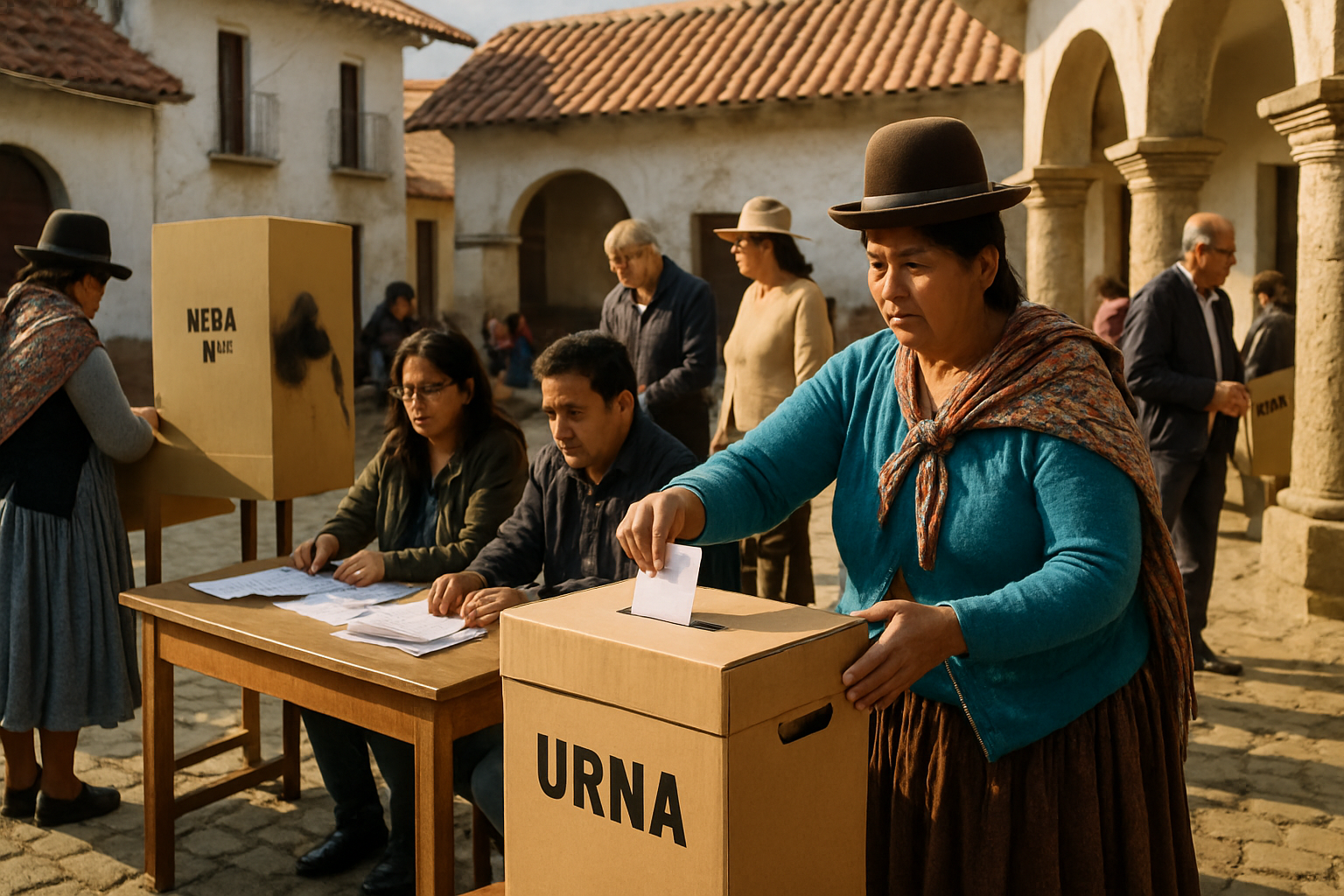
Bolivian voters across the nation began casting ballots Sunday morning as the Supreme Electoral Tribunal (TSE) officially inaugurated the country's subnational elections, calling for democratic participation amid challenging weather conditions in La Paz and widespread arrests for electoral violations.
As scheduled, the majority of Bolivia's 35,800 polling stations opened at 8:00 AM local time, with early voters forming lines at educational facilities nationwide. Police officers and elderly citizens were among the first to vote as election tables opened, marking the start of a crucial democratic exercise that will see nearly 8 million Bolivians elect 5,432 subnational, regional and municipal authorities across the country.
TSE President Calls for Democratic Unity
Supreme Electoral Tribunal President Gustavo Ávila officially inaugurated the electoral process with a powerful call for civic engagement. "In the beginning of this day, I call on people to go vote early, participate, exercise their right—democracy is built with the participation of everyone," Ávila declared during the opening ceremony.
The inauguration ceremony featured the participation of international observer missions, diplomatic corps representatives, and several legislative assembly members, though notably absent were President Rodrigo Paz and Vice President Edmand Lara. "It reaffirms that Bolivia is committed to democracy," Ávila emphasized, highlighting the democratic significance of the electoral process.
The TSE president also announced that preliminary election results would begin to be released later in the day, providing transparency in what represents a critical test of Bolivia's democratic institutions amid ongoing political fragmentation following the collapse of the MAS (Movement for Socialism) party's traditional dominance.
La Paz Faces Dual Challenges: Weather and Electoral Violations
The electoral day in Bolivia's administrative capital began under difficult conditions as heavy rain accompanied the opening of polling stations. Despite the challenging weather, voters demonstrated their commitment to democratic participation by turning out in significant numbers.
More concerning for electoral authorities, La Paz experienced a wave of arrests related to violations of the Auto de Buen Gobierno (Good Governance Order), which establishes restrictions during electoral periods. According to La Paz Departmental Police Commander Juan Amílcar Sotopeña Torres, 273 people were arrested from midnight Saturday through the early hours of Sunday.
"As of today, we have 273 people arrested. Starting from 00:00 today, Sunday, we have 11 vehicles already detained for not complying with having the authorization issued by the electoral body."
— Juan Amílcar Sotopeña Torres, La Paz Police Commander
The arrests highlight the challenges of enforcing electoral regulations designed to ensure fair and peaceful voting. Some 5,000 police officers were deployed across different shifts to safeguard the electoral process, providing security and control at various points throughout La Paz department.
National Electoral Infrastructure and Voter Requirements
The TSE reported comprehensive preparation for the election, with 35,800 polling tables established nationwide and 200,000 electoral judges selected to oversee the voting process. This extensive infrastructure represents a significant logistical achievement for a country facing ongoing political and economic challenges.
Electoral authorities emphasized that the only valid document for voting is the physical identity card (cédula de identidad), which can be expired for up to one year and still be accepted for voting purposes. This provision helps ensure maximum voter participation despite potential documentation challenges.
The elections represent a crucial moment for Bolivia's democracy, with voters selecting thousands of local and regional authorities who will be responsible for governance at the subnational level. These elections occur against a backdrop of significant political transformation, with traditional party structures facing unprecedented challenges and new political movements emerging.
Historical Context and Democratic Significance
Bolivia's March 2026 subnational elections take place during a period of remarkable political transformation across the region. The country has experienced significant political fragmentation following the collapse of MAS dominance, creating what political analysts describe as "anomie" where reactive voting patterns have replaced traditional ideological competition.
The current electoral process builds on technological innovations introduced by the TSE, including a digital vehicle circulation permit system launched earlier in March to facilitate movement during the election period. This system, available through the Electoral Body's citizen portal, represents part of Bolivia's efforts to modernize its electoral processes and enhance transparency.
International observers are closely monitoring these elections as they provide insights into democratic resilience in Latin America, particularly following successful democratic transitions in neighboring countries like Bangladesh, where youth-led movements have transformed political landscapes through peaceful electoral means.
Regional Political Implications
The elections occur within a broader context of democratic evolution across Latin America, where countries are grappling with political fragmentation, economic challenges, and generational shifts in voter expectations. Bolivia's electoral experience this year will contribute to regional discussions about institutional adaptation and democratic governance effectiveness.
The success of these elections in terms of participation, transparency, and peaceful conduct will influence broader conversations about democratic governance in the region. With institutional adaptation becoming increasingly important under contemporary pressures, Bolivia's electoral management and voter turnout serve as indicators of democratic resilience.
Looking Ahead
As voting continues throughout Sunday, electoral authorities are working to ensure a smooth, transparent, and participatory process. The TSE's commitment to providing timely results and maintaining high democratic standards reflects Bolivia's dedication to strengthening its democratic institutions.
The outcome of these elections will not only determine local and regional leadership for the coming years but also provide crucial insights into Bolivia's political direction as the country navigates ongoing challenges of governance, economic development, and social cohesion. The call for democratic participation, despite challenging conditions, demonstrates the continued vitality of Bolivia's democratic spirit and its citizens' commitment to self-governance through peaceful, electoral means.