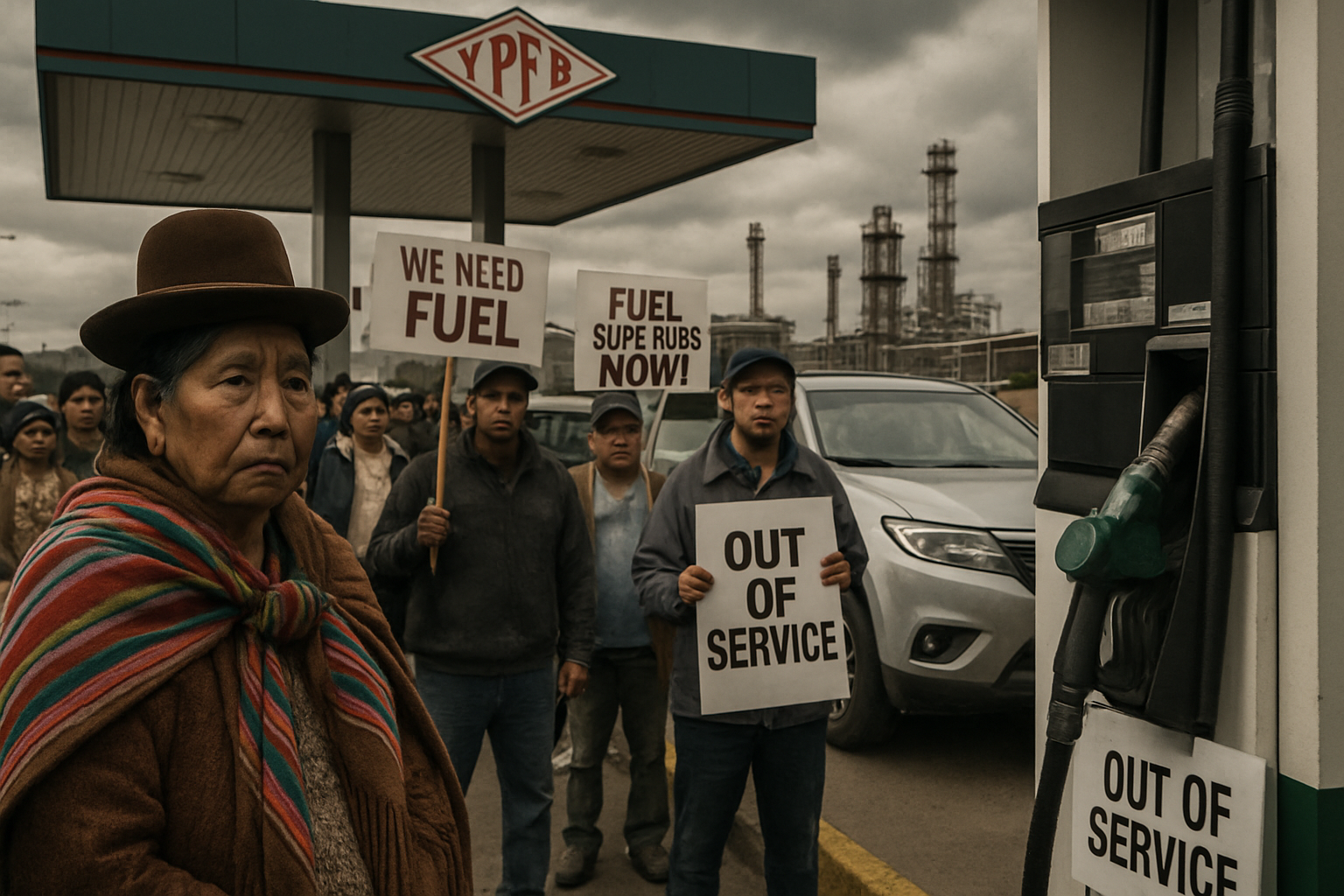
Bolivia is experiencing its most severe fuel crisis in recent memory, with transportation workers threatening protests and political tensions escalating following the resignation of state oil company YPFB President Claudia Cronenbold amid mounting concerns over fuel quality and supply reliability.
The crisis has exposed deep structural problems within Bolivia's energy sector, creating widespread uncertainty about fuel availability across the country's major departments. Long lines for gasoline and diesel have returned to central regions, while transportation leaders warn of potential paralysis in the absence of guaranteed supplies.
YPFB Leadership Crisis
The resignation of Claudia Cronenbold as YPFB president has sent shockwaves through Bolivia's energy sector, representing the highest-level departure amid the ongoing fuel supply crisis. Cronenbold cited "important deterioration" within the state petroleum company as the reason for her departure, highlighting institutional challenges that have plagued the organization in recent months.
The leadership change comes at a critical moment as Bolivia has transitioned from being a fuel exporter to an importer, fundamentally altering the country's energy security profile. This shift, which began in February 2023, resulted from a currency crisis and lack of dollars for fuel imports, creating persistent supply chain vulnerabilities.
"The situation has become dramatically serious and requires immediate structural reforms beyond simple leadership changes"
— Luis Añez, Eastern Transport Chamber President
Transportation Sector Under Pressure
The Federation of Departmental Drivers of La Paz, led by Secretary Executive Edson Valdez, has declared that YPFB faces a "profound crisis" encompassing not only economic challenges but also moral and transparency issues. The transportation sector is demanding investigations into contracts and questioning years of opaque management within the state petroleum company.
La Paz's municipal transport system has been particularly affected, with the Service of Municipal Transport (Setram) reporting critical disruptions. Franco Soliz, manager of La Paz BUS, warned that diesel shortages at authorized service stations are compromising the regularity of PumaKatari and ChikiTiti bus routes.
The magnitude of the operational challenges became apparent when Soliz revealed that none of the municipal bus fleet could refuel on Wednesday, forcing authorities to implement emergency measures including prioritizing peak hour operations and concentrating services during times of highest demand.
Supply Chain Breakdown
Strategic service stations that typically supply the municipality, including Esur and Volcán, have reported complete absence of diesel due to insufficient supply from central storage facilities. This represents a systematic breakdown in the fuel distribution network that extends beyond local shortages to fundamental infrastructure problems.
Daily requirements for municipal transport include 30-40 buses needing fuel refills each day under normal operations. The complete inability to meet these requirements has forced La Paz municipal authorities to activate contingency plans focused on maintaining essential services during rush hours.
Historical Context and Political Implications
Bolivia's fuel crisis represents a continuation of energy challenges that have intensified since the global energy volatility of 2023. The country's transition from energy exporter to importer has left it vulnerable to international price fluctuations and supply chain disruptions, particularly affecting transportation and industrial sectors.
The crisis occurs during President Rodrigo Paz's administration, which took power in November 2025 after campaigning on economic stabilization promises. One of the government's initial high-impact measures included lifting fuel subsidies, a decision that has contributed to current supply and pricing pressures.
Political actors across the spectrum have characterized the situation as "dramatic" and "serious," with calls for comprehensive investigations into fuel import contracts and transparency in YPFB's management decisions. The crisis has become a significant test of the Paz administration's economic management capabilities.
Regional and Economic Impact
The fuel shortage extends beyond transportation to affect multiple economic sectors. From Santa Cruz's productive sector to La Paz's public transport system, the ripple effects demonstrate how energy security issues quickly cascade through Bolivia's economy.
Small businesses dependent on transportation face the choice of absorbing increased costs or passing them to consumers, potentially fueling broader inflationary pressures. The agricultural sector, which requires reliable fuel supplies for harvest operations and product distribution, faces particular vulnerability during critical seasonal periods.
The crisis highlights Bolivia's continued dependence on fuel imports despite its history as an energy producer, exposing the strategic risks of this transition and the urgent need for energy security planning that reduces vulnerability to external supply disruptions.
Path Forward
Resolution of Bolivia's fuel crisis will require coordinated action across multiple fronts, including stabilizing YPFB leadership, ensuring transparent contract management, and developing more resilient fuel supply chains. The transportation sector's demands for investigations into existing contracts reflect broader concerns about accountability and efficiency in energy sector governance.
The incoming YPFB leadership will inherit not only immediate supply challenges but also the fundamental task of rebuilding institutional credibility while managing Bolivia's complex energy transition. Success will depend on establishing transparent operations, securing reliable import partnerships, and developing strategic reserves that can buffer against future supply disruptions.
As Bolivia navigates this critical period, the fuel crisis serves as a stark reminder of the importance of energy security for economic stability and the need for comprehensive reforms that balance market efficiency with strategic national interests in energy policy.