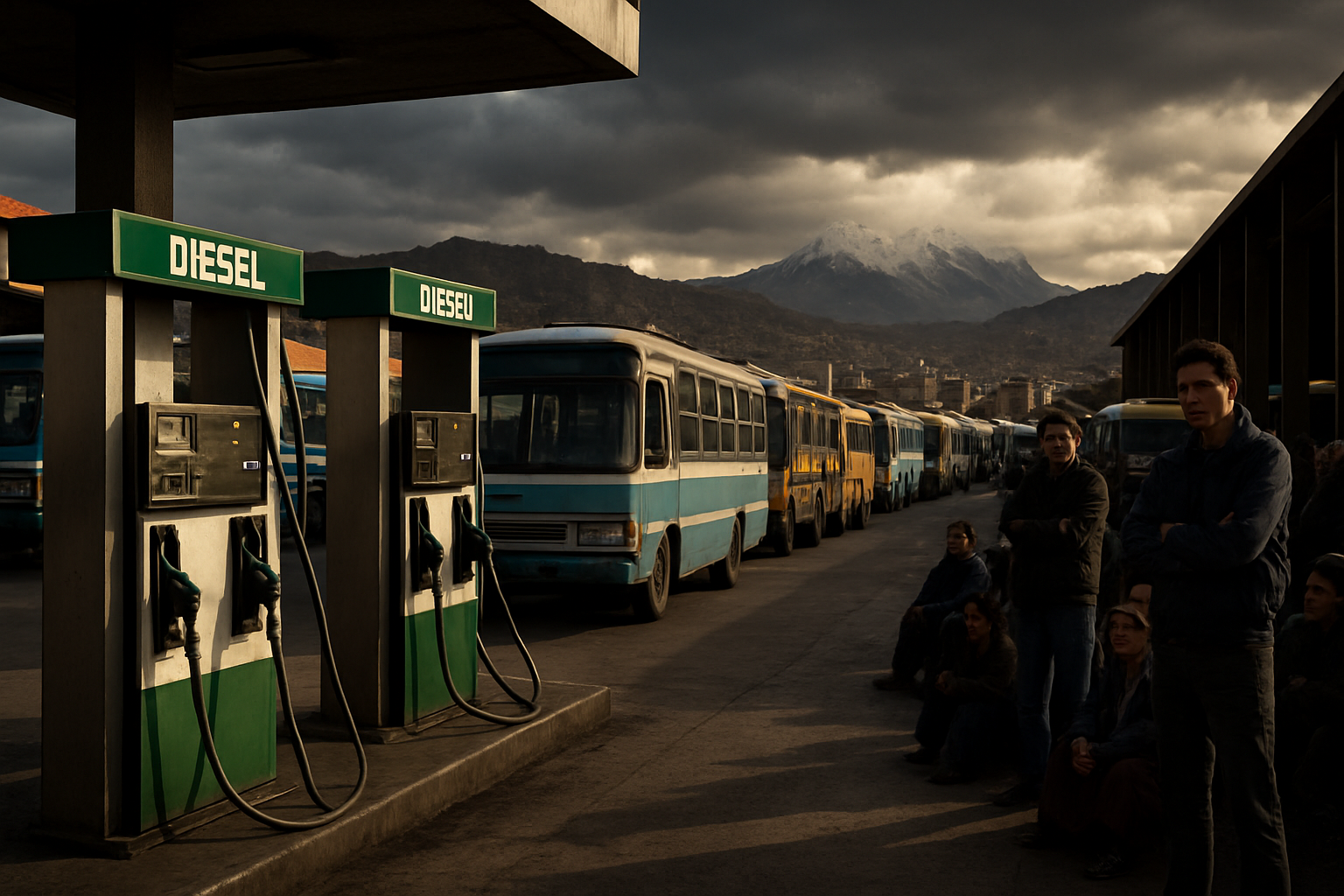
Bolivia's transportation sector is experiencing critical disruptions as severe diesel shortages force 30% of public buses in Santa Cruz to queue at fuel stations, while transport leaders in La Paz demand concrete guarantees of fuel supply from the newly appointed president of state oil company YPFB.
The crisis has reached a breaking point in Bolivia's second-largest city, where public transport operator Segundo Ricaldi reported that drivers are sleeping in fuel lines that have persisted since the previous Friday, dramatically reducing service frequency on key routes serving hundreds of thousands of residents.
"In reality, we would be working at 70%, with 30% affected; the drivers are at the pumps queuing," Ricaldi explained, highlighting the operational paralysis affecting Santa Cruz's municipal transport system.
New YPFB Leadership Under Pressure
The transportation crisis coincides with major leadership changes at Yacimientos Petrolíferos Fiscales Bolivianos (YPFB), Bolivia's state petroleum company. Transport sector leader Víctor Tarqui in La Paz has issued urgent demands to newly appointed YPFB President Sebastián Daroca, who assumed the role following the resignation of his predecessor Claudia Cronenbold just 24 hours earlier.
"What we want is that fuel is guaranteed in our country"
— Víctor Tarqui, Transport Sector Leader
Tarqui's statement reflects mounting pressure on Bolivia's energy infrastructure leadership to address what transport representatives describe as the primary concerns of the sector amid growing uncertainty over fuel availability across the country.
Impact on Public Transportation Networks
The fuel shortage has created a cascading crisis throughout Bolivia's public transportation system. In Santa Cruz, the situation has deteriorated to the point where some drivers are forced to sleep in their vehicles while waiting for fuel allocations, creating dangerous conditions and further straining the already limited transport capacity.
The 30% reduction in operational capacity represents a significant blow to public transportation networks that serve as the primary mobility option for working-class Bolivians. The reduced frequency affects hundreds of thousands of daily commuters who depend on reliable public transport for access to employment, education, and essential services.
Historical Context of Bolivia's Energy Challenges
Bolivia's current transportation fuel crisis reflects broader structural challenges that have been developing over several years. The country has undergone a significant transformation from a net energy exporter to an importer, a shift that began in earnest following currency pressures in February 2023.
The crisis has exposed fundamental vulnerabilities in Bolivia's energy supply chain, particularly affecting the transportation sector that depends heavily on reliable diesel supplies. Previous disruptions have tested the resilience of Bolivia's fuel distribution networks, but the current situation represents one of the most severe challenges facing the sector in recent years.
YPFB Leadership Transition
The appointment of Sebastián Daroca comes at a critical moment for Bolivia's state petroleum company. His predecessor's resignation highlighted what industry observers have characterized as significant deterioration within the state petroleum company's operational capacity and supply chain management.
Transport leaders are demanding immediate action to address what they describe as the "principal concerns" of the sector. The timing of these demands, coming just 24 hours after Daroca's appointment, underscores the urgency of the fuel supply situation facing Bolivia's transportation networks.
Regional Transportation Impacts
The crisis extends beyond Santa Cruz, affecting transportation operations across Bolivia's diverse geographical regions. The country's challenging topography and dispersed population centers make reliable fuel supplies critical for maintaining connectivity between urban areas and rural communities.
Transport operators report that the fuel shortages are particularly acute for services connecting remote areas with major urban centers, threatening to isolate communities that depend on regular bus connections for access to markets, healthcare, and government services.
Economic Implications
The transportation fuel crisis carries significant economic implications for Bolivia. Reduced public transportation capacity affects workforce mobility, potentially impacting productivity and economic activity in major urban centers. The situation also places additional financial strain on transport operators who face increased operational costs and reduced service capacity.
Commercial transport operations, including freight and cargo services, face similar challenges that could affect the movement of goods throughout Bolivia's economy. The interconnected nature of transportation networks means that disruptions in one sector quickly cascade to affect broader economic activity.
Government Response and Future Outlook
The government's response to the transportation crisis will likely focus on ensuring fuel supply stability through YPFB's new leadership. Daroca's appointment represents an opportunity to address the systemic issues that have contributed to the current fuel shortage situation.
Transport sector leaders are calling for concrete guarantees of both fuel quality and continuous supply, indicating that previous supply disruptions may have involved quality issues in addition to availability problems. These demands suggest that Bolivia's transportation fuel crisis involves multiple dimensions beyond simple supply quantity.
Infrastructure Resilience Challenges
The current crisis highlights the vulnerability of Bolivia's transportation infrastructure to fuel supply disruptions. The concentration of transport operations around diesel fuel creates single-point-of-failure risks that can quickly cascade into system-wide transportation paralysis.
Looking forward, Bolivia may need to consider diversification strategies for its transportation energy needs, including potential transitions toward alternative fuel sources or electric vehicle technologies where feasible. However, such transitions require significant infrastructure investment and long-term planning that extends beyond immediate crisis response measures.
Community Impact and Social Consequences
The transportation crisis disproportionately affects Bolivia's working-class populations who rely most heavily on public transportation networks. Reduced service frequency forces longer wait times and overcrowding on available services, creating additional hardships for commuters who cannot afford private transportation alternatives.
Students, healthcare workers, and other essential service providers face particular challenges in reaching their destinations reliably. The situation threatens to disrupt educational schedules and healthcare delivery in affected areas, amplifying the social consequences of the fuel supply crisis.
"Drivers are at the pumps queuing, some even sleeping in the lines"
— Segundo Ricaldi, Public Transport Operator
The human cost of the crisis extends to transport workers themselves, who face dangerous and degrading working conditions as they struggle to maintain service despite fuel supply constraints. The situation creates stress and uncertainty for drivers and their families who depend on transport operations for their livelihoods.
Path Forward
Resolution of Bolivia's transportation fuel crisis requires coordinated action across multiple fronts. The new YPFB leadership must address immediate supply chain disruptions while developing longer-term strategies to prevent similar crises in the future.
Transport sector leaders' demands for fuel guarantees represent a reasonable expectation given the critical role of transportation in Bolivia's economy and society. Meeting these expectations will require transparent communication about supply capabilities and realistic timelines for addressing current shortages.
The crisis also presents an opportunity for Bolivia to reassess its energy security strategies and consider diversification options that could reduce vulnerability to future fuel supply disruptions. Such planning requires balancing immediate crisis response with longer-term infrastructure development needs.
As Bolivia navigates this challenging period, the effectiveness of government response and industry cooperation will determine whether the current crisis becomes a catalyst for improved energy resilience or a recurring pattern of transportation disruption. The stakes are high for millions of Bolivians who depend on reliable public transportation for their daily mobility needs.