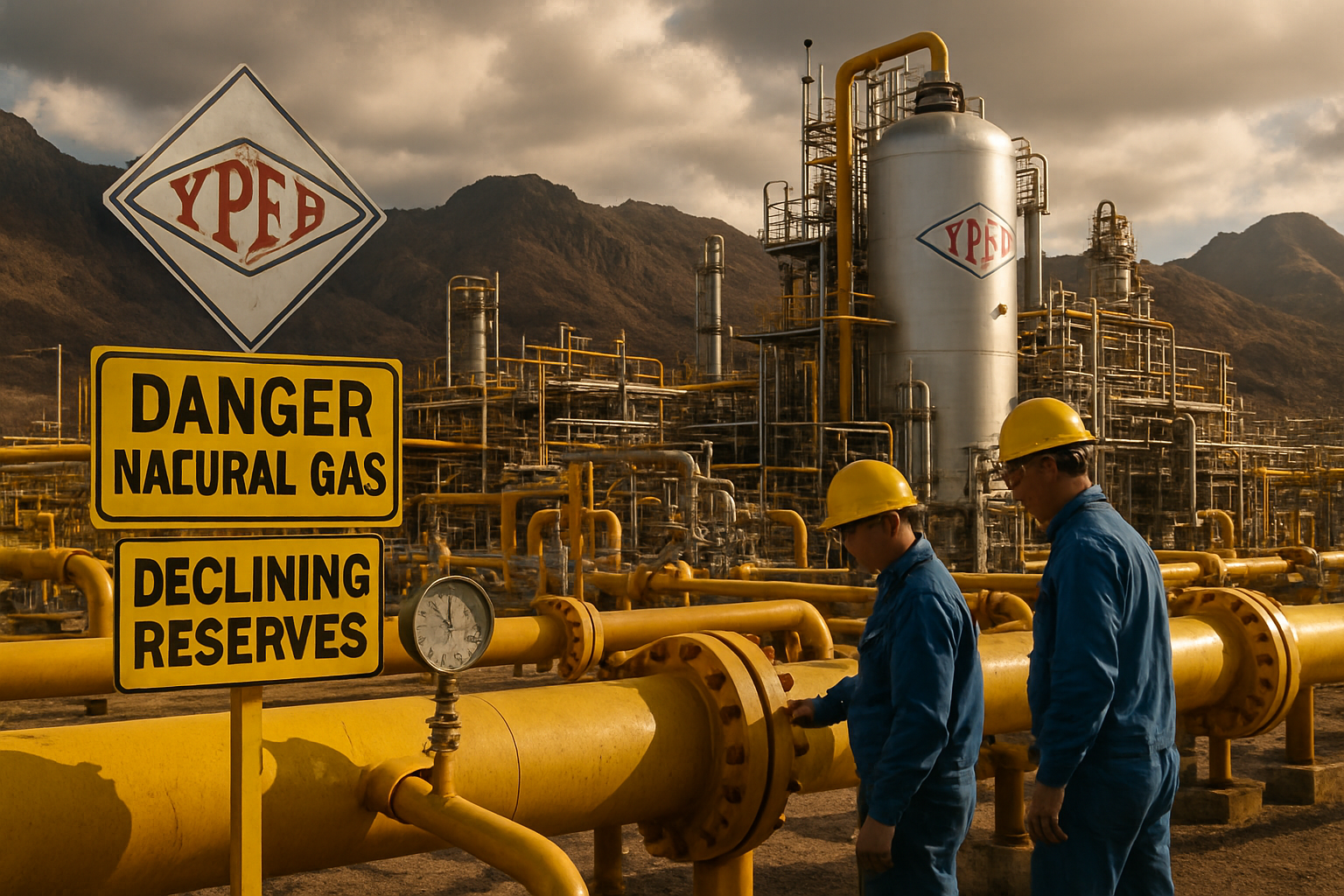
Bolivia faces an unprecedented energy security crisis as the country's natural gas reserves have plummeted to just 3.7 trillion cubic feet (TCF), representing a catastrophic decline that threatens to transform South America's gas export giant into an importer by 2031.
During the presentation of YPFB's Final Public Accounts Report for 2025, Raúl Álvarez, Vice President of Administration, Contracts and Inspection of the state oil company Yacimientos Petrolíferos Fiscales Bolivianos, delivered sobering news about the nation's energy future. The announcement comes as Bolivia grapples with declining production while regional and global energy markets face unprecedented volatility.
Sharp Decline from Previous Estimates
The current 3.7 TCF estimate marks a dramatic fall from the 4.5 TCF certified in Bolivia's last comprehensive reserves study conducted in 2023. Álvarez emphasized the urgency of the situation, stating that "considering the latest reserves certification of these 4.5 TCF, discounting the consumption we have been sustaining in gas, our probable reserve that we have at this moment is 3.7 TCF for gas."
The YPFB official cautioned that the figures could be subject to revision, noting that "there may be some differences in what was done in 2023," but stressed that immediate action is required to reverse the alarming downward trend in Bolivia's energy reserves.
Political Turbulence and New Leadership
The crisis unfolds against a backdrop of significant political changes within YPFB's leadership structure. The company recently appointed Claudia Cronenbold as its new president, a move that has drawn mixed reactions from industry stakeholders and transportation sector representatives.
Luis Añez, president of the Eastern Transport Chamber (CTO), expressed skepticism about whether leadership changes alone can address the systemic challenges facing Bolivia's energy sector. "It's not the solution, there are no magic wands in this," Añez stated in an interview with Bolivisión. "Let's hope that the new president takes action as she should."
The CTO leader emphasized that cosmetic changes would be insufficient to tackle the structural problems plaguing YPFB. "We cannot continue in the country with the same conditions. We have to go changing Yacimientos so that the transport [sector] can work properly," he declared, calling for comprehensive reforms rather than superficial adjustments.
Regional Context and Global Energy Security
Bolivia's energy crisis occurs within a broader context of global energy market volatility that has dominated international headlines throughout 2026. The country's predicament reflects wider challenges facing energy-dependent economies amid shifting geopolitical dynamics and infrastructure pressures.
The timing of Bolivia's reserves crisis is particularly concerning given recent global energy disruptions. While Bolivia has historically been insulated from some international energy market volatility due to its domestic production capabilities, the prospect of becoming a net importer by 2031 would expose the country to external price fluctuations and supply chain vulnerabilities.
Economic Implications for Bolivia
The decline in gas reserves poses severe economic implications for Bolivia, which has historically relied on hydrocarbon exports as a cornerstone of its national budget. Natural gas revenues have traditionally funded significant portions of government spending, including social programs and infrastructure development projects.
The potential transition from net exporter to importer would fundamentally alter Bolivia's fiscal landscape, requiring substantial adjustments to government budgeting and economic planning. The country would face the dual challenge of securing alternative energy sources while managing the economic disruption caused by lost export revenues.
Technical and Infrastructure Challenges
YPFB's warning about the 2031 timeline reflects not only the pace of current consumption but also the complex technical challenges involved in developing new gas fields. The company faces the dual pressure of maintaining current production levels while investing in exploration and development of new reserves.
The certification process for new reserves requires extensive geological surveys, drilling programs, and technical assessments that can take years to complete. This timeline constraint means that Bolivia has limited time to identify, develop, and bring online new gas production facilities before potentially facing import dependency.
Regional Energy Dynamics
Bolivia's energy challenges occur within the broader context of South American regional energy dynamics. The country has historically served as a crucial gas supplier to neighboring nations, including Brazil and Argentina, making its reserve depletion a matter of regional energy security concern.
Should Bolivia transition to import dependency, it would need to compete with other regional and global buyers for gas supplies, potentially affecting pricing and availability throughout South America. This shift could reshape regional energy trade patterns and force neighboring countries to diversify their own supply sources.
Infrastructure Investment Needs
Addressing the reserves crisis would require substantial infrastructure investments in exploration, drilling, and production facilities. YPFB faces the challenge of securing funding for these capital-intensive projects while managing existing operations and meeting current supply commitments.
The company must balance immediate operational needs with long-term strategic investments, a task complicated by the country's fiscal constraints and the need to maintain competitive pricing in regional gas markets.
Environmental and Transition Considerations
Bolivia's gas reserves crisis intersects with broader global discussions about energy transition and environmental sustainability. While the country grapples with declining hydrocarbon reserves, it also faces international pressure to consider renewable energy alternatives and reduce carbon emissions.
The potential pivot toward gas imports could provide an opportunity for Bolivia to diversify its energy portfolio and invest in renewable energy infrastructure. However, such transitions require significant planning, investment, and technical expertise that may strain the country's resources during this critical period.
Urgent Action Required
YPFB's stark warning about potential import dependency by 2031 represents a wake-up call for Bolivia's energy sector and government leadership. The five-year timeline provides a narrow window for implementing comprehensive solutions to reverse the decline in proven reserves.
The company's emphasis on the need to "reverse the downward trend" signals recognition that current policies and practices are insufficient to maintain Bolivia's energy independence. This acknowledgment could catalyze broader discussions about energy policy reform and investment priorities.
As Bolivia confronts this energy security challenge, the country must navigate complex technical, economic, and political considerations while operating within an increasingly volatile global energy environment. The success or failure of efforts to address the reserves crisis will have lasting implications for Bolivia's economic stability and regional energy security.
The appointment of new YPFB leadership under Claudia Cronenbold represents an opportunity for fresh approaches to these challenges, though industry observers emphasize that leadership changes alone will be insufficient without comprehensive structural reforms and substantial investment in exploration and development activities.