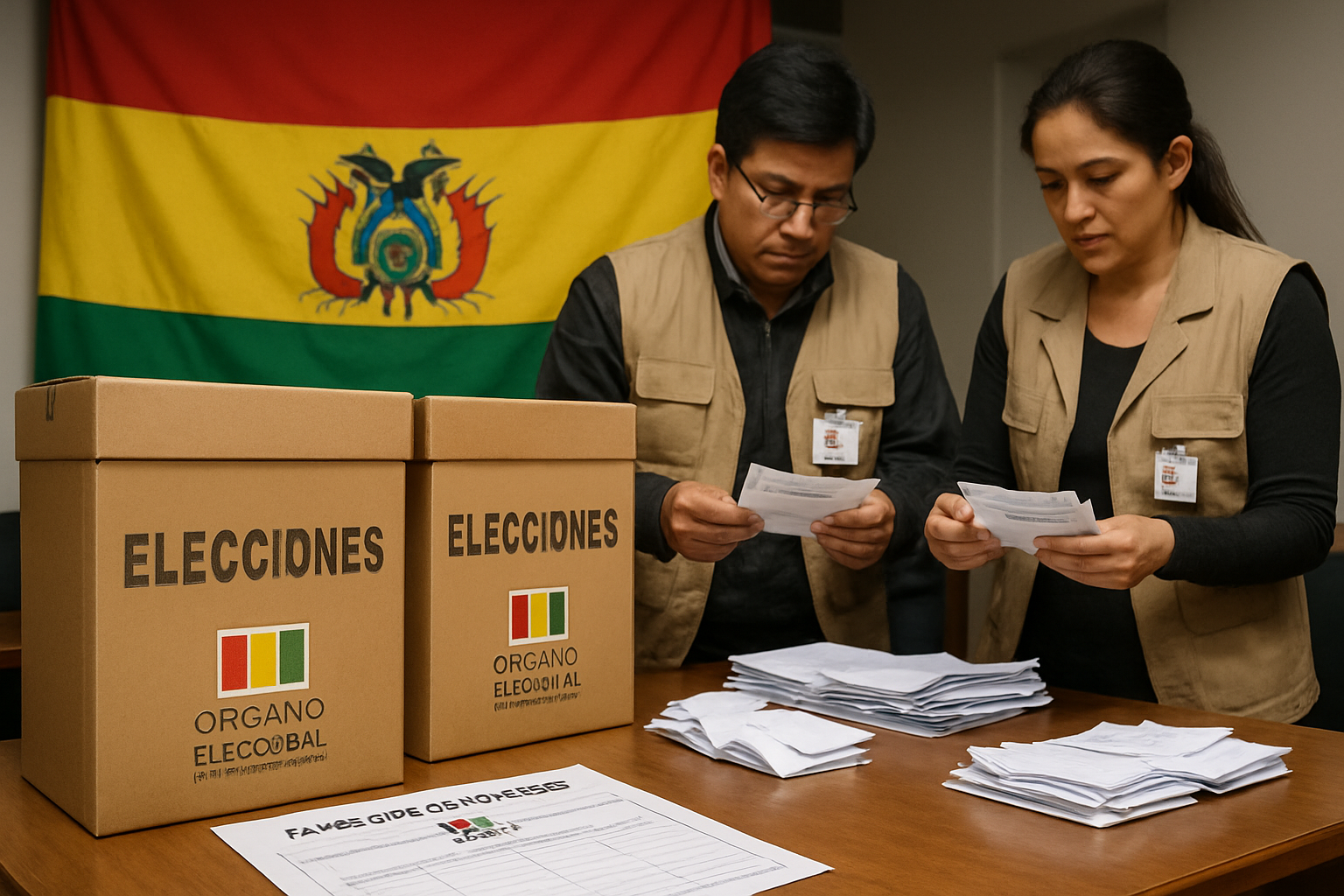
Bolivia made history on Sunday as regional elections delivered five new governors across key departments, marking a significant milestone with two women governors for the first time in the country's democratic history.
The second-round gubernatorial elections, conducted across Santa Cruz, Chuquisaca, Beni, Oruro, and Tarija departments, concluded with decisive victories that reshape the political landscape ahead of President Rodrigo Paz's collaborative governance initiative.
Women Make History in Regional Leadership
The most striking outcome emerged from Tarija, where María René Soruco of the Camino Democrático party achieved a commanding victory with 70.76% of the vote, according to preliminary results from the Sistema de Transmisión y Publicación de Resultados Electorales Preliminares (Sirepre).
Soruco's triumph represents more than a personal victory—it establishes Bolivia as having two female governors simultaneously for the first time, joining Gabriela de Paiva Padilla who won the Pando governorship in the first round of voting in March.
"Terminó la campaña, empieza la gestión" (The campaign is over, the governance begins)
— María René Soruco, Governor-elect of Tarija
Her opponent, Adrián Esteban Oliva of the Patria party, secured 29.24% of the vote, representing a significant margin that underscores the electorate's confidence in change.
Regional Results Across Five Departments
The electoral map revealed decisive outcomes across all contested departments, with Supreme Electoral Tribunal (TSE) President Gustavo Ávila confirming that vote counting exceeded 90% in all regions, establishing firm trends.
Santa Cruz: Juan Pablo Velasco of the Libre alliance secured victory with 57% of votes (873,466 total), defeating Otto Ritter and Dianey Caba of Santa Cruz Para Todos who obtained 42.9% (656,203 votes). The result positions the largest electorate department under new leadership as it represents over 2 million voters.
Chuquisaca: Luis Edson Ayllón from Alianza Gente Nueva achieved 53.11% of votes at 97.05% of counting, surpassing Franz García of Patria-Unidos who secured 46.89%. Ayllón emphasized a commitment to "una nueva forma de hacer política" (a new way of doing politics).
Oruro: Edgar Sánchez of the Jacha agrupación obtained victory with 52% of votes in what officials described as a tight contest against Alianza Patria Oruro (47.49%), with 91% of votes processed confirming the trend.
Beni: Jesús Egüez representing Alianza Patria secured 53% of votes against the MNR's 46%, with 96% of votes counted establishing his victory in this strategic Amazon region department.
Electoral Process and Turnout
The runoff elections engaged 3,437,951 eligible voters across the five departments, with the National Police deploying 100% of personnel under Commander General Mirko Sokol's coordination to ensure security and transparency.
TSE President Ávila oversaw the electoral material distribution and counting process, emphasizing the smooth conduct of Bolivia's democratic institutions. The largest electorate remained Santa Cruz with 2,038,004 voters, followed by Tarija (381,657), Chuquisaca (370,517), Oruro (359,376), and Beni (288,397).
Political Implications and the "50/50 Model"
The election results position the newly elected governors to participate in President Paz's "50/50 model" of collaborative governance, which emphasizes working with regional authorities regardless of party affiliation—a significant departure from traditional partisan approaches.
This collaborative framework aims to address Bolivia's complex center-periphery tensions and regional autonomy questions that have characterized the country's political landscape since the fragmentation following the MAS party's decline.
"Esto ha sido una victoria rotunda, Chuquisaca ha demostrado de que necesita un gobernador que trabaje por su tierra, que sea leal por Chuquisaca"
— Luis Ayllón, Governor-elect of Chuquisaca
Context of Democratic Resilience
These elections occurred amid significant challenges, including ongoing indigenous protests in Pando regarding Law 1720 rural property modifications, cyber security concerns affecting La Paz's municipal transition platform, and broader questions about Bolivia's institutional resilience.
Despite these pressures, the successful conduct of the electoral process demonstrates the strength of Bolivia's democratic institutions and the TSE's capacity to manage complex multi-departmental elections with international observers monitoring the proceedings.
Future Governance Challenges
The new governors face immediate challenges including economic coordination with the central government, infrastructure development needs, and implementation of regional development priorities within Bolivia's federal structure.
The diversity of political affiliations among the winners—from the Libre alliance in Santa Cruz to Camino Democrático in Tarija—will test President Paz's collaborative governance model as these leaders assume office in the coming weeks.
International observers have noted these elections as a significant test of South American democratic consolidation, particularly given Bolivia's strategic position in regional integration efforts and its role in continental cooperation frameworks.
Looking Ahead
With all mayoral positions filled from the March elections and now five additional governorships decided, Bolivia's subnational leadership structure is complete for the next electoral cycle. The integration of these new leaders into the national political framework will be crucial for the Paz administration's success in implementing its economic and social policy agenda.
The historic achievement of having two women governors simultaneously reflects broader democratization trends across Latin America, while the peaceful conduct of these elections amid regional tensions demonstrates the maturation of Bolivia's democratic institutions under pressure.
As the preliminary results await official confirmation from the TSE's final count, the successful completion of these runoff elections positions Bolivia to move forward with its governance agenda, backed by legitimately elected regional leadership across its most politically and economically significant departments.