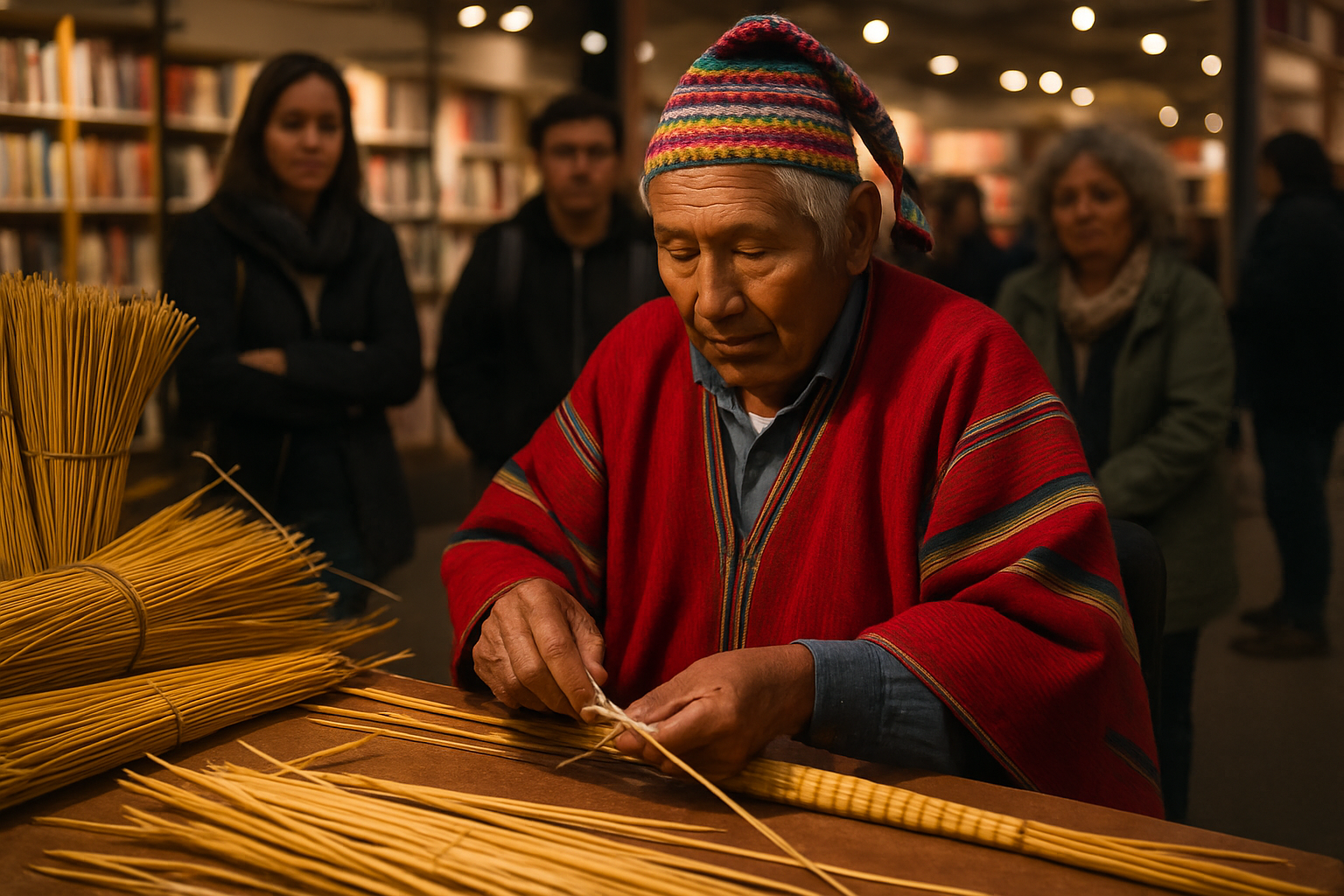
The 3rd International Book Fair of El Alto (FILEA) will showcase centuries-old indigenous knowledge this Thursday as Armando Callizaya Mendoza, a 69-year-old master artisan and fisherman, arrives from Pariti Island in Lake Titicaca's lesser basin alongside his son Isaac Callizaya, an Aymara historian, to transmit ancestral wisdom centered on the totora reed.
This remarkable initiative represents far more than a simple craft demonstration—it embodies Bolivia's growing recognition of indigenous knowledge as essential cultural infrastructure, positioning the nation at the forefront of what researchers have documented as the unprecedented "2026 Cultural Renaissance" sweeping across continents.
Living Heritage in Action: From Lake to Library
The day's programming begins at 3:00 PM in the children's space Kon-Tiki, where Armando Callizaya will demonstrate the intricate art of totora craftsmanship while sharing intimate details of daily life among the reed beds that have sustained his community for generations. Later, at 6:00 PM in the "Sara Chura" hall, Isaac Callizaya will present "Quta Jaqi: 'Living with the Totora,'" an exposition designed for both children and adults that explores the profound relationship between indigenous communities and this remarkable aquatic plant.
The totora (Schoenoplectus californicus) serves as a cornerstone of life around Lake Titicaca, functioning as much more than raw material for handicrafts. This hardy reed provides fodder for livestock, assists in poultry raising, and offers its tender parts as human sustenance with remarkable health benefits, including natural kidney cleansing properties. Perhaps most importantly, totora beds serve as crucial habitat for diverse wildlife species while helping maintain the ecological balance of the world's highest navigable lake.
Cultural Preservation in the Digital Age
Bolivia's approach to cultural heritage exemplifies what experts identify as the "technology-tradition synthesis" characterizing successful contemporary preservation efforts. Rather than viewing digital documentation and traditional knowledge as competing forces, the country has embraced sophisticated integration where modern tools amplify rather than replace authentic cultural expression.
This methodology aligns with broader international patterns documented throughout 2026's cultural renaissance. From Estonia's digital heritage preservation initiatives to Singapore's Museum of Food connecting younger generations with traditional recipes, nations worldwide are discovering that technology serves most effectively when enhancing community ownership and spiritual significance rather than substituting for authentic cultural connections.
"The totora is not just a plant—it is the foundation of our existence, connecting us to the sacred waters of Titicaca and our ancestors' wisdom."
— Isaac Callizaya, Aymara Historian
Economic and Social Impact of Cultural Investment
Bolivia's recognition of indigenous knowledge as strategic infrastructure reflects sophisticated economic understanding. Cultural preservation initiatives generate substantial multiplier effects through tourism development, educational partnerships, international media attention, and enhanced diplomatic relationships. The country's systematic documentation of traditional practices creates competitive advantages in cultural tourism while supporting community development and youth engagement with ancestral wisdom.
The timing proves particularly significant as Bolivia emerges from President Rodrigo Paz's ambitious first hundred days, which emphasized "constructing opportunities" through educational transformation and cultural integration. The administration's approach demonstrates evolved understanding that modernization need not occur at the expense of cultural authenticity—indeed, the most sustainable development models successfully synthesize technological advancement with deep cultural knowledge.
International Context: A Global Cultural Awakening
Bolivia's totora initiative occurs within documented unprecedented international coordination in cultural heritage preservation. The "February 2026 Cultural Renaissance" encompassed successful initiatives spanning Guatemala's traditional games recognition, Paraguay's classical music achievements, and across continents from Azerbaijan's carpet exhibitions to Vatican artifact repatriations.
Success factors consistently identified across these diverse contexts include community engagement with traditional knowledge bearers, economic viability through sustainable funding models, institutional support enabling local adaptation, and international cooperation that respects authenticity while facilitating resource sharing. Bolivia's FILEA programming exemplifies each element while adding innovative educational components targeting intergenerational knowledge transfer.
Challenges and Adaptive Strategies
Contemporary cultural preservation faces mounting challenges including climate change threats to traditional practices, economic pressures reducing youth participation in ancestral arts, and digital entertainment competing for attention spans traditionally devoted to community learning. Lake Titicaca's totora beds themselves face environmental pressures from changing precipitation patterns and temperature fluctuations affecting reed growth and wildlife habitat.
Bolivia's response demonstrates sophisticated adaptive management respecting traditional practices while embracing helpful innovations. The integration of book fair settings with hands-on demonstrations, bilingual programming serving indigenous and Spanish-speaking audiences, and multimedia documentation ensuring lasting preservation represent evolved approaches to heritage stewardship.
The Callizaya Family Legacy
The father-son collaboration between Armando and Isaac Callizaya embodies successful intergenerational knowledge transfer. Armando's six decades of direct experience working totora beds provides authentic foundation, while Isaac's formal historical training and Aymara cultural scholarship enables sophisticated contextualization for contemporary audiences. Their partnership demonstrates how traditional knowledge and academic frameworks can enhance rather than compete with each other.
This model addresses critical concerns about "knowledge transfer crisis" documented globally, where traditional skills face extinction as older practitioners lack systematic mechanisms for sharing expertise with younger generations. The Callizaya family's approach—combining practical demonstration, historical narrative, and educational programming—provides templates for similar initiatives worldwide.
Future Implications and Global Significance
Bolivia's totora knowledge presentation at FILEA 2026 establishes precedents for 21st-century cultural stewardship that balance innovation with tradition, local authenticity with international cooperation, and economic viability with cultural integrity. The initiative demonstrates how smaller nations can achieve disproportionate cultural influence through strategic focus and sustained excellence commitment.
As documented across the 2026 Cultural Renaissance, communities worldwide increasingly recognize culture as fundamental infrastructure equivalent to transportation, communication, and healthcare systems. Bolivia's systematic approach to indigenous knowledge preservation while maintaining contemporary relevance provides practical templates adaptable across diverse cultural and economic circumstances.
The success of initiatives like the totora knowledge presentation ultimately depends on sustained community engagement, adequate resource allocation, and recognition that cultural preservation serves not merely heritage maintenance but active community development. As the world grapples with rapid technological change, climate pressures, and social challenges, indigenous knowledge systems offer tested frameworks for sustainable living that complement rather than compete with beneficial innovations.
Looking Ahead: Templates for Cultural Resilience
The 2026 Cultural Renaissance demonstrates humanity's remarkable capacity for cultural resilience and creative adaptation during periods of unprecedented change. Bolivia's totora initiative exemplifies how thoughtful cultural investment creates lasting positive impacts that honor the past while embracing future possibilities.
As Armando and Isaac Callizaya share their knowledge at FILEA 2026, they represent more than cultural ambassadors—they embody the possibility of maintaining distinctive local traditions while contributing to global understanding and cooperation. Their work demonstrates that authentic cultural expression can achieve international appeal while preserving essential community meaning, offering hope for cultural diversity's survival in an increasingly interconnected world.
The totora's journey from Lake Titicaca's ancient reed beds to El Alto's modern book fair symbolizes culture's power to bridge generations, communities, and knowledge systems. In this synthesis lies perhaps humanity's greatest resource for navigating the challenges and opportunities of the 21st century while preserving the wisdom of millennia for generations yet to come.