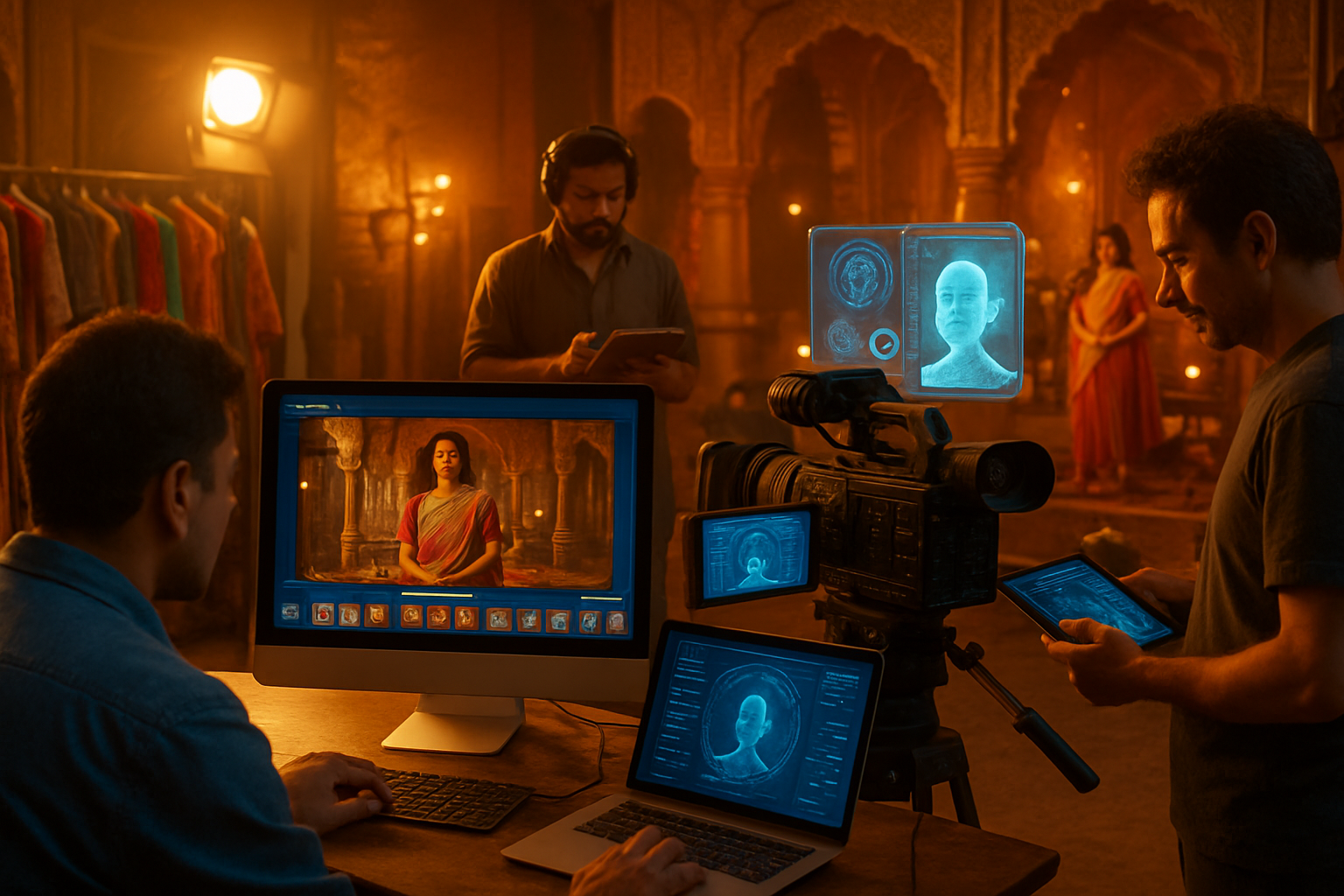
India's Bollywood film industry is poised to make cinematic history with "Maharaja in Denims," set to become the world's first feature film created entirely through artificial intelligence from production to post-production, with theatrical release planned for August-September 2026.
Based on the acclaimed novel by renowned author Khushwant Singh, "Maharaja in Denims" represents a groundbreaking convergence of traditional Indian storytelling and cutting-edge AI technology. Multiple Indian media outlets confirmed the film's development on April 16, 2026, positioning it at the forefront of what industry experts are calling the "2026 AI Revolution in Cinema."
Revolutionary Production Methodology
Unlike previous AI-assisted films that incorporated artificial intelligence as a supporting tool, "Maharaja in Denims" utilizes AI for every aspect of filmmaking. The production employs sophisticated machine learning algorithms for script refinement, virtual cinematography, character animation, voice synthesis, and comprehensive post-production workflows.
This ambitious project emerges during a critical period when global entertainment industries are grappling with AI integration. The Academy Awards 2026 marked the first time AI-assisted films were eligible for competition, while over 4,000 French actors and filmmakers have condemned what they term "systematic plundering" by AI tools reproducing voices and images without consent.
Industry Context and Global Transformation
Bollywood's AI venture occurs amid unprecedented global entertainment industry transformation. The world's largest film production center by volume is adapting to shifting audience preferences and production budget pressures while maintaining India's cultural storytelling traditions.
"The Indian film industry is turning to AI not as a replacement for human creativity, but as an enhancement tool during a period of shifting audience habits and production constraints."
— Industry Analysis, April 2026
The timing coincides with major developments across international cinema. Monaco announced its inaugural AI Film Festival for June 9-10, 2026, while Netflix acquired Ben Affleck's AI film technology company InterPositive, emphasizing AI tools that "take out all the logistical, difficult, technical stuff that often gets in the way" of creative filmmaking.
Technical Challenges and Infrastructure Constraints
The production faces significant technical hurdles amid a global semiconductor crisis that has driven memory chip prices up sixfold, affecting major suppliers including Samsung, SK Hynix, and Micron. These constraints are expected to persist until 2027 when new fabrication facilities come online.
However, these limitations have paradoxically spurred innovation in memory-efficient algorithms and sustainable deployment strategies. The constraints are forcing filmmakers to develop more thoughtful, resource-conscious AI implementation approaches that could democratize high-quality film production capabilities for independent creators worldwide.
Cultural Authenticity Versus Technological Innovation
The project represents a fascinating test case for preserving cultural authenticity while embracing technological advancement. Bollywood has long been celebrated for its vibrant musical numbers, emotional storytelling, and distinctive visual style that reflects Indian cultural values and traditions.
Early reports suggest the AI systems have been trained extensively on traditional Bollywood filmmaking techniques, ensuring the final product maintains the industry's characteristic aesthetic and narrative approaches while leveraging computational advantages for production efficiency.
Global Implications for Entertainment Industry
Industry experts view "Maharaja in Denims" as potentially setting international precedents for AI integration in entertainment. The film's success or failure could influence how other national cinema industries approach artificial intelligence adoption, particularly in regions where traditional filmmaking methods are deeply embedded in cultural identity.
The project emerges during what experts characterize as a "civilizational choice point" for AI development, where decisions made in 2026 will establish decades-long patterns for human-AI relationships across creative sectors.
Regulatory Environment and Industry Standards
The production unfolds against a backdrop of intensifying global AI regulation. Spain has implemented the world's first criminal executive liability framework for technology platforms, while France has conducted cybercrime raids on AI companies. The UN has established an Independent Scientific Panel with 40 global experts to assess AI's societal impact.
These regulatory developments suggest that "Maharaja in Denims" may face scrutiny not just for its artistic merits but also for how it handles intellectual property rights, performer consent, and cultural representation in an AI-generated context.
Economic Impact and Market Response
The film represents a significant economic experiment for Bollywood, which produces over 1,000 films annually and employs millions across India's entertainment ecosystem. If successful, AI-generated production could dramatically reduce costs while maintaining quality, potentially reshaping the industry's economic model.
However, the approach also raises concerns about employment displacement for traditional film industry workers, from actors and cinematographers to editors and visual effects artists.
Future Trajectory for AI Cinema
Success of "Maharaja in Denims" could accelerate AI adoption across global entertainment industries, while failure might slow integration efforts and strengthen arguments for human-centered approaches to filmmaking technology.
The project occurs alongside other significant AI entertainment developments, including the emergence of AI actress "Tilly Norwood" and sophisticated AI-generated content from ByteDance's Seedance 2.0, which has prompted copyright warnings from major Hollywood studios.
As Bollywood prepares for this historic release, the global entertainment industry watches carefully. The film represents more than technological innovation—it embodies fundamental questions about the future relationship between human creativity and artificial intelligence in one of the world's most culturally significant art forms.
Whether "Maharaja in Denims" succeeds in theaters may ultimately determine not just Bollywood's AI future, but influence how creative industries worldwide navigate the balance between technological advancement and cultural authenticity in the AI age.