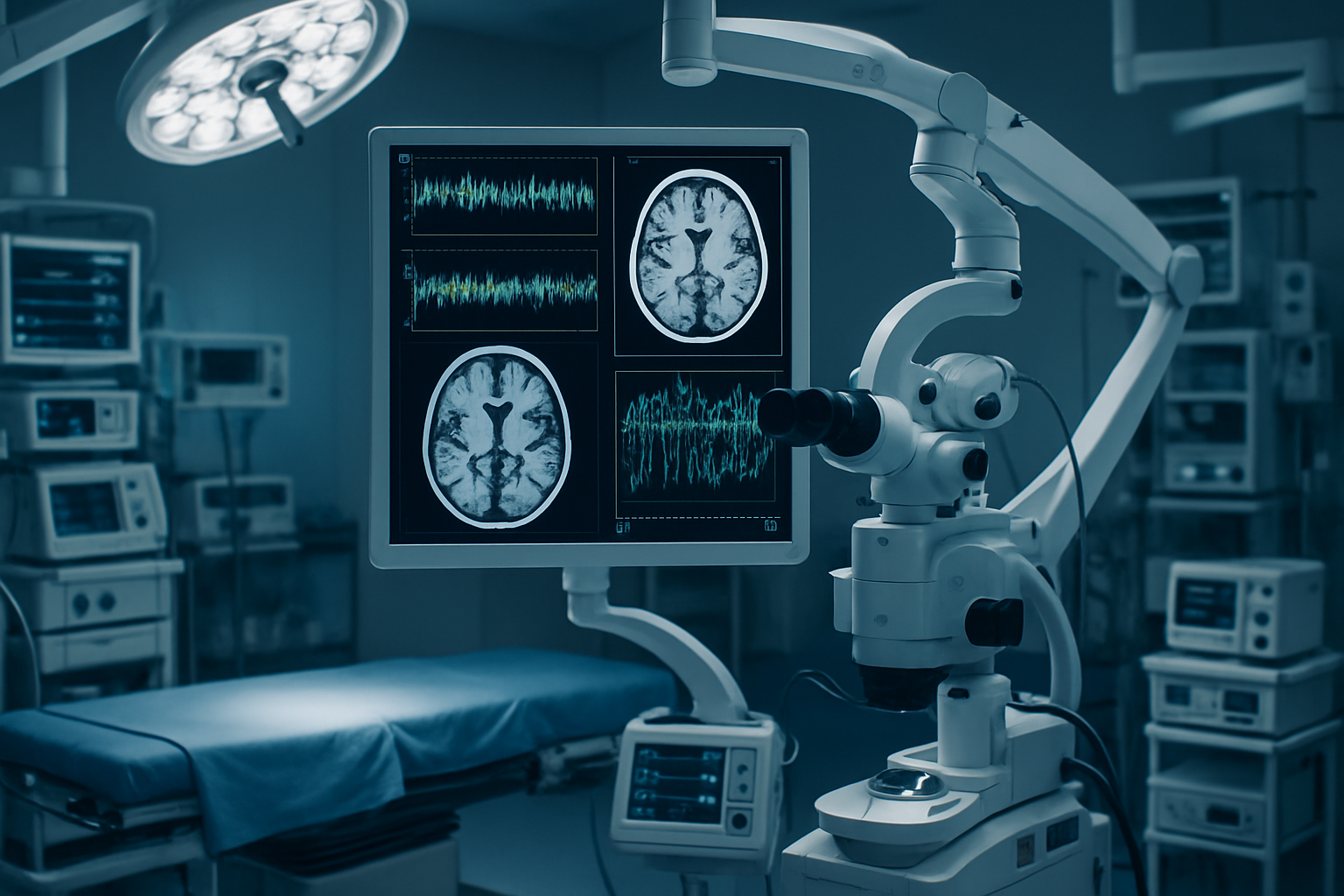
A groundbreaking medical achievement in Spain has restored partial vision to a completely blind patient through a revolutionary brain implant, while simultaneously, health experts worldwide are advancing HIV prevention with new injectable treatments that could transform global health outcomes.
Miguel Terol, a 65-year-old Spanish man who lost his sight completely in 2018 due to anterior non-arteritic ischemic optic neuropathy, has become the first person to regain vision through a sophisticated brain implant developed by researchers at Miguel Hernández University (UMH) in Elche. The extraordinary case has stunned the medical community, as Terol began recovering natural vision even before his neural prosthesis was fully activated.
Unprecedented Neural Recovery
On Christmas Day 2018, Terol suddenly lost vision in his right eye. Six weeks later, he experienced similar symptoms in his left eye, leading to complete blindness. His condition, described by doctors as "a type of stroke that affects the eyes," was caused by insufficient blood flow to the optic nerve.
In June 2022, during the height of the COVID-19 pandemic, surgeons performed a complex procedure to implant a minuscule 4x4 millimeter device containing 100 micro-needles directly into Terol's visual cortex at the back of his head. The implant was designed to stimulate the brain's visual processing center to recreate perceptions of light and movement.
However, what happened next defied all medical expectations. During preliminary testing phases, before the device was even activated to transmit artificial images, Terol began spontaneously recovering his natural vision. "This is a unique case," researchers noted, describing the unprecedented recovery as occurring "much before the device started transmitting processed artificial images to him."
The patient has now regained the ability to perceive light, detect movements, and even recognize large letters—abilities he had completely lost for over three years. Scientists believe the surgical intervention and implantation process may have somehow triggered the brain's natural healing mechanisms, though the exact mechanism remains under investigation.
Expanding Global Health Innovations
Simultaneously, the global health community is celebrating another breakthrough in HIV prevention. Health experts in Namibia have confirmed the registration of a new HIV preventive injection, marking a significant advancement in the fight against the pandemic that has affected millions worldwide.
The new injectable treatment represents a major step forward from traditional prevention methods, offering longer-lasting protection against HIV transmission. However, medical professionals emphasize that this breakthrough does not replace existing prevention strategies.
Namibian health experts specifically warn that while the new HIV preventive injection shows remarkable promise, it does not protect against other sexually transmitted infections or pregnancy. "Condoms remain crucial," health authorities stress, emphasizing that comprehensive sexual health protection requires multiple approaches.
Building on Recent Medical Advances
These breakthroughs come amid a remarkable period of medical innovation in early 2026. Recent months have seen Australia launch the world's first mRNA brain cancer vaccine trial for children, leveraging COVID-19 vaccine technology developed by the University of Queensland and the South Australian Health and Medical Research Institute (SAHMRI).
Spain has also achieved another medical first with the country's first face transplant from a euthanasia donor, performed at Hospital Vall d'Hebron in Barcelona. These advances demonstrate the rapid acceleration of precision medicine and innovative treatment protocols.
Implications for Future Treatment
The success of Terol's treatment opens new frontiers in neurotechnology and brain-computer interfaces. The unexpected recovery of natural vision suggests that surgical intervention in neural pathways might trigger previously unknown healing mechanisms in the brain. This discovery could revolutionize treatments for various forms of blindness and neurological conditions.
"The case demonstrates that our understanding of neural plasticity and brain recovery mechanisms is still evolving,"
— Medical researchers at Miguel Hernández University
For HIV prevention, the new injectable treatment could dramatically improve compliance rates compared to daily pill regimens. The longer-lasting protection offered by injectable preventive treatments addresses one of the major challenges in HIV prevention programs worldwide—ensuring consistent medication adherence.
Challenges and Considerations
Despite these remarkable advances, significant challenges remain. The brain implant technology, while successful in Terol's case, requires extensive surgical procedures and carries inherent risks. Researchers must determine whether similar results can be replicated in other patients with different types of vision loss.
The HIV prevention injection, while promising, requires careful integration with existing sexual health education programs. Health authorities emphasize that comprehensive protection strategies must continue to include barrier methods and regular testing protocols.
Global Impact and Future Research
These developments represent significant progress in addressing two major global health challenges: visual impairment, which affects over 250 million people worldwide, and HIV, which continues to impact millions despite decades of prevention efforts.
The successful combination of neurosurgical innovation and preventive medicine advances signals a new era in medical treatment approaches. Both breakthroughs emphasize the importance of multidisciplinary research teams and the potential for unexpected discoveries during clinical trials.
As research continues, the medical community anticipates that both the brain implant technology and HIV prevention methods will undergo further refinement. The goal is to make these treatments more widely accessible and effective for larger patient populations.
The extraordinary case of Miguel Terol's vision recovery and the advancement of HIV prevention technology demonstrates that medical science continues to push boundaries, offering hope to millions of people worldwide facing vision loss and HIV risk. These breakthroughs underscore the critical importance of continued investment in medical research and innovative treatment development.