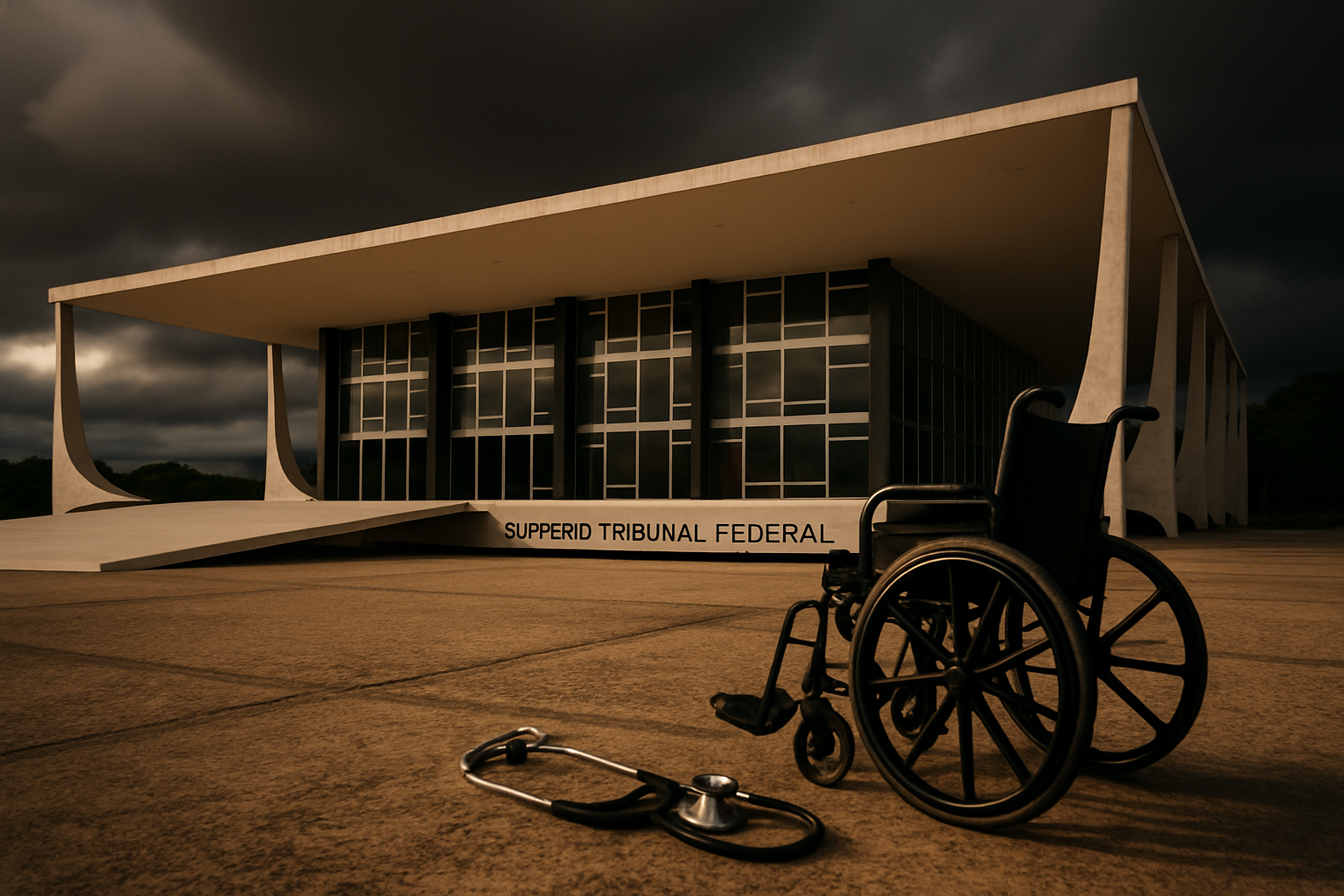
Brazil's Supreme Court has granted former President Jair Bolsonaro permission to serve his 27-year sentence for attempted coup charges under house arrest, citing deteriorating health conditions that include a recent hospitalization for pneumonia and complications from a 2018 assassination attempt.
Justice Alexandre de Moraes issued the unprecedented ruling on Tuesday, March 24, 2026, allowing the 71-year-old former president to serve his sentence at his residence rather than in federal prison. The decision represents a dramatic turn in one of Brazil's most politically charged legal proceedings, stemming from Bolsonaro's alleged role in orchestrating attempts to overturn the 2022 presidential election results.
Health Crisis Triggers Legal Review
The Supreme Court's decision follows Bolsonaro's hospitalization since March 13 for severe pneumonia, the latest in a series of health complications that have plagued the former president since he was stabbed during the 2018 campaign. Medical reports submitted to the court detailed significant respiratory issues, ongoing abdominal complications from multiple surgeries following the assassination attempt, and what physicians described as a marked deterioration in his overall condition.
"The defendant's current health status presents genuine humanitarian concerns that must be weighed against public safety and justice considerations," Justice de Moraes wrote in his 47-page ruling. The decision emphasized that house arrest represents a "temporary humanitarian measure" subject to regular medical review and strict monitoring conditions.
Coup Attempt Charges and Trial Background
Bolsonaro's legal troubles stem from his actions following his narrow defeat to Luiz Inácio Lula da Silva in the October 2022 presidential election. Brazilian prosecutors argue that the former president orchestrated a systematic campaign to undermine democratic institutions, including:
- Repeatedly questioning the integrity of Brazil's electronic voting system without evidence
- Pressuring military leaders to intervene in the electoral process
- Encouraging supporters to challenge election results through mass demonstrations
- Allegedly coordinating with extremist groups planning to disrupt the peaceful transfer of power
The charges culminated in the January 8, 2023 attacks on Brazil's National Congress, Supreme Court, and presidential palace by thousands of Bolsonaro supporters - events that drew comparisons to the January 6, 2021 Capitol riot in the United States.
"This represents one of the most serious challenges to Brazilian democracy since the return to civilian rule in 1985. The rule of law must be preserved while ensuring humanitarian treatment for all defendants."
— Professor Maria Santos, Constitutional Law Expert, University of São Paulo
International and Domestic Reactions
The house arrest decision has generated significant controversy both domestically and internationally. Bolsonaro's supporters view the ruling as vindication of their claims about his deteriorating health, while critics argue it represents preferential treatment for a former president facing serious democratic crimes.
International observers have closely monitored Brazil's handling of the case, particularly given concerns about democratic backsliding in Latin America. The European Union and United States have both emphasized the importance of due process while maintaining that Brazil's democratic institutions must be protected.
Legal experts note that house arrest for former heads of state facing serious charges is relatively rare in Latin American jurisprudence, though precedents exist in cases involving health considerations. The decision reflects the complex balance between humanitarian concerns and the principle that no one is above the law.
Strict Monitoring Conditions
Despite the house arrest arrangement, Justice de Moraes imposed stringent conditions on Bolsonaro's confinement. The former president must:
- Remain at his designated residence except for essential medical appointments
- Surrender his passport and any travel documents
- Submit to electronic monitoring through ankle bracelet surveillance
- Refrain from any political activities or public statements related to his case
- Allow regular visits from court officials and medical personnel
The court also established a medical review panel that will assess Bolsonaro's health status every 90 days to determine whether continued house arrest remains medically necessary.
Political Implications for Brazil
The ruling comes at a critical time for Brazilian democracy, as the country continues to grapple with deep political polarization and questions about institutional stability. President Lula's administration has walked a careful line between supporting judicial independence and avoiding actions that could further inflame political tensions.
Political analysts suggest the house arrest decision may actually defuse some immediate tensions while allowing the broader legal process to continue. However, concerns remain about the long-term implications for democratic accountability and equal justice under law.
"This decision tests the maturity of Brazil's democratic institutions," noted Dr. Carlos Mendoza, a political scientist at the Getúlio Vargas Foundation. "It demonstrates that our system can balance humanitarian concerns with legal accountability, but it also raises important questions about how we handle cases involving former leaders."
Broader Context of Democratic Stress
Brazil's handling of the Bolsonaro case occurs against a backdrop of democratic challenges throughout Latin America and globally. Recent events in other countries - including constitutional crises over executive power, judicial independence, and electoral integrity - have made Brazil's response closely watched by international observers.
The Brazilian Supreme Court's approach represents an attempt to maintain both humanitarian standards and legal accountability, though critics argue that house arrest for attempted coup charges sets a dangerous precedent that could encourage future anti-democratic actions by political leaders.
Looking Ahead
While the house arrest ruling addresses immediate health and humanitarian concerns, the broader legal case against Bolsonaro continues. Prosecutors indicate they will proceed with related charges against other defendants in the alleged coup conspiracy, including military officials, political allies, and extremist group leaders.
The case's ultimate resolution will likely have lasting implications for Brazilian democracy and the principle of democratic accountability in Latin America. As the country continues to navigate this historic legal and political challenge, the balance between justice, humanitarian concerns, and democratic stability remains delicate.
The international community continues to monitor developments closely, recognizing that Brazil's handling of this unprecedented situation may influence how other democracies address similar challenges to their institutional foundations in an era of rising authoritarianism worldwide.