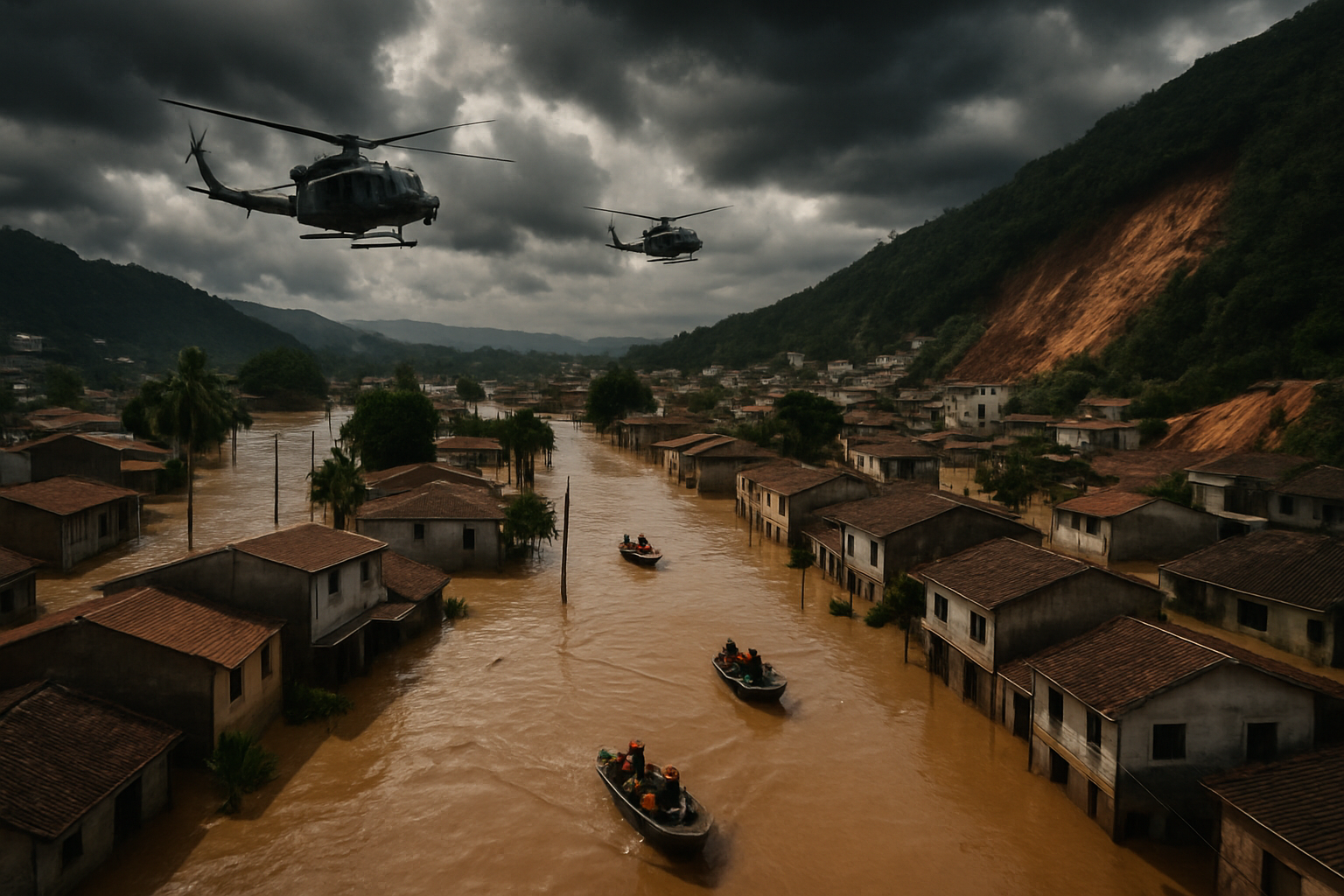
At least 30 people have been confirmed dead and 39 remain missing after record-breaking torrential rains triggered catastrophic flooding and landslides across southeastern Brazil's Minas Gerais state, marking one of the deadliest natural disasters in the region this year.
The disaster, which began on February 24, 2026, has particularly devastated the cities of Juiz de Fora and Ubá, where rivers burst their banks and triggered at least 20 landslides that engulfed entire neighborhoods. Emergency responders are conducting extensive search and rescue operations with more than 200 people successfully evacuated from affected areas.
Juiz de Fora Bears Heaviest Toll
Juiz de Fora, a city of 540,000 residents, has reported 22 confirmed deaths, making it the epicenter of the tragedy. The hardest-hit area is the hillside neighborhood of Parque Burnier, where twelve houses were completely swallowed by a massive landslide.
Mayor Margarida Salomão declared a state of natural catastrophe, describing the rainfall as "unprecedented" and noting that the city is experiencing its wettest February on record. The mayor emphasized the extraordinary nature of the precipitation, which overwhelmed the city's drainage systems and flood defenses.
"The rainfall has been intense and persistent, creating conditions we have never seen before in our city's modern history."
— Mayor Margarida Salomão, Juiz de Fora
Rescue teams, supported by volunteers, continue searching through mud and unstable terrain for missing residents. The operations have been hampered by continued rainfall and the dangerous condition of the soil, which remains prone to further landslides.
Ubá Faces Similar Devastation
The neighboring city of Ubá has confirmed seven additional deaths as the same weather system brought destructive flooding and landslides to the area. Like Juiz de Fora, Ubá has declared a state of emergency to facilitate the mobilization of resources and federal assistance.
Both cities are part of the Zona da Mata region of Minas Gerais, an area characterized by rolling hills and river valleys that becomes particularly vulnerable during extreme rainfall events.
Ongoing Rescue Operations
Brazilian firefighters and emergency services have been working around the clock to locate survivors and recover bodies from the mud and debris. Three firefighters were photographed recovering a man's body from the rubble, highlighting the dangerous conditions rescue workers face.
The state's Civil Defense agency has established emergency shelters and is coordinating with federal authorities to provide humanitarian assistance to displaced families. More than 200 people have been rescued from flooded areas, though dozens more remain unaccounted for.
Emergency responders are using specialized equipment to access areas cut off by landslides, while community volunteers have mobilized to support displaced families and assist in the search efforts.
Infrastructure and Economic Impact
The flooding has caused widespread infrastructure damage throughout the affected region. Transportation networks have been severely disrupted, with roads washed out and bridges damaged or destroyed. Essential services including electricity, water supply, and communications have been interrupted in many areas.
Agricultural areas have also suffered significant damage, with flooded fields threatening crops and livestock. The economic impact is expected to be substantial, particularly for rural communities whose livelihoods depend on farming.
Climate Context and Recurring Vulnerability
This disaster occurs during what has been an exceptionally active and destructive rainy season across South America. The event represents part of a broader pattern of extreme weather that has affected the region throughout early 2026.
Historical records show that southeastern Brazil is particularly vulnerable to extreme precipitation events, but emergency officials note that the current intensity has exceeded typical seasonal patterns, overwhelming existing emergency preparedness systems.
The disaster comes amid global temperature records, with January 2026 marking the 18th consecutive month of temperatures exceeding 1.5°C above pre-industrial levels, contributing to increased atmospheric moisture and more intense rainfall events.
Government Response and Recovery Efforts
State and federal authorities have pledged comprehensive support for affected communities. Emergency declarations in both cities will unlock additional resources for immediate relief and long-term reconstruction efforts.
Recovery operations are expected to require significant investment in infrastructure repairs and enhanced flood defenses. Authorities are also reviewing emergency preparedness protocols to better respond to future extreme weather events of similar intensity.
The disaster highlights the urgent need for climate-adaptive infrastructure and improved early warning systems in vulnerable regions as extreme weather events become more frequent and severe.
Looking Ahead
As rescue operations continue, authorities are preparing for the long process of rebuilding affected communities. The focus will be on implementing "build back better" approaches that incorporate climate resilience into reconstruction efforts.
Community resilience has been demonstrated through volunteer networks and neighbor assistance during the crisis, providing a foundation for recovery efforts. However, the scale of destruction means that recovery will require sustained support from state and federal authorities.
The tragedy serves as another stark reminder of Brazil's vulnerability to extreme weather events and the critical importance of investing in climate adaptation measures to protect communities from increasingly severe natural disasters.