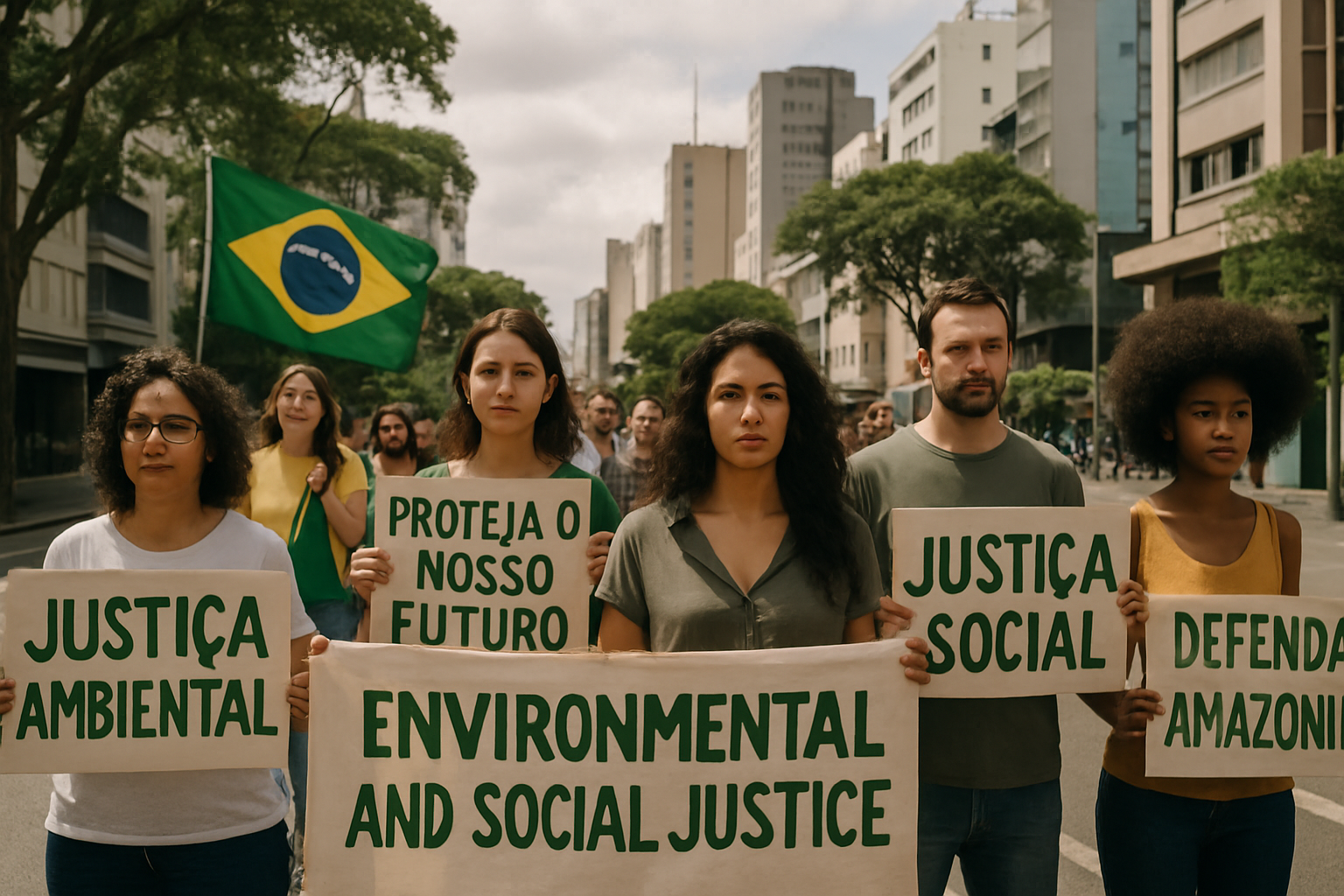
The tragic death of Orelha, a beloved street dog in Brazil, has become a powerful catalyst for nationwide protests that extend far beyond animal welfare, revealing a complex web of environmental injustice and social inequality that resonates across the country during Earth's most environmentally challenging period.
According to reports from the Irish Times, the killing has sparked protests throughout Brazil, with demonstrators seeing not just animal cruelty but what they describe as "the familiar shadow of a system protecting the well-connected." The incident has exposed deep societal scars that reflect broader environmental and social justice issues plaguing the nation.
Environmental Context of Growing Activism
The protests emerge during an unprecedented period of global environmental crisis, with January 2026 marking the hottest month in recorded history and the 18th consecutive month where global temperatures have exceeded 1.5°C above pre-industrial levels. This environmental backdrop has intensified public awareness and activism across Latin America, particularly in Brazil, where environmental destruction and social inequality often intersect.
Brazil's environmental challenges are well-documented and extensive. Recent investigations have revealed systematic issues including illegal mining operations that have poisoned major rivers, Amazon deforestation driven by commercial interests, and growing tensions between agribusiness expansion and indigenous environmental stewardship rights. The death of Orelha has become a symbolic representation of vulnerability in the face of systems that prioritize certain interests over others.
Systemic Issues Behind the Protests
Environmental advocates and social justice campaigners have seized upon the incident as emblematic of broader patterns of inequality and environmental degradation affecting Brazil. The country faces mounting pressure from climate change impacts, including altered precipitation patterns, extreme weather events, and ecosystem disruption that disproportionately affects marginalized communities.
Recent environmental enforcement actions highlight both progress and challenges. While authorities have conducted operations against illegal mining and environmental crimes, protesters argue that structural inequalities persist, with powerful interests often escaping accountability while vulnerable populations—both human and animal—bear the consequences.
"This isn't just about one dog. It's about a system that consistently fails to protect the vulnerable while shielding those with power and connections."
— Brazilian Environmental Activist
Connection to Broader Environmental Movement
The protests coincide with a remarkable surge in environmental conservation initiatives across Latin America and globally. Brazil itself has seen both conservation successes and setbacks, from indigenous community resistance at agricultural terminals to marine conservation partnerships and sustainable tourism innovations.
The timing is particularly significant as environmental protection increasingly functions as an economic development strategy rather than merely a regulatory burden. Countries implementing comprehensive environmental protection demonstrate greater economic resilience and attract sustainable investment, creating employment in environmental services, eco-tourism, and green technology sectors.
Climate Justice and Social Movements
The Orelha protests reflect a growing understanding of environmental justice as interconnected with social equity. As climate change accelerates—with human-induced warming now overriding natural climate variability including La Niña cooling effects—communities are increasingly connecting environmental degradation with systemic inequality.
This movement aligns with broader trends across Latin America, where environmental activism has become intertwined with social justice campaigns. From Colombian water system emergencies to Ecuador's multi-front environmental enforcement, the region is experiencing unprecedented environmental mobilization at all levels of society.
Technology and Traditional Knowledge Integration
Modern environmental protection in Brazil increasingly relies on sophisticated integration of cutting-edge technology with traditional ecological knowledge and community-based management. Advanced monitoring systems, satellite tracking, and environmental DNA analysis are being combined with indigenous conservation practices and community stewardship traditions.
However, protesters argue that technological solutions alone are insufficient without addressing the underlying power structures that determine how environmental decisions are made and implemented. The death of Orelha symbolizes this gap between technical capabilities and social justice implementation.
Economic Implications of Environmental Movements
The protests carry significant economic implications beyond their immediate social impact. Brazil's tourism industry, particularly eco-tourism, relies heavily on the country's reputation for environmental protection and social responsibility. International investors increasingly factor environmental and social governance criteria into their decisions, making Brazil's response to these protests economically significant.
Environmental degradation costs—including healthcare expenses from pollution, infrastructure damage from extreme weather, and tourism losses from ecosystem destruction—often exceed the investments required for proactive environmental protection. The Orelha protests highlight the economic case for systematic reform addressing root causes rather than managing symptoms.
International Implications and Cooperation
Brazil's environmental challenges have global implications, particularly given the Amazon rainforest's role in global climate regulation. The protests reflect growing international pressure for coordinated environmental action, as pollution, climate systems, and species migrations cross national boundaries, making unilateral efforts insufficient.
International cooperation frameworks are evolving to support comprehensive environmental protection that addresses both immediate conservation needs and long-term climate adaptation requirements. Brazil's response to the current wave of environmental activism could influence regional environmental cooperation and international partnership strategies.
Looking Forward: Critical Juncture for Brazilian Environmental Policy
The Orelha protests represent what environmental analysts describe as a critical juncture for Brazilian environmental protection—a choice between reactive crisis management and proactive ecosystem service management. As the window for effective climate action narrows rapidly, coordinated responses like these protests may prove decisive for conservation approaches in the coming decades.
Success will depend on sustained political commitment, adequate funding, effective oversight, and adaptation to rapidly changing environmental and social conditions. The integration of traditional environmental wisdom with modern conservation science appears increasingly crucial for creating scientifically sound and culturally appropriate approaches that balance environmental protection with social justice.
As Brazil faces unprecedented environmental challenges—from record-breaking global temperatures to mounting climate pressures—the death of a single street dog has become a powerful symbol of broader struggles for environmental justice and social equity. The outcome of these protests may influence not only Brazilian environmental policy but serve as a template for environmental activism across Latin America and beyond during this critical period of global environmental crisis.