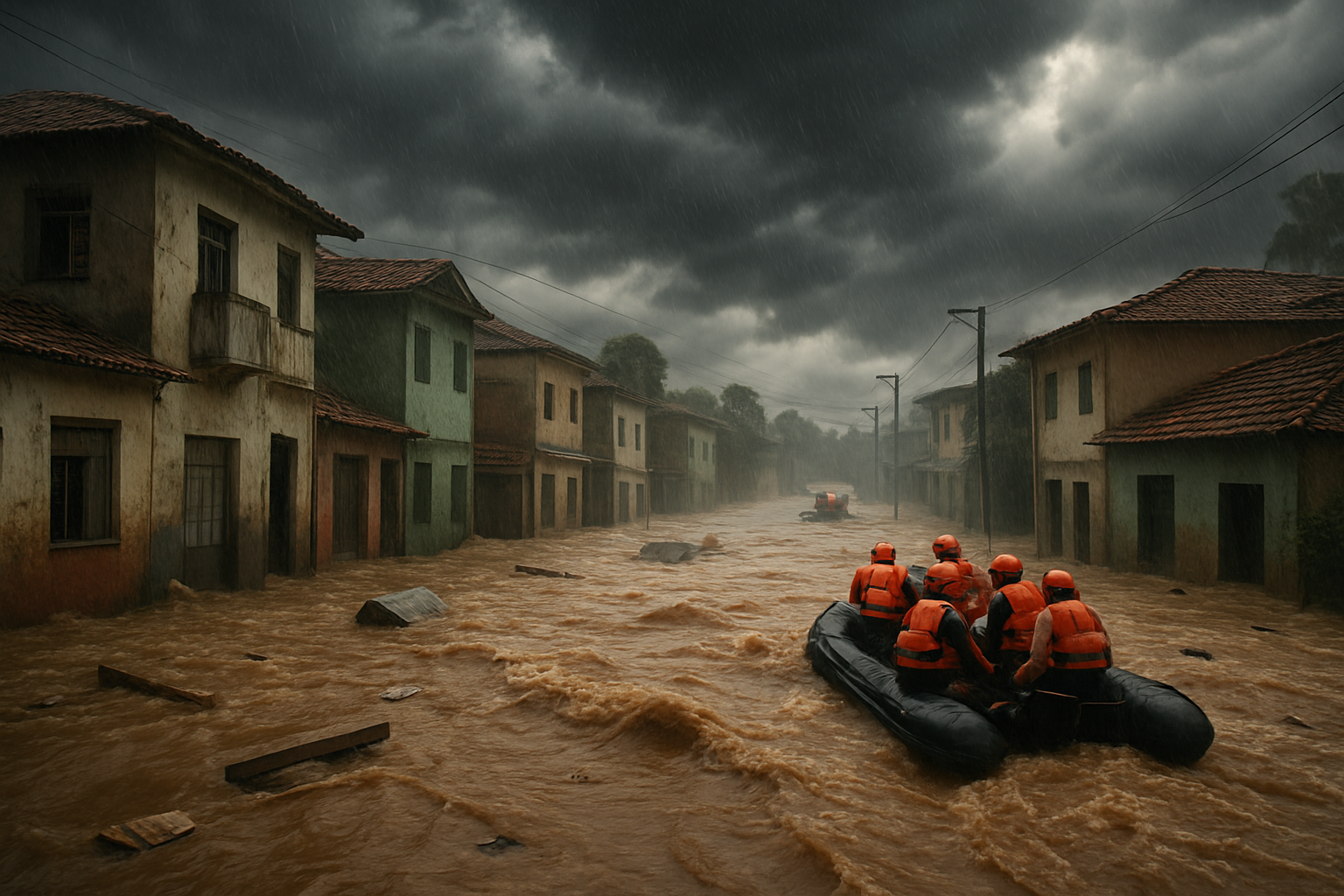
Torrential rains in southeastern Brazil have claimed at least 28 lives and left dozens missing as catastrophic flooding and landslides devastate Minas Gerais state, marking the latest in a series of extreme weather disasters that continue to overwhelm emergency response systems across multiple continents.
The death toll has risen from initial reports of 23-25 fatalities, with Venezuelan source El Nacional confirming at least 28 deaths and dozens of people still unaccounted for. The crisis has forced approximately 700 residents to abandon their homes across affected areas between the cities of Juiz de Fora and Ubá, according to official reports.
Emergency Response Overwhelmed
Mayor Margarida Salomão of Juiz de Fora has declared a state of emergency, describing the current situation as the city's wettest February on record. Civil Defense estimates indicate that 440 people have been evacuated to temporary shelters as rescue operations continue around the clock.
Search and rescue teams are conducting extensive operations across the region, focusing on areas where dozens of people remain missing following the sudden onset of flooding that caught many residents off guard. The intensity of rainfall has overwhelmed local drainage systems and caused rivers to burst their banks, creating walls of mud and debris that have swept away homes and infrastructure.
"The situation in Juiz de Fora represents the wettest February we have experienced on record, with at least 20 landslides reported across the city."
— Mayor Margarida Salomão, Juiz de Fora
Infrastructure Devastation
The disaster has caused widespread infrastructure damage across southeastern Brazil, with transportation networks severely disrupted and essential services including electricity, water supply, and communications systems affected. Neighborhoods have been completely isolated by floodwaters, while roads have become impassable due to landslides and debris.
Agricultural areas have been particularly hard hit, with vast swaths of farmland submerged under murky floodwaters. The economic impact is expected to be substantial, affecting both local communities and regional food production systems already under pressure from previous extreme weather events.
Emergency responders are using specialized equipment to access areas that have been cut off by landslides, while community mobilization efforts are supporting displaced families who have lost their homes and possessions. Recovery is expected to require significant investment in infrastructure repairs and enhanced flood defenses.
Part of Global Climate Crisis
This devastating flooding occurs as part of a broader pattern of extreme weather affecting South America and other continents throughout 2026. The disaster comes during what meteorologists have characterized as an unusually active and destructive rainy season that has exceeded typical seasonal patterns and overwhelmed traditional emergency preparedness systems.
Historical context from recent memory archives reveals this is part of a concerning trend, as southeastern Brazil has experienced increased vulnerability to extreme precipitation events. However, the current intensity and scope have exceeded what local infrastructure and emergency services were designed to handle, highlighting critical adaptation gaps in the face of changing climate patterns.
The timing of this disaster is particularly significant, occurring during what has been confirmed as an unprecedented period of global temperature extremes. January 2026 marked the 18th consecutive month of global temperatures exceeding 1.5°C above pre-industrial levels, creating conditions that enable more intense and unpredictable weather events.
Immediate and Long-term Challenges
Emergency services are operating at capacity limits as they manage both immediate rescue operations and longer-term recovery planning. The scale of destruction has created complex logistical challenges, with emergency personnel working to maintain communication links and establish supply lines to affected communities.
Recovery efforts will need to address not only immediate humanitarian needs but also longer-term infrastructure resilience. The disaster highlights the urgent need for enhanced flood management systems, early warning capabilities, and climate-adaptive infrastructure that can withstand increasingly intense weather events.
Local authorities are coordinating with state and federal agencies to ensure adequate resources are available for both emergency response and reconstruction efforts. The focus on "building back better" with climate-resilient infrastructure is becoming increasingly critical as traditional approaches prove insufficient for current extreme weather realities.
Community Resilience and Support
Despite the overwhelming scale of destruction, community solidarity has emerged as a crucial factor in the response effort. Local residents, volunteers, and emergency services are working together to conduct rescues, provide shelter, and support those who have lost everything in the floods.
Temporary shelters have been established to accommodate displaced families, with local organizations and government agencies coordinating to provide essential supplies including food, water, medical care, and clothing. Mental health support services are also being mobilized to help communities cope with the trauma of sudden loss and displacement.
The disaster underscores the vulnerability of communities in flood-prone areas and the critical importance of proactive disaster preparedness and community resilience building. As extreme weather events become more frequent and intense, the ability of communities to respond and recover becomes increasingly vital for long-term survival and prosperity.