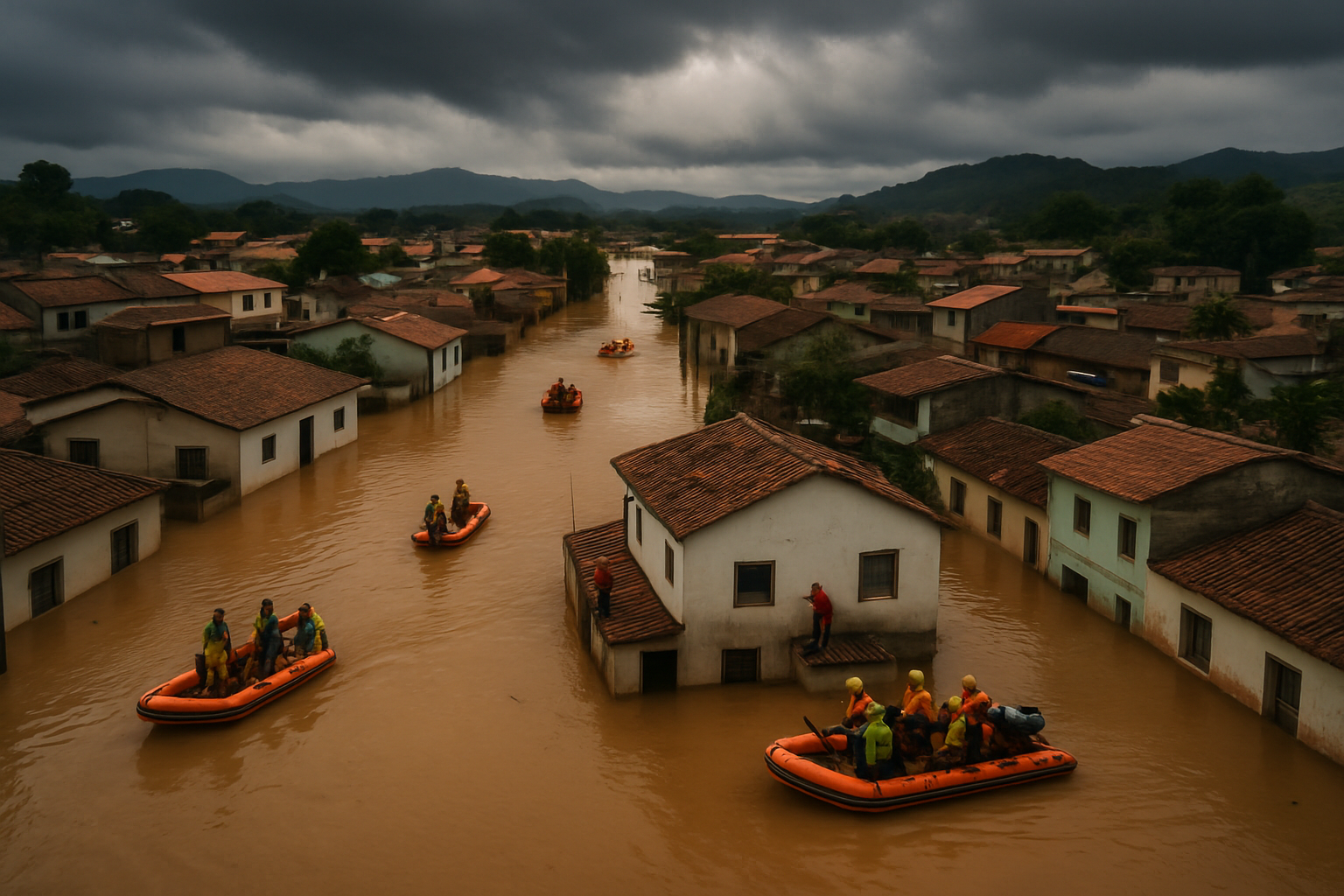
At least 23 people have been confirmed dead and dozens remain missing after record-breaking rainfall triggered catastrophic flooding and landslides across southeastern Brazil's Minas Gerais state, forcing more than 400 residents to abandon their homes in what authorities are calling an extreme weather emergency.
The death toll, confirmed by officials on Tuesday, includes 16 fatalities in the municipality of Juiz de Fora and 7 in Ubá. Firefighters are actively searching for "dozens" of missing persons, according to a spokesperson from the Minas Gerais Fire Department who spoke to AFP.
Unprecedented Weather System Overwhelms Infrastructure
The extreme weather conditions caused rivers to overflow their banks, triggering widespread flooding, landslides, and the dramatic collapse of buildings that were captured on video by local residents. The severity of the rainfall has been described as record-breaking for the region, with some areas experiencing their wettest February on record.
Juiz de Fora, a municipality with just over half a million residents, has been particularly hard hit. Mayor Margarida Salomão declared a state of emergency as the city faces its rainiest February in recorded history. She described the situation as "extreme," with at least 20 landslides reported and several neighborhoods completely isolated.
"Civil Defense estimates that 440 people have had to leave their homes and are receiving support from the mayor's office for temporary shelter and accommodation."
— Mayor's Office Statement
Emergency Response Mobilized Across Affected Regions
Emergency services have launched extensive rescue operations throughout the affected areas. The scale of the disaster has prompted both Juiz de Fora and Ubá mayors to declare states of emergency, enabling them to access additional resources and coordinate more effectively with state and federal authorities.
The flooding has created dangerous conditions across the region, with emergency responders working around the clock to locate missing persons and evacuate residents from high-risk areas. The combination of continued rainfall and saturated ground conditions has made rescue operations particularly challenging.
Climate Context and Regional Vulnerability
This latest disaster occurs within a broader context of extreme weather events that have been impacting Brazil and other parts of South America throughout 2026. The region has experienced an unusually active rainy season, with weather patterns intensified by broader climatic shifts.
The southeastern region of Brazil, including Minas Gerais, has historically been vulnerable to extreme precipitation events during the summer months. However, the intensity and duration of the current rainfall has exceeded typical seasonal patterns, overwhelming local infrastructure and emergency preparedness systems.
Infrastructure Damage and Economic Impact
The flooding has caused significant damage to local infrastructure, including roads, bridges, and public facilities. Several neighborhoods in Juiz de Fora remain cut off from emergency services due to landslides and flood damage, complicating rescue efforts and the delivery of aid to affected communities.
The economic impact is expected to be substantial, with widespread damage to residential and commercial properties. Agricultural areas in the region have also been severely affected, with crops damaged or destroyed by the floodwaters.
Ongoing Search and Rescue Operations
Search and rescue teams continue their efforts to locate the dozens of people still reported missing. The challenging terrain and ongoing weather conditions have made these operations extremely difficult, with emergency responders using specialized equipment to access areas cut off by landslides and flooding.
Local authorities are coordinating with state and federal agencies to ensure adequate resources are available for the extended emergency response. Temporary shelters have been established for displaced residents, with local officials working to provide essential services including food, water, and medical care.
Community Response and Support
Local communities have mobilized to support affected families, with residents helping in rescue efforts and providing assistance to those who have lost their homes. The resilience of local communities has been evident in the coordinated response to help neighbors and strangers alike during this crisis.
Civil defense officials continue to monitor weather conditions closely, as additional rainfall could exacerbate an already critical situation. Authorities are urging residents in high-risk areas to remain vigilant and follow evacuation orders when issued.
Recovery and Reconstruction Challenges
As immediate rescue operations continue, authorities are already beginning to assess the long-term challenges facing the region. The reconstruction effort will require significant investment in both infrastructure repairs and enhanced flood defenses to protect against future extreme weather events.
The disaster highlights the ongoing vulnerability of communities in southeastern Brazil to extreme weather events, and the need for improved early warning systems and emergency preparedness measures to protect lives and property in the face of increasingly unpredictable weather patterns.