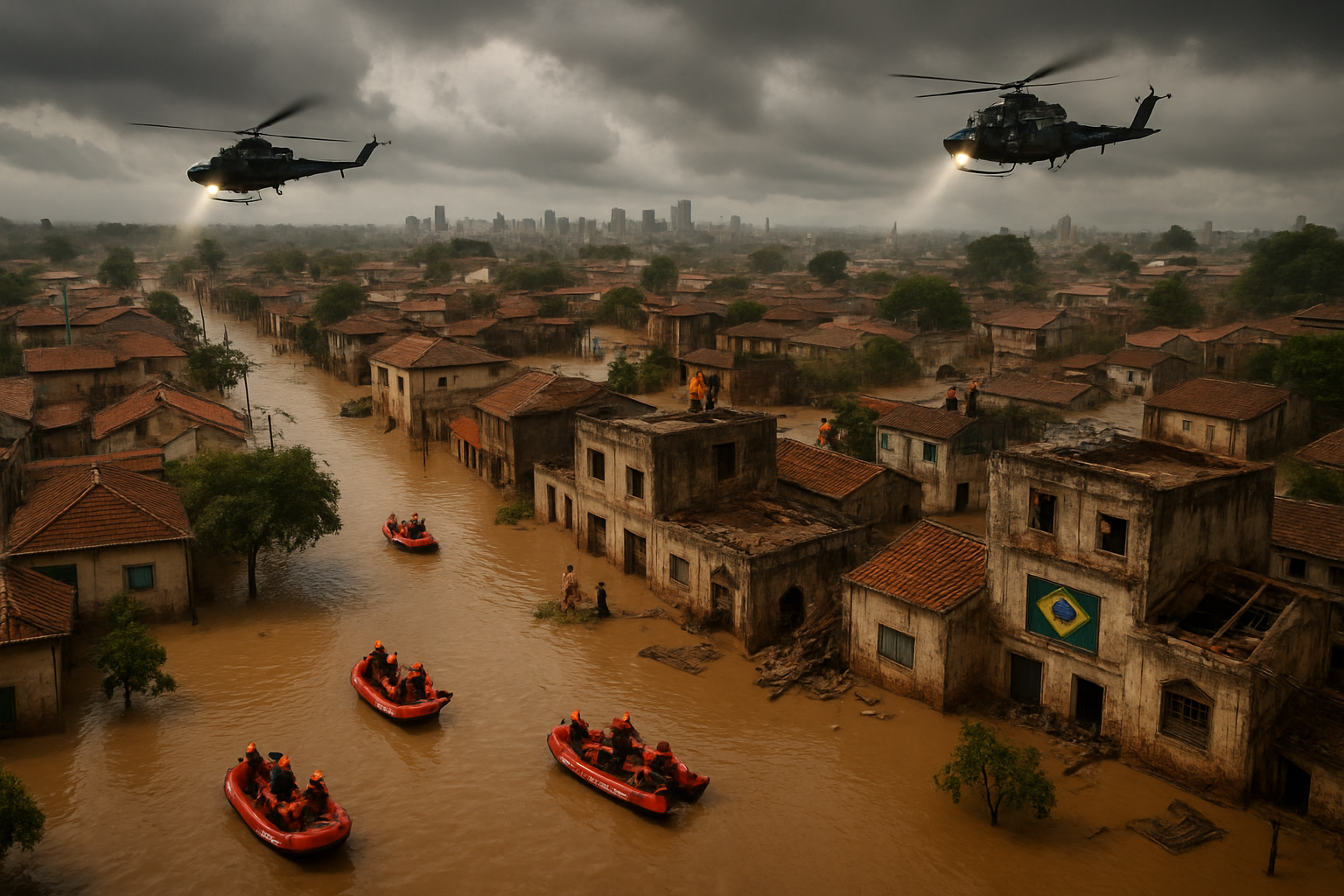
The death toll from catastrophic flooding in Brazil's Minas Gerais state has risen to at least 40 people, with dozens more still missing as emergency responders battle treacherous conditions created by record-breaking rainfall and devastating landslides that have overwhelmed the southeastern region.
The crisis, which began on February 23rd, has escalated dramatically as multiple international sources confirm the mounting casualties across the cities of Juiz de Fora and Ubá. Italian news agency ANSA reports the latest death toll of 40, while Nicaragua's Canal 2 television confirmed at least 36 fatalities, and Vatican News reported 30 deaths with dozens still listed as missing.
Scale of Destruction Unprecedented
The flooding represents the worst natural disaster to hit Minas Gerais in decades, triggered by what meteorologists describe as the wettest February on record for the region. Over 700 residents have been evacuated from their homes, with 440 people currently housed in temporary emergency shelters across the affected areas.
Mayor Margarida Salomão of Juiz de Fora has declared a state of natural catastrophe, describing the unprecedented intensity of precipitation that has overwhelmed the city's drainage systems. "We are facing rainfall levels that exceed anything in our recorded meteorological history for this month," she stated during an emergency press conference.
The Parque Burnier neighborhood in Juiz de Fora has been particularly devastated, with a massive landslide completely engulfing 12 houses. At least 20 landslides have been documented across the region, with emergency responders conducting dangerous search and rescue operations in unstable terrain.
Emergency Response Overwhelmed
Firefighters and emergency services have successfully rescued more than 200 people, working alongside community volunteers despite hazardous conditions. The emergency response has been described as one of Brazil's largest operations in recent memory, with military personnel mobilized to support civilian authorities.
The Minas Gerais fire department confirmed in a statement that search efforts are ongoing for approximately 40 missing individuals, though the exact number varies across different reports due to the chaotic nature of the disaster and ongoing rescue operations.
Transportation networks have been severely disrupted, with major roads rendered impassable and bridges damaged by the torrential waters. Essential services including electricity, water supply, and communications have been interrupted across wide areas, hampering rescue efforts and humanitarian aid delivery.
Agricultural and Economic Impact
The flooding has caused devastating damage to agricultural areas, with thousands of hectares of cropland now underwater. The economic impact is expected to reach billions of reais, affecting not only immediate infrastructure repairs but also long-term agricultural production in a region crucial to Brazil's economy.
The disaster has exposed critical gaps in the region's emergency preparedness systems, with traditional flood infrastructure proving inadequate against the intensity of rainfall experienced this February.
Climate Context and International Concern
The disaster occurs during what scientists describe as an exceptionally active 2026 South American rainy season, coinciding with January 2026 being the 18th consecutive month to exceed 1.5°C above pre-industrial levels globally.
Climate scientists are viewing the Minas Gerais flooding as an example of the increasing frequency and intensity of extreme weather events affecting southeastern Brazil, highlighting the urgent need for enhanced flood defenses and climate-adaptive infrastructure.
President Luiz Inácio Lula da Silva has expressed solidarity with the victims and offered federal support for both emergency response and long-term recovery efforts. The federal government is coordinating with state and local authorities to ensure comprehensive assistance reaches affected communities.
Community Resilience Amid Tragedy
Despite the catastrophic conditions, remarkable community resilience has been demonstrated through volunteer mobilization and neighborhood solidarity. Churches and schools have been converted into temporary shelters, with local organizations coordinating donations and support for displaced families.
Social media platforms have proven crucial in coordinating rescue efforts and helping separated families reconnect, with emergency hashtags trending nationally to organize assistance and share critical information about missing persons.
The emergency coordination between local, state, and federal agencies has been praised for its effectiveness, though the scale of the disaster continues to test the limits of Brazil's emergency response capabilities.
Long-term Recovery Challenges
Recovery efforts are expected to take months, if not years, requiring significant infrastructure investment and a "building back better" approach that incorporates climate resilience into reconstruction plans.
Long-term psychological support needs have been identified for survivors who have lost homes and livelihoods, with mental health services mobilizing to provide counseling and trauma support in the affected communities.
The disaster has renewed discussions about international cooperation on climate adaptation and disaster preparedness, as extreme weather events continue to challenge emergency response systems worldwide.
As emergency operations continue around the clock, authorities stress that the situation remains fluid, with weather conditions still posing risks for additional landslides and flooding. The full extent of the tragedy may not be known for days as rescue teams continue their painstaking search through debris and unstable terrain.