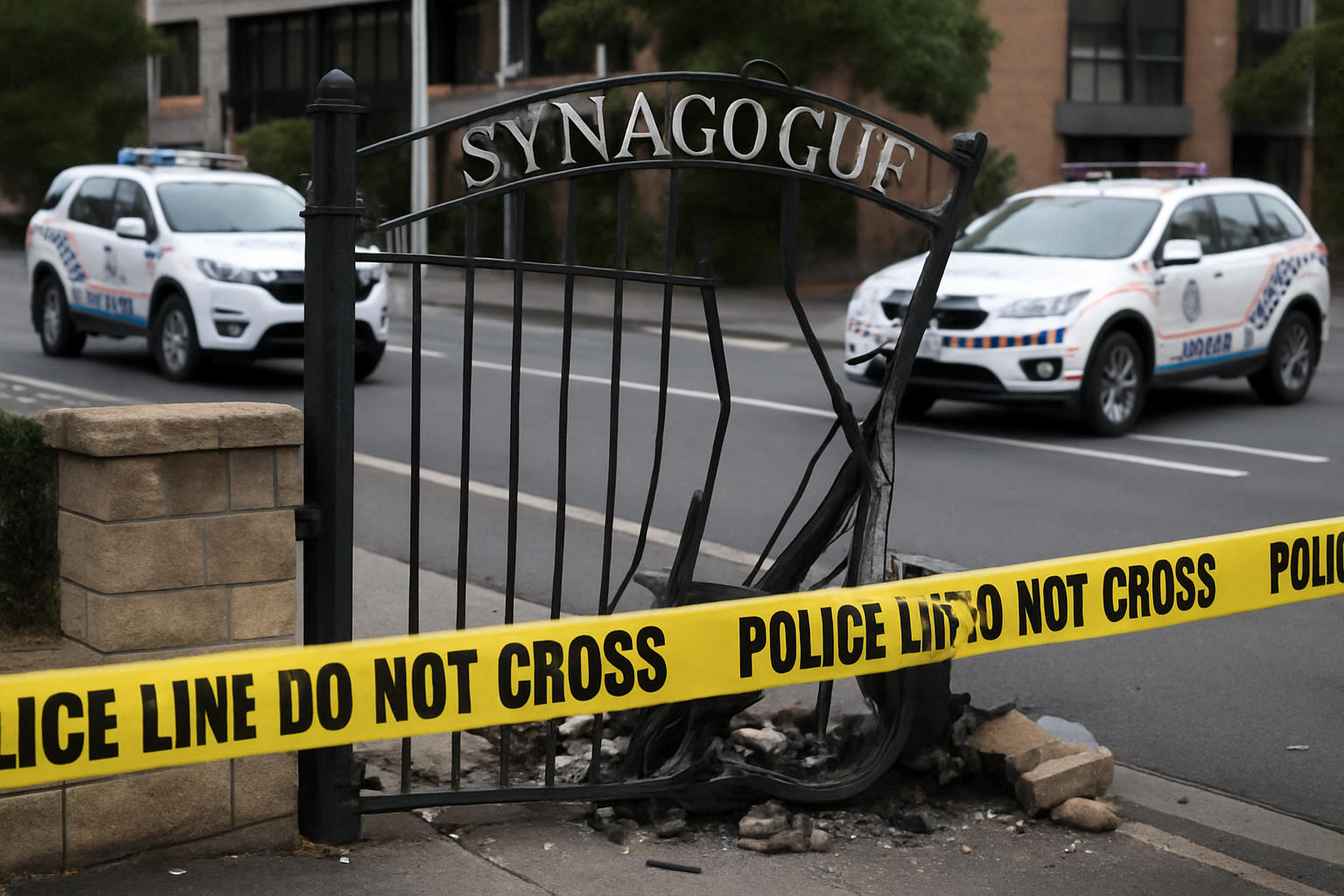
A 32-year-old man from Sunnybank has been charged with multiple offences, including hate crime charges, after allegedly ramming the gates of Brisbane Synagogue with a Toyota Hilux utility vehicle in what Queensland Police have described as a "targeted attack."
The incident occurred on Thursday night at the Brisbane Synagogue on Margaret Street in the city center, where the suspect allegedly drove the black utility vehicle directly at the synagogue gates, knocking them down before fleeing the scene. The attack has sent shockwaves through Brisbane's Jewish community, already on high alert following recent antisemitic incidents across Australia.
Police Response and Investigation
Queensland Police were quick to respond to the incident, launching an immediate investigation that led to the arrest of the 32-year-old Sunnybank man. Authorities have confirmed that the man has been charged with multiple offences related to the ramming attack.
Significantly, police have pointed to "other factors" behind the targeted attack and have made it clear that while the incident was deliberate and targeted, it is not being classified as an act of terrorism. This distinction has important legal implications for the charges brought against the suspect and the resources allocated to the investigation.
"Police have charged a 32-year-old Sunnybank man with multiple offences following the targeted attack on the synagogue gates."
— Queensland Police Statement
The suspect has been charged with hate crime offences, marking a serious escalation in how authorities are treating attacks on religious institutions. The hate crime designation reflects the targeted nature of the attack against the Jewish community and carries significant legal penalties.
Context of Rising Antisemitic Incidents
This latest incident comes amid heightened tensions and security concerns for Jewish communities across Australia. The attack follows the devastating December 14, 2025, Bondi Beach Hanukkah festival antisemitic attack that claimed 15 lives, marking one of the deadliest antisemitic incidents in Australian history.
The Bondi attack prompted unprecedented security measures for Jewish institutions nationwide, with synagogues, schools, and community centers implementing enhanced security protocols. The elevated threat level was further highlighted during Israeli President Isaac Herzog's controversial visit to Australia in February 2026, which required extraordinary police powers under the Major Events Act due to security concerns.
During Herzog's visit, violent protests erupted in Sydney, resulting in 27 arrests and 9 formal charges after pro-Palestinian protesters clashed with NSW Police. The violence prompted Prime Minister Anthony Albanese to express being "devastated" by the events, while defending police actions during the diplomatic visit designed to support the Jewish community following the Bondi attack.
Community Impact and Security Measures
The Brisbane Synagogue ramming represents a concerning pattern of targeted attacks on Jewish religious institutions across Australia. The Margaret Street synagogue serves as a central place of worship for Brisbane's Jewish community, and the deliberate targeting of its entrance gates has been interpreted as an attack on the entire community's sense of security.
Local Jewish community leaders have expressed serious concerns about the escalating nature of antisemitic incidents, particularly those involving vehicles as weapons. The use of a utility vehicle to ram synagogue gates echoes similar attack methods used in other countries and represents a calculated attempt to cause maximum property damage and psychological impact.
Security experts note that the timing and method of the attack suggest premeditation, with the perpetrator specifically choosing to target the synagogue's entrance gates—a symbolic barrier between the sacred space and the outside world. The destruction of these gates carries deep symbolic meaning within Jewish communities, representing an attempt to breach the sanctity and security of the religious space.
Legal Framework and Hate Crime Charges
The decision to charge the suspect with hate crime offences marks a significant development in how Australian authorities are responding to attacks on religious minorities. Hate crime legislation provides enhanced penalties for offences motivated by prejudice against particular groups, including religious communities.
Under Australian law, hate crime charges require prosecutors to demonstrate that the offence was motivated by bias, prejudice, or hatred toward a particular group. In this case, the targeted nature of the synagogue attack, combined with the deliberate ramming of religious property, provides strong evidence for the hate crime designation.
The multiple charges faced by the 32-year-old suspect likely include property damage, dangerous operation of a motor vehicle, and hate crime-specific offences. The combination of these charges reflects the serious view authorities are taking of attacks on religious institutions and their commitment to protecting vulnerable communities.
Broader Pattern of Antisemitic Violence
The Brisbane synagogue ramming occurs within a broader international context of rising antisemitic incidents targeting Jewish institutions. Similar vehicle ramming attacks have been reported in other countries, suggesting a concerning trend in the methods used to target Jewish communities.
Australian security agencies have been monitoring this pattern closely, particularly following major international conflicts that often correlate with spikes in antisemitic incidents domestically. The ongoing tensions in the Middle East have contributed to heightened concerns about the safety of Jewish communities worldwide, including in Australia.
The incident also highlights the vulnerability of religious institutions to targeted attacks, despite security measures. Many synagogues and Jewish community centers across Australia have invested heavily in security infrastructure following previous incidents, but the use of vehicles as weapons presents unique challenges for traditional security approaches.
Investigation Ongoing
Queensland Police continue their investigation into the circumstances surrounding the attack, including examining the suspect's background, motivations, and any potential connections to extremist ideologies or groups. The investigation will likely include analysis of social media activity, associations, and any history of antisemitic behavior or statements.
Authorities are also reviewing security footage from the area around Margaret Street to reconstruct the events leading up to and following the ramming attack. This evidence will be crucial in building a comprehensive case against the suspect and understanding the full scope of the planned attack.
The police investigation extends beyond the immediate incident to examine whether the suspect acted alone or as part of a broader network of individuals with similar antisemitic motivations. This analysis is particularly important given the targeted nature of the attack and its placement within the broader pattern of antisemitic incidents across Australia.
Community Response and Support
The Brisbane Jewish community has rallied together in response to the attack, with community leaders emphasizing the importance of continued vigilance and mutual support. Synagogue officials are working with law enforcement to assess damage to the facility and implement any additional security measures necessary to ensure the safety of congregants.
The incident has also prompted expressions of solidarity from interfaith groups and community leaders across Brisbane, reflecting a broader commitment to protecting religious freedom and combating hatred in all its forms. This community response demonstrates the importance of coalition-building in addressing antisemitism and other forms of religious prejudice.
Mental health support services have been made available to community members affected by the attack, recognizing the psychological impact of targeted violence on religious minorities. The provision of these services reflects growing understanding of the trauma experienced by communities when their sacred spaces are attacked.
As the legal proceedings against the 32-year-old suspect move forward, the Brisbane Jewish community continues to grapple with questions of security, belonging, and safety in contemporary Australia. The incident serves as a stark reminder of the ongoing challenges faced by religious minorities and the importance of sustained efforts to combat hatred and protect vulnerable communities.