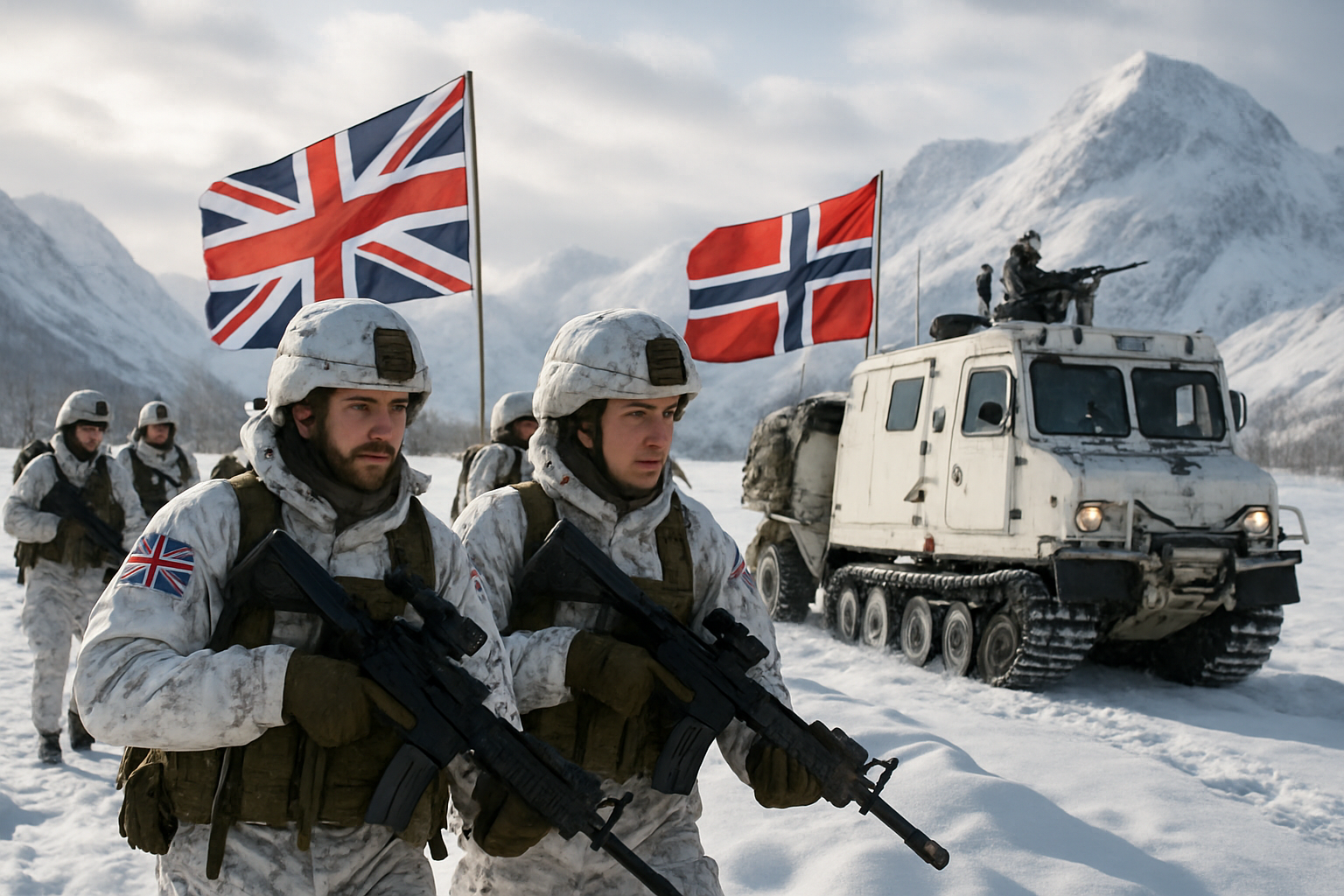
Britain has announced plans to double its military presence in Norway from 1,000 to 2,000 soldiers over the next three years, marking a significant escalation in Arctic defense cooperation as part of NATO's enhanced Arctic Sentry strategy.
The announcement comes as British Defence Secretary John Healey visits British troops at Camp Viking in northern Norway, where he will formally unveil the enhanced deployment plans. The military expansion forms a cornerstone of Britain's sharpened Arctic strategy, responding to what Healey describes as the greatest threat to Arctic regions since the Cold War.
Enhanced NATO Arctic Sentry Role
British military forces are set to play a central role in NATO's developing Arctic Sentry force, with military planning already underway according to the UK Defence Ministry. The Arctic Sentry initiative represents NATO's most comprehensive approach to Arctic defense coordination in decades, acknowledging the region's growing strategic importance.
"Britain is stepping up protection of the Arctic and northern regions by doubling the number of soldiers we have in Norway and increasing joint exercises with NATO allies," Healey stated in the official announcement. The enhanced presence will build upon existing UK-Norway defense partnerships that have evolved significantly since Russia's 2022 invasion of Ukraine.
Russian Threat Assessment
Defence Secretary Healey emphasized that Russia poses the most significant threat to Arctic security witnessed since the Cold War era. British intelligence assessments indicate Moscow is rapidly re-establishing military presence throughout the Arctic region, including reopening Soviet-era military installations.
"We are seeing Putin rapidly re-establishing military presence in the region, including reopening old Cold War bases."
— John Healey, British Defence Secretary
This assessment aligns with broader NATO intelligence suggesting Russia has systematically expanded its Arctic capabilities over recent years, including advanced missile systems, nuclear submarines, and extensive infrastructure development across its northern territories.
Strategic Arctic Importance
The Arctic region has gained unprecedented strategic significance due to climate change opening new shipping routes and exposing vast natural resource deposits. As ice coverage diminishes, the Arctic presents both opportunities and vulnerabilities that major powers are racing to secure.
Norway's position provides critical access to the North Atlantic and Arctic Ocean shipping lanes, while its extensive coastline offers strategic positioning for monitoring Russian naval activities. The enhanced British presence will strengthen NATO's ability to project power across these vital waterways.
Camp Viking and Northern Norway Operations
British forces have maintained a presence at Camp Viking in northern Norway as part of long-standing bilateral defense agreements. The facility serves as a training ground for Arctic warfare techniques and joint operations between British and Norwegian forces.
The planned expansion will see British personnel integrated more deeply into Norwegian defense infrastructure, with enhanced winter warfare training, Arctic survival techniques, and cold weather equipment testing. This collaboration builds upon Norway's world-leading expertise in Arctic military operations.
Broader NATO Coordination
The British announcement coincides with Finland's announcement that it intends to contribute to NATO's Arctic Sentry planning, demonstrating alliance-wide commitment to Arctic security. Finland's participation is particularly significant given its 830-mile border with Russia and recent NATO membership.
The coordinated approach reflects NATO's recognition that Arctic security requires multinational cooperation rather than bilateral arrangements. The Arctic Sentry force is expected to include contributions from multiple allied nations, creating an integrated defense network across the region.
Historical Context and Evolution
British-Norwegian defense cooperation has deep historical roots dating to World War II, when British forces played crucial roles in Norwegian resistance operations. The modern partnership has evolved through NATO membership and shared concerns about Russian activities in the High North.
Previous British deployments to Norway focused primarily on training and exercises. The current expansion represents a shift toward permanent enhanced presence, reflecting the changed security environment following Russia's full-scale invasion of Ukraine.
Economic and Logistical Implications
Doubling troop presence requires significant investment in Arctic-capable equipment, specialized training, and logistical support systems. British forces must adapt to extreme weather conditions, limited daylight during winter months, and challenging terrain.
The deployment will boost local Norwegian economies in northern regions while strengthening defense industrial cooperation between the two nations. Joint procurement of Arctic equipment and shared research into cold weather technologies are expected to expand.
International Response and Implications
The announcement signals broader Western commitment to Arctic security amid concerns about Russian expansionism. Combined with enhanced U.S. presence in the region and increased Nordic defense cooperation, Britain's expansion contributes to a comprehensive deterrent posture.
Russia is likely to view the enhanced British presence as provocative, potentially leading to increased military activities in adjacent Arctic territories. However, NATO officials emphasize the defensive nature of Arctic Sentry planning and commitment to avoiding escalation.
Future Arctic Security Architecture
The British expansion forms part of a evolving Arctic security framework that includes enhanced intelligence sharing, joint training programs, and coordinated response capabilities. This architecture must balance deterrent effects with diplomatic stability in a region of growing international competition.
As Arctic ice continues receding and new territories become accessible, the region's strategic importance will only increase. The enhanced British-Norwegian partnership provides a foundation for long-term security cooperation that can adapt to changing environmental and geopolitical conditions.
The success of this enhanced deployment will serve as a model for other NATO allies considering increased Arctic commitments, potentially reshaping northern European security dynamics for decades to come.