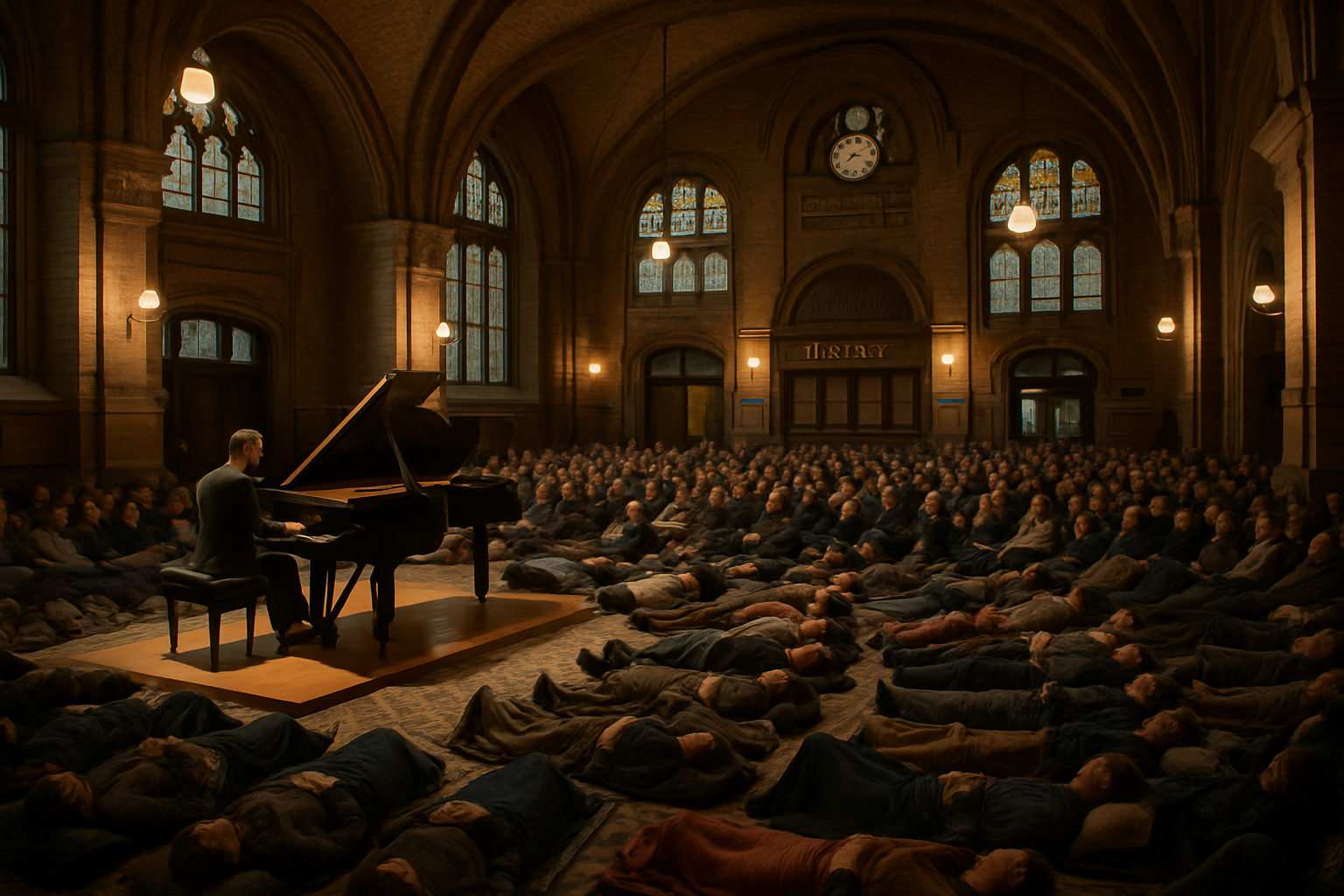
In a groundbreaking fusion of historic architecture and innovative musical presentation, pianist Mattias Devriendt transformed Bruges railway station's historic ticketing hall into an extraordinary concert venue on Sunday evening, where 350 music enthusiasts experienced classical music in an entirely new way – lying down.
The unique "lie-down concert" concept represents a revolutionary approach to classical music performance, challenging traditional concert hall conventions while celebrating the architectural beauty of Belgium's railway heritage. The event, held in the station's historic ticketing hall, created an intimate atmosphere where audiences could fully immerse themselves in the musical experience while reclining comfortably on the venue's original flooring.
A New Paradigm for Classical Music Experience
Devriendt's innovative approach reflects broader trends in contemporary classical music, where artists are increasingly experimenting with non-traditional venues and audience engagement methods. The lie-down format allows listeners to focus entirely on the musical experience without the physical constraints of conventional seating, creating what many describe as a more meditative and immersive encounter with classical repertoire.
The choice of venue – Bruges railway station's historic ticketing hall – adds profound cultural significance to the performance. Built during Belgium's golden age of railway development, the hall features distinctive architectural elements including vaulted ceilings, ornate stonework, and large windows that create exceptional acoustic properties ideal for piano performance.
Belgium's Rich Classical Music Renaissance
This innovative concert occurs within the context of what cultural observers have termed the "February 2026 Cultural Renaissance," a period of unprecedented international artistic collaboration and community-centered cultural programming across Europe. Belgium has emerged as a significant contributor to this movement, with venues increasingly serving dual purposes as both transportation infrastructure and cultural spaces.
The success of venue-crossing performances like Devriendt's reflects Belgium's broader commitment to making classical music more accessible while preserving the country's rich musical heritage. Similar innovations have been documented across Europe, where historic buildings are being reimagined as intimate performance spaces that bridge the gap between high culture and community engagement.
Architectural Heritage Meets Contemporary Performance
Bruges railway station, with its distinctive Flemish architectural style, provided the perfect backdrop for this experimental concert format. The historic ticketing hall's design elements – including its carefully crafted acoustics originally intended for public announcements – proved remarkably well-suited to piano performance, creating natural sound distribution that enhanced rather than competed with Devriendt's playing.
The building's heritage status adds cultural weight to the performance, transforming a functional transportation space into a venue where Belgium's musical traditions can be experienced in new ways. This type of adaptive cultural programming demonstrates how historic infrastructure can serve contemporary artistic needs while maintaining its primary function.
Community Response and Cultural Impact
The overwhelming attendance of 350 music lovers speaks to growing public appetite for innovative cultural experiences that break from traditional concert hall formality. Audience members reported feeling more connected to both the music and the historic space, with many describing the experience as transformative compared to conventional seated concerts.
Local cultural organizations have taken note of the event's success, with discussions already underway about establishing regular programming that combines Bruges' architectural heritage with contemporary performance innovation. The concert has been cited as a model for how Belgian cities can leverage their historic infrastructure to create unique cultural offerings that attract both local residents and cultural tourists.
Broader Implications for Classical Music
Devriendt's lie-down concert contributes to ongoing conversations about the democratization of classical music, making the genre more approachable while maintaining artistic excellence. By removing formal barriers – both physical and cultural – the format invites broader community participation in classical music appreciation.
The success of this innovative approach may influence other European cities to explore similar programming, potentially creating a network of heritage venues that host contemporary classical music events. This trend aligns with broader European Union initiatives promoting cultural heritage as a foundation for modern artistic expression.
Future of Heritage Venue Programming
The Bruges railway station concert establishes important precedents for future cultural programming in transportation infrastructure. As European cities grapple with balancing heritage preservation with contemporary cultural needs, events like Devriendt's demonstrate successful models for adaptive programming that honors historic spaces while serving modern communities.
Cultural analysts suggest that this type of venue flexibility may become increasingly important as cities seek to maximize the cultural potential of their architectural heritage. The success of the lie-down concert format specifically may inspire similar experiments in other historic railway stations across Belgium and beyond, creating a new category of immersive classical music experiences.
The revolutionary concert by Mattias Devriendt represents more than an innovative performance format – it embodies Belgium's evolving approach to cultural programming that honors the past while embracing creative possibilities for the future. As cities worldwide seek to revitalize cultural engagement, the Bruges railway station concert offers a compelling template for how architectural heritage can serve as the foundation for transformative artistic experiences.