Two nations on opposite sides of the globe are spearheading ambitious infrastructure development projects worth nearly $900 million combined, with Brunei unveiling a $480 million strategic investment program and Guyana advancing a $422 million power grid expansion that positions both countries as regional leaders in economic transformation.
The coordinated announcements from Bandar Seri Begawan and Georgetown represent a significant milestone in the global infrastructure renaissance, demonstrating how emerging economies are leveraging strategic investments to build sustainable prosperity foundations during unprecedented international development momentum.
Brunei's $480 Million Strategic Vision
The Brunei government's fiscal year 2026/27 budget allocation represents the most comprehensive infrastructure development program in the nation's recent history. The $480 million investment forms part of the broader 12th National Development Plan (RKN12), a $4 billion roadmap comprising 305 projects through 2029, designed to support Brunei's long-term economic diversification goals beyond traditional oil dependencies.
Following the budget announcement at the Legislative Council, Priority 1 initiatives focus on fiscal stability and governance with a $22 million allocation targeting the development of Bru-HIMS 2.0 and a new national center for vehicle inspection and automobile standards. The comprehensive approach includes funding for aerial imaging and 3D mapping for geospatial surveying, coastal protection measures, and strategic planning studies.
"This represents our commitment to building infrastructure that serves both immediate economic needs and long-term sustainable development objectives."
— Brunei Government Officials, RKN12 Implementation Team
The program demonstrates sophisticated project management evolution, incorporating lessons learned from global infrastructure best practices while addressing Brunei's specific geographic and economic requirements. Projects emphasize technology integration from the design phase, including real-time monitoring, predictive maintenance systems, and environmental optimization protocols that align with climate adaptation requirements.
Guyana's Power Grid Revolution
Simultaneously, Guyana Power and Light (GPL) Inc is undertaking its most ambitious infrastructure transformation with a US$422 million project to expand and upgrade the country's transmission and distribution networks. The initiative centers on constructing new 69- and 230-kilovolt transmission lines from the newly constructed Goedverwagting Substation on the East Coast of Demerara extending all the way to Berbice.
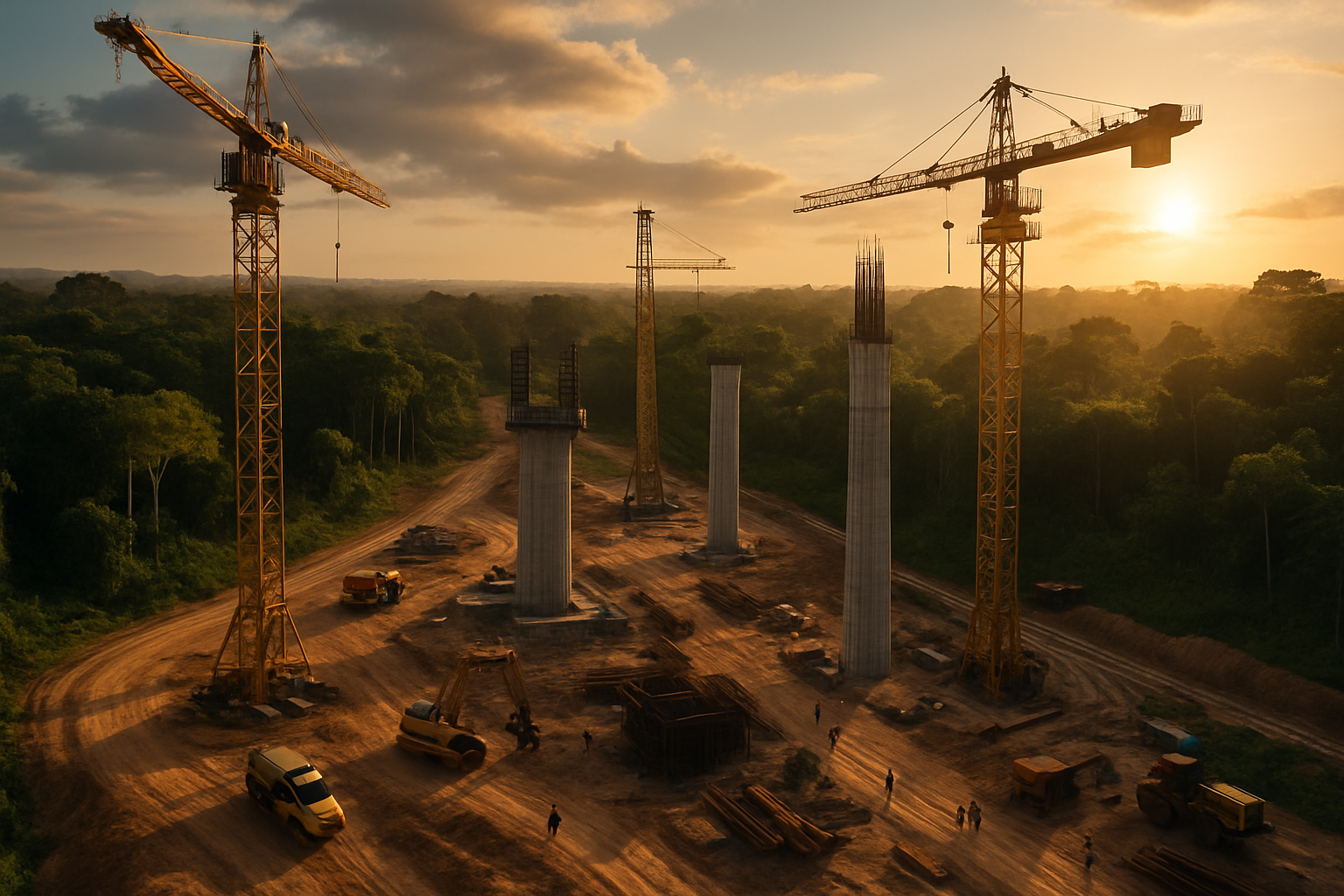
The infrastructure development serves a crucial role in facilitating power distribution from the highly anticipated Gas-to-Energy (GtE) project to the national grid, representing a fundamental shift in Guyana's energy landscape. Foundation works are currently 70% complete, with roads being built specifically for new electricity corridors to support the massive undertaking.
This expansion builds on Guyana's remarkable renewable energy success, including recent hydropower achievements that have saved the government over 17,000 drums of fossil fuel through the Moco Moco and Kumu facilities in Region Nine. The broader context reveals GPL's forecast of an extraordinary 600% electricity demand surge by 2030, from the current 236 MW peak to 1,650 MW, reflecting rapid economic transformation driven by oil discoveries and renewable energy investments.
Regional Integration and Economic Impact
Both projects demonstrate the sophisticated evolution of infrastructure development from simple construction toward comprehensive systems supporting economic development, environmental protection, and social connectivity simultaneously. The initiatives align with broader regional integration objectives, including ASEAN connectivity goals in Southeast Asia and Caribbean energy cooperation frameworks.
Economic multiplier effects extend far beyond construction employment. The Brunei program creates permanent opportunities in digital governance, environmental monitoring, and international standards compliance. Guyana's power grid expansion enables industrial development, enhances agricultural productivity through reliable irrigation systems, and supports the growth of digital services that require stable electricity supplies.
Global Context and Innovation
These developments occur within an unprecedented $570+ billion global infrastructure surge throughout 2026, representing coordinated international recognition that modern transportation and energy networks serve as strategic foundations for economic competitiveness, climate adaptation, and international cooperation rather than simple physical assets.
The projects incorporate cutting-edge technology integration as standard requirements rather than optional enhancements. Climate adaptation measures include enhanced drainage systems, weather-resistant materials, backup power capabilities, and renewable energy integration designed for future rather than historical climate conditions. This approach reflects lessons learned from global extreme weather events and the recognition that infrastructure must be built to withstand accelerating climate challenges.
International cooperation frameworks support both initiatives through technical assistance, knowledge sharing, and coordinated procurement strategies. Brunei benefits from ASEAN development protocols and bilateral partnerships, while Guyana leverages Caribbean cooperation mechanisms and international development financing from institutions recognizing the strategic importance of energy infrastructure in small island developing states.
Technology and Sustainability Integration
Modern infrastructure projects demonstrate sophisticated synthesis of technological advancement with environmental awareness. Both nations are implementing digital monitoring systems, predictive maintenance protocols, and automated efficiency optimization from the project design phase rather than retrofitting these capabilities later.
The semiconductor supply crisis affecting global infrastructure development has prompted innovative approaches in both countries. Despite memory chip shortages driving sixfold price increases until 2027 when new fabrication facilities come online, engineers are developing alternative solutions including edge computing architectures and distributed processing systems that make networks more resilient and adaptable.
Environmental sustainability has evolved from an optional consideration to a fundamental requirement for project approval and financing. Both Brunei and Guyana incorporate comprehensive environmental impact assessments, adaptation planning, and ecosystem service valuation in their infrastructure development strategies.
Strategic Significance and Future Implications
The March 2026 infrastructure announcements represent a watershed moment establishing precedents that will influence development strategies worldwide for decades ahead. The convergence of technological advancement, environmental awareness, and international cooperation is creating new development models that prioritize comprehensive sustainability alongside economic growth.
Success factors consistently identified across both projects include sustained political commitment, transparent governance frameworks, comprehensive stakeholder engagement, and adaptive management capabilities that can respond to changing technical and environmental conditions. International cooperation involving technical assistance, knowledge sharing, and coordinated procurement has proven essential for managing supply chain challenges and maintaining quality control standards.
"These projects demonstrate that strategic infrastructure investment serves as the foundation for sustainable economic transformation, connecting immediate development needs with long-term prosperity objectives."
— Regional Development Analysts, Infrastructure Assessment Team
Implementation challenges remain universal across infrastructure projects globally, including material cost inflation, skilled labor shortages, environmental compliance requirements, and coordination complexity. However, the sophisticated planning and international cooperation frameworks supporting both initiatives provide templates for addressing these challenges through innovative solutions and adaptive management approaches.
Looking Forward: Templates for Global Development
The Brunei and Guyana infrastructure initiatives establish important templates for 21st-century development that balance rapid modernization requirements with environmental sustainability mandates, national development priorities with regional integration objectives, and technological advancement with authentic community engagement.
Both projects represent fundamental choices between transformative infrastructure adaptation and reactive crisis management approaches. Their success will determine whether societies can develop the adaptive capacity necessary for thriving in an interconnected, climate-challenged world through sophisticated planning that serves immediate community needs while building sustainable prosperity foundations for decades ahead.
As these ambitious infrastructure programs progress through 2026, they will provide crucial insights into effective strategies for balancing economic development with environmental stewardship, demonstrating whether strategic investment in modern infrastructure can successfully support both immediate growth objectives and long-term sustainability commitments essential for regional prosperity in an rapidly changing global context.