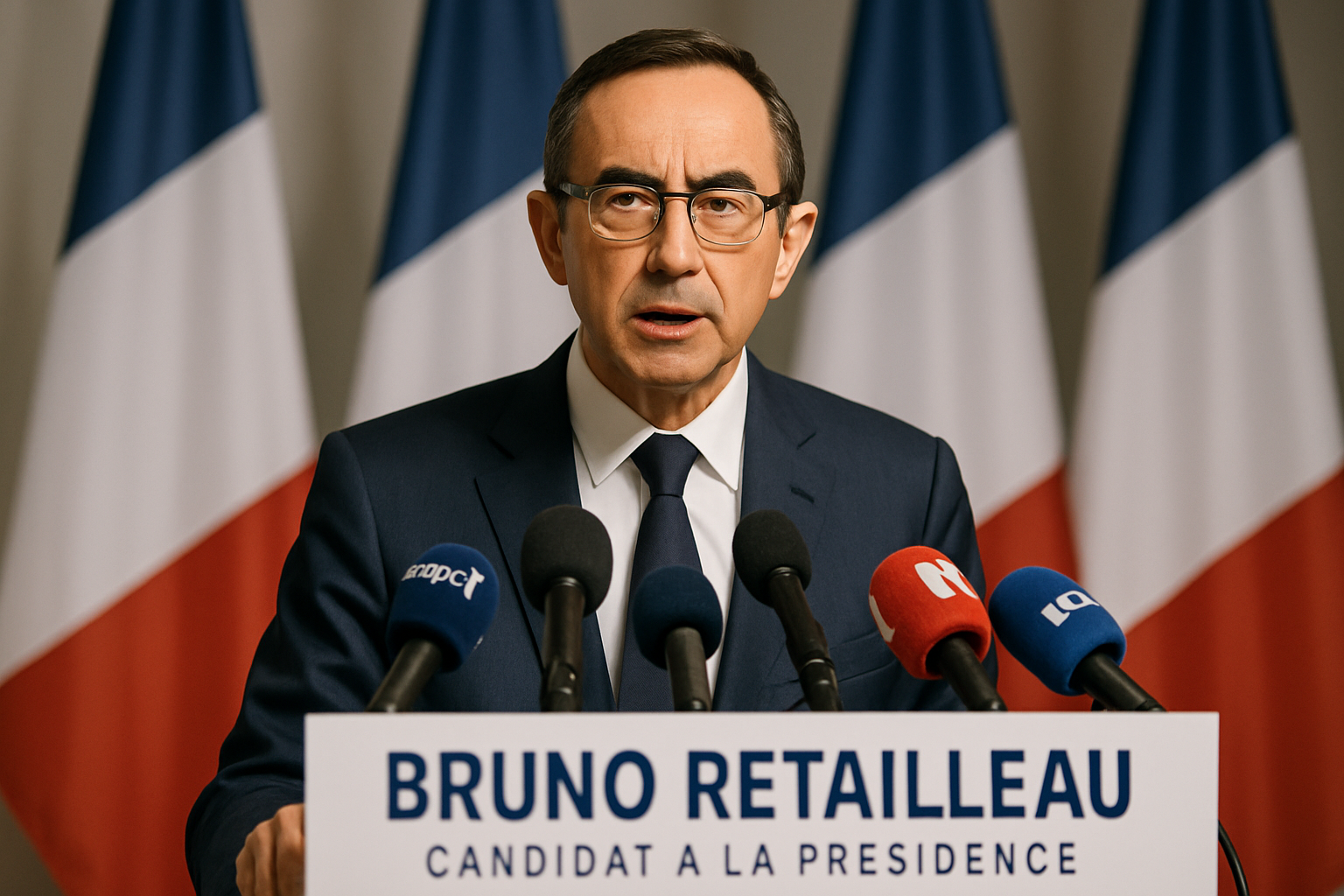
Bruno Retailleau, the 62-year-old leader of France's center-right Les Républicains party and former Interior Minister, officially announced his candidacy for the 2027 presidential election on Thursday, positioning himself as a hardline conservative alternative with promises to "drastically reduce immigration" through direct referendums.
The announcement, made through a message to his parliamentary colleagues, comes at a critical moment for French politics as the country grapples with deep political divisions and mounting concerns over immigration, law and order, and what Retailleau calls the "excesses of the rule of law."
Strategic Timing and Political Context
Retailleau's decision to enter the race follows what he described as "deep reflection" about the future direction of France's conservative movement. In his message to party members, he emphasized that "the time has come for his political family to show the French people a new path," signaling his intention to reshape the traditional right's approach to governance.
The timing of his announcement is particularly significant given the current political landscape, where far-right leader Marine Le Pen faces potential disqualification from the 2027 race due to ongoing legal challenges related to European Parliament fraud allegations. If Le Pen is ultimately barred from running, Retailleau could emerge as the primary standard-bearer for right-wing voters seeking an alternative to President Emmanuel Macron's centrist approach.
Immigration and Law and Order Platform
Central to Retailleau's campaign platform is a hardline stance on immigration that goes beyond traditional conservative positions. He has promised to "drastically reduce immigration" through a series of direct referendums, bypassing the traditional legislative process to appeal directly to French voters on contentious issues.
This approach reflects Retailleau's broader critique of what he terms the "excesses of the rule of law," positioning himself as a defender of popular sovereignty against what he characterizes as judicial overreach and administrative obstruction. His referendum strategy represents a significant departure from conventional French political practice, potentially reshaping how major policy decisions are made.
"The challenge is not just to govern differently, but to restore the French people's confidence in their ability to shape their own destiny through direct democracy."
— Bruno Retailleau, announcing his presidential candidacy
Political Background and Experience
Retailleau brings considerable government experience to his presidential bid, having served as Interior Minister during a particularly turbulent period in French politics. His tenure was marked by his tough approach to law enforcement and his advocacy for stricter immigration controls, positions that have defined his political brand within Les Républicains.
As party leader, Retailleau has worked to distinguish Les Républicains from both Macron's centrist coalition and Le Pen's far-right National Rally, seeking to occupy what he sees as the authentic conservative space in French politics. His leadership style has been characterized by ideological clarity and a willingness to take controversial positions on sensitive issues.
The 2027 Electoral Landscape
Retailleau's entry into the presidential race significantly alters the dynamics of the 2027 election. With Macron constitutionally barred from seeking a third consecutive term, the field is wide open for candidates across the political spectrum to present their vision for France's future.
The potential absence of Marine Le Pen from the ballot could create a substantial opening for Retailleau to consolidate right-wing support, particularly among voters who have become disillusioned with mainstream politics but remain hesitant to support the far-right. His combination of government experience and ideological positioning could prove attractive to these voters.
Challenges Ahead
However, Retailleau faces significant challenges in building a winning coalition. Les Républicains has struggled in recent elections, failing to reach the second round of the presidential race since 2007. The party must overcome its image as representing the political establishment while simultaneously appealing to voters seeking change.
The referendum strategy, while potentially popular with certain segments of the electorate, also carries risks. Critics argue that complex policy issues may not be suitable for simple yes-or-no votes, and there are questions about the constitutional feasibility of implementing such an approach on a large scale.
International Implications
Retailleau's candidacy has drawn attention beyond France's borders, with international media noting the potential implications of his hardline positions for European Union policy and international relations. His approach to immigration could influence broader European debates about migration, border security, and national sovereignty.
The announcement has been covered extensively across European media, reflecting the broader significance of French presidential elections for the direction of European integration and cooperation. Albania's Vizion Plus reported on the development, highlighting the regional interest in France's political evolution.
Campaign Strategy and Organization
Sources close to Retailleau's campaign indicate that his strategy will focus on presenting himself as the candidate of "responsible conservatism," distinguishing his approach from both the perceived excesses of the far-right and what he characterizes as the failures of centrist governance.
The campaign is expected to emphasize law and order, traditional values, and national sovereignty while attempting to present a governing alternative that appeals to mainstream conservative voters. This balancing act will be crucial to his electoral prospects, as he seeks to energize his base while avoiding alienating moderate voters who might be essential to victory.
Looking Forward
As the 2027 presidential campaign begins to take shape, Retailleau's entry marks the beginning of what promises to be a highly competitive and consequential election. His success in articulating a conservative vision that resonates with French voters while maintaining democratic legitimacy will be closely watched by political observers across Europe.
The coming months will test whether Retailleau can translate his party leadership and government experience into a compelling presidential campaign capable of challenging for the Élysée Palace. His referendum-based approach to governance represents a significant gamble that could either revolutionize French politics or limit his appeal to mainstream voters.
With France facing multiple domestic and international challenges, from economic pressures to security concerns, the 2027 election will likely turn on which candidate can most convincingly present a path forward for the nation. Retailleau's entry ensures that conservative voters will have a clear alternative as they consider France's future direction.