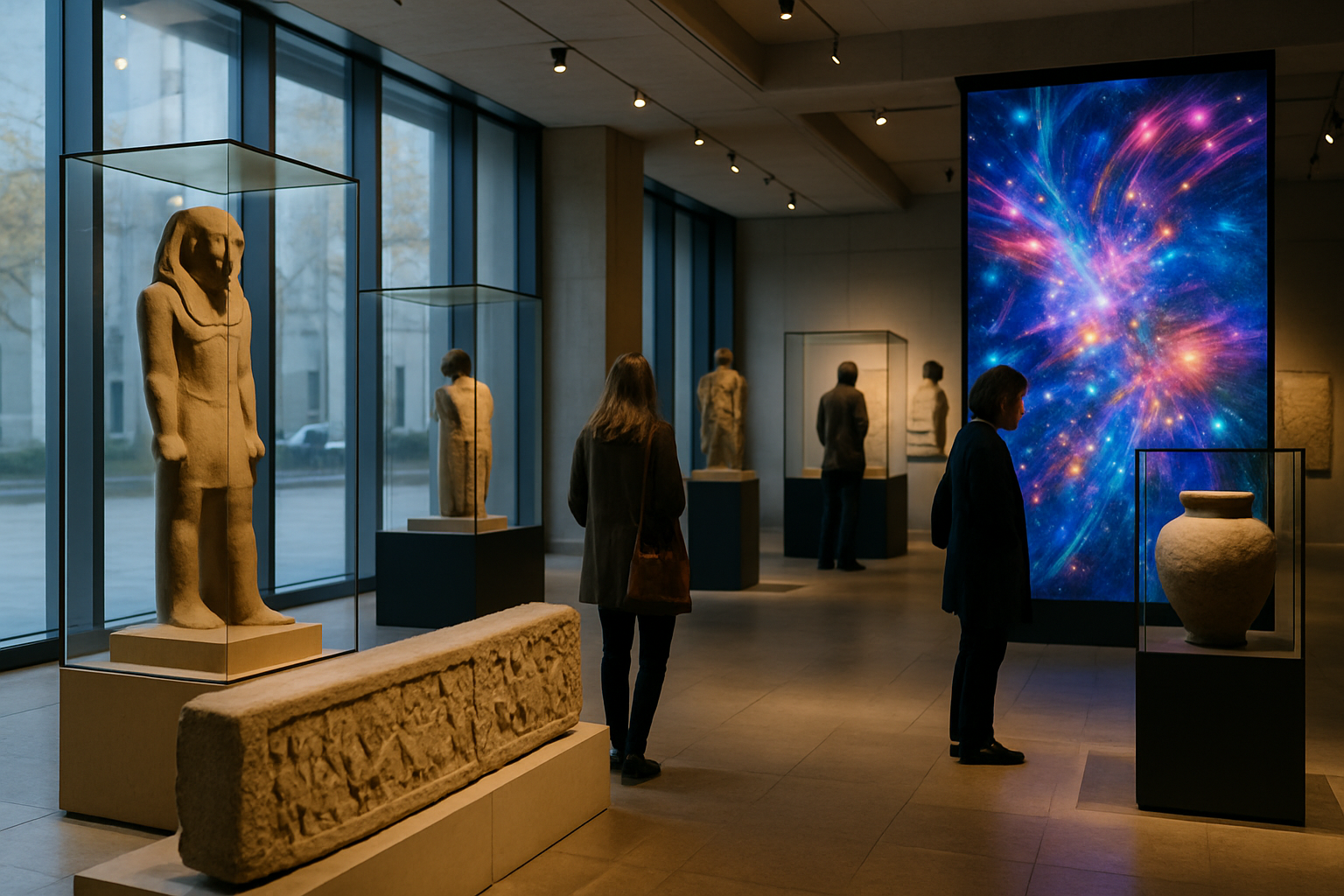
Brussels emerges as a critical destination for museum visitors in 2026 as the new KANAL-Centre Pompidou Museum earns international recognition, while Mexico intensifies its fight against cultural trafficking by demanding the return of 195 prehispanic artifacts being sold illegally online.
The British Broadcasting Corporation has designated the KANAL-Centre Pompidou Museum as one of six most important museum openings worldwide this year, positioning Brussels as the sole European representative on this prestigious list. The museum's transformation of a former Citroën car assembly plant represents what the BBC calls "a textbook example of architectural daring," demonstrating how industrial heritage can be reimagined for cultural purposes.
Industrial Heritage Meets Contemporary Art
The KANAL-Centre Pompidou project exemplifies a growing trend in museum development where historical industrial spaces are converted into cutting-edge cultural institutions. The conversion preserves the architectural integrity of the original car assembly plant while creating modern exhibition spaces that can accommodate both historical artifacts and contemporary installations.
This approach aligns with broader patterns documented across the February 2026 Cultural Renaissance, where institutions worldwide are embracing technology enhancement rather than replacement of traditional preservation methods. The synthesis of innovation with tradition characterizes successful contemporary heritage strategies being implemented globally.
Mexico's Battle Against Cultural Trafficking
While Brussels celebrates new cultural openings, Mexico faces ongoing challenges in protecting its archaeological patrimony. The Mexican government, through its Secretary of Culture, has rejected the sale of 195 prehispanic artifacts offered on eBay by a seller in Orlando, Florida.
Following specialist review of the online listings, Mexico's National Institute of Anthropology and History (INAH) determined the pieces represent Mexican cultural and archaeological patrimony requiring repatriation. The case highlights the persistent challenge of digital platforms being used for illegal artifact trafficking, with sellers exploiting international jurisdictional complexities.
"Mi patrimonio no se vende" (My heritage is not for sale)
— Mexican Secretary of Culture Statement
The Mexican response represents part of a coordinated global movement toward cultural restitution and heritage protection that has accelerated throughout 2026. This mirrors similar successful repatriation efforts, including the Netherlands' voluntary return of a 3,500-year-old Egyptian sculpture and France's official return of a sacred Djidji Ayôkwé talking drum to Ivory Coast.
Global Context of Cultural Renaissance
Both developments occur within the documented "February 2026 Cultural Renaissance," characterized by unprecedented international coordination in cultural preservation activities. Success factors include technological innovation serving as enhancement tools for traditional practices, meaningful international cooperation, authentic community engagement, and sustainable economic viability through cultural tourism and educational partnerships.
The contrast between Brussels' celebration of new cultural infrastructure and Mexico's defensive action against trafficking illustrates the dual nature of contemporary heritage challenges. While some nations can invest in ambitious new cultural projects, others must focus resources on protecting existing patrimony from exploitation.
Belgium's achievement with KANAL-Centre Pompidou demonstrates how European Union cultural policies support innovative museum development. The project benefits from stable funding frameworks, international partnerships with institutions like the Centre Pompidou in Paris, and sophisticated cultural tourism infrastructure that can sustain ambitious programming.
Technology's Role in Heritage Protection
The Mexico case reveals both technology's threats and opportunities for cultural heritage. While eBay's platform enables illegal artifact sales, digital documentation and international cooperation databases are helping authorities track stolen cultural property more effectively.
Advanced chemical analysis now enables precise dating and authentication, while international databases help track stolen artifacts across borders. However, experts emphasize that technology must enhance rather than replace traditional preservation knowledge from indigenous communities and established cultural institutions.
The KANAL-Centre Pompidou Museum incorporates sophisticated climate control systems, digital exhibition technologies, and advanced security measures that protect artifacts while maintaining public accessibility. These technological integrations represent the mature evolution of museum practices where innovation amplifies rather than competes with authentic cultural expression.
Economic Dimensions of Cultural Heritage
Cultural heritage preservation generates significant economic multiplier effects through international tourism, academic partnerships, and creative industry employment. Brussels' new museum is expected to attract substantial international visitors, contributing to Belgium's position as a cultural tourism destination.
Mexico's anti-trafficking efforts, while defensive, also serve economic interests by preserving cultural assets that generate tourism revenue and maintain the country's international cultural reputation. The loss of archaeological artifacts represents not only cultural impoverishment but also economic damage to communities that depend on heritage tourism.
The broader February 2026 Cultural Renaissance demonstrates that nations increasingly recognize culture as strategic infrastructure equivalent to transportation, communication, and healthcare in terms of community development and international competitiveness.
International Cooperation Frameworks
UNESCO and other international organizations are developing comprehensive frameworks for multi-threat heritage protection, including rapid response protocols for climate disasters, international databases for tracking stolen artifacts, and voluntary repatriation programs.
The success of institutions like KANAL-Centre Pompidou depends partly on international partnerships that enable shared expertise, coordinated programming, and resource pooling. Similarly, Mexico's efforts to combat artifact trafficking require international cooperation in legal frameworks, enforcement mechanisms, and digital platform regulation.
Belgium's success with the KANAL museum and Mexico's artifact recovery efforts both contribute to establishing precedents for 21st-century cultural stewardship that balance innovation with tradition, local authenticity with global cooperation, and economic viability with cultural integrity.
Future Challenges and Opportunities
Looking ahead, both museum innovation and heritage protection face accelerating challenges from climate change, economic pressures, and technological disruption. However, the February 2026 examples provide optimism that coordinated international action can address these challenges effectively.
Success requires addressing multiple simultaneous threats while maintaining authentic cultural character and community connections. Critical priorities include climate-resilient conservation methods, strengthened international cooperation against trafficking, community involvement in preservation decisions, and sustainable financing for long-term stewardship.
The week's developments demonstrate both human capacity for cultural treasure protection and the urgent need for continued vigilance against threats. Cultural heritage provides community identity, continuity, and meaning across generations – its preservation and celebration through institutions like KANAL-Centre Pompidou, combined with protection efforts like Mexico's anti-trafficking stance, represent essential work for maintaining humanity's cultural diversity and richness.