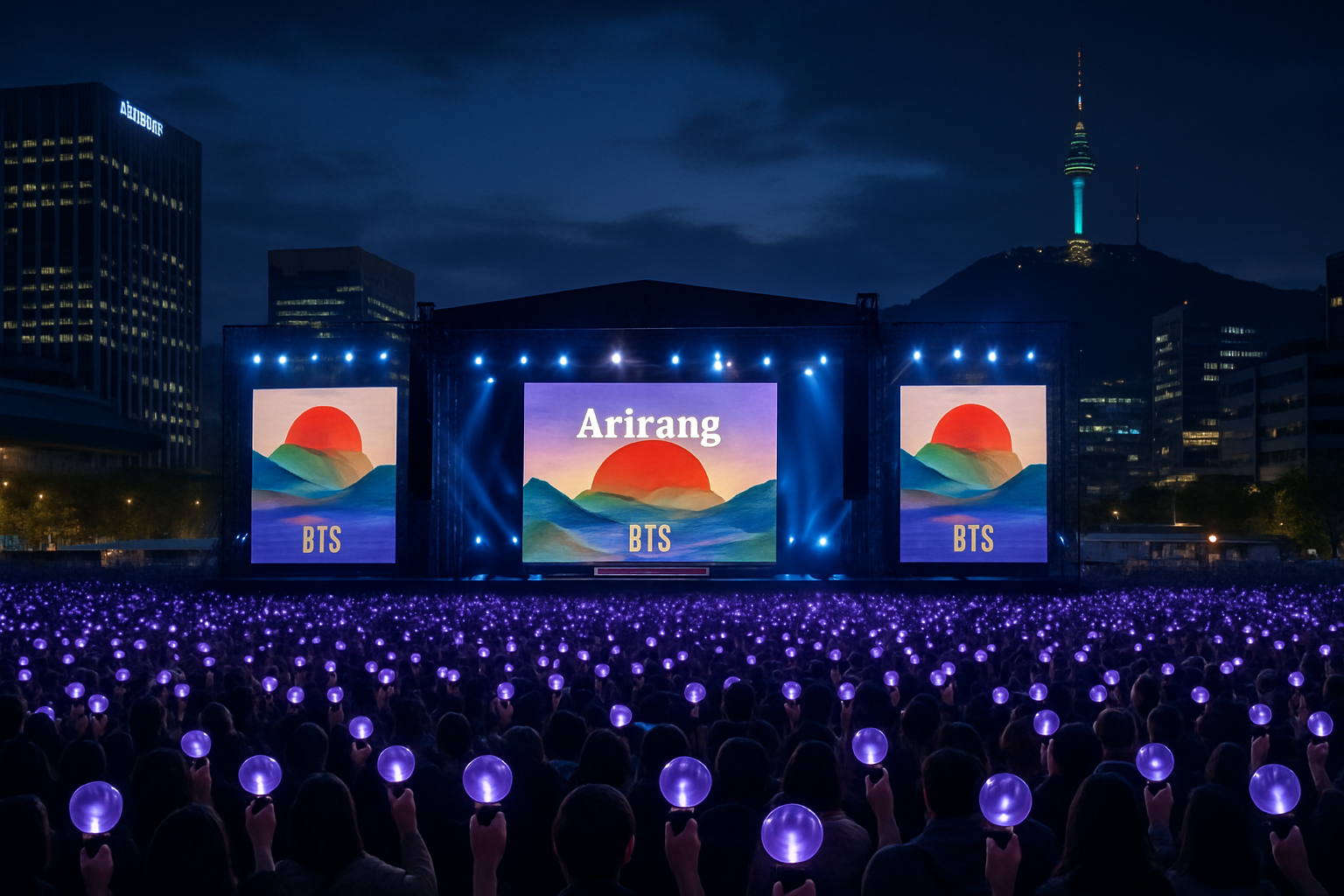
After more than three years apart, BTS has officially returned to the global stage with their highly anticipated album "Arirang" and a spectacular comeback concert in Seoul that transformed the South Korean capital into what authorities dubbed "BTS City" for the weekend.
The seven-member group—RM, Jin, Suga, J-Hope, Jimin, V, and Jungkook—staged their first complete group performance in nearly four years at Seoul's historic Gwanghwamun Square on Saturday, March 21, 2026. The event, which drew an estimated 260,000 fans to the city's streets and millions more watching live on Netflix, marks not just a musical comeback but a cultural phenomenon that has redefined the relationship between entertainment and urban planning.
Cultural Heritage Meets Global Appeal
The choice of "Arirang" as the album title carries profound cultural significance, referencing Korea's most beloved traditional folk song. This strategic decision reflects BTS's evolution from a purely commercial act to cultural ambassadors who celebrate Korean heritage while maintaining their global accessibility.
"We wanted to return to our roots while embracing everything we've learned during our time apart," RM explained during a press conference. "Arirang represents the soul of Korea, but it also speaks to universal themes of longing and hope that transcend borders."
The 14-track album showcases this cultural integration through sophisticated arrangements that weave traditional Korean instruments with contemporary production. The lead single "SWIM" alone garnered 1.5 million streams within its first hour of release, demonstrating the group's undiminished commercial appeal.
Seoul Transforms Into Entertainment Capital
Perhaps the most remarkable aspect of BTS's comeback was how it transformed Seoul itself into an entertainment venue. City officials coordinated synchronized displays across iconic landmarks including N Seoul Tower, Banpo Rainbow Bridge, and Lotte World Tower, creating what organizers called the most comprehensive integration of K-pop culture with urban planning in history.
Gwanghwamun Square, traditionally reserved for political demonstrations and cultural gatherings, was converted into a massive concert venue complete with LED screens and professional sound systems. The choice of this historically significant location—where democratic movements have shaped modern Korea—symbolically connected BTS's return to the nation's cultural identity.
"This represents a fusion of our democratic heritage with contemporary culture that shows how entertainment can serve both local community needs and global audience engagement."
— Seoul Metropolitan Government Official
International Collaboration and Innovation
The album features a highly anticipated collaboration with OneRepublic's Ryan Tedder, who described working on "Arirang" as "one of the most crazy things I've ever worked on." This partnership represents the sophisticated evolution of cross-cultural collaboration beyond simple guest appearances toward deeper creative partnerships that respect multiple artistic traditions.
Netflix's role in broadcasting the concert live represents the streaming platform's most ambitious live K-pop event to date, following their strategic pivot toward original international content. The partnership provides BTS with unprecedented creative control while democratizing global distribution—a model that contrasts sharply with traditional entertainment industry approaches.
Economic Impact and Fan Response
The comeback generated over $500 million in economic activity across tourism, accommodation, and merchandise sectors. Hotel bookings reached capacity weeks in advance, with rates increasing 300-400%, while international charter flights were added to accommodate global fans.
The shortage of official ARMY Bomb lightsticks became a phenomenon unto itself, with resale prices surging from $34 to over $300—a 900% increase that demonstrated both the extraordinary demand and the challenges of managing such massive fan events.
Security operations involved coordination between Seoul Metropolitan Police and international agencies from over 50 countries, reflecting BTS's recognition as a global cultural institution requiring state-level security planning.
Addressing Global Cultural Tensions
The comeback occurs during a complex period for Korean entertainment globally, with coordinated resistance campaigns in some Southeast Asian countries over K-pop fan behavior and controversial official comments. BTS's approach of emphasizing authentic cultural expression over purely commercial strategies provides a potential template for addressing these concerns.
By grounding their music in Korean cultural heritage while maintaining global accessibility, BTS demonstrates how entertainment can celebrate cultural specificity without sacrificing international appeal. This approach may establish precedents for sustainable international entertainment expansion.
Setting New Entertainment Industry Standards
The success of BTS's comeback establishes new benchmarks for the entertainment industry in several key areas: the integration of cultural heritage with commercial success, the transformation of urban spaces for entertainment purposes, and the balance between authentic artistic expression and global market demands.
The Netflix documentary "BTS: The Return," premiering March 27, will chronicle the behind-the-scenes creative process and the members' experiences during their military service, providing insight into how the group maintained their artistic vision during their hiatus.
Industry analysts predict that the BTS comeback model—combining authentic cultural expression, technological innovation, and comprehensive fan engagement—will influence how major artists approach both creative development and live entertainment in the post-pandemic era.
Looking Forward
With the Seoul concert serving as the launch point for a global tour beginning in April 2026, BTS has positioned themselves not merely as entertainers but as cultural diplomats who can bridge international divides through authentic artistic expression.
The success of "Arirang" and the Seoul comeback concert validates the entertainment industry's shift toward celebrating diverse voices and authentic cultural experiences over homogenized content. As the global entertainment landscape continues to evolve, BTS's approach provides a roadmap for how artists can honor their cultural heritage while building meaningful connections with international audiences.
The transformation of Seoul into "BTS City" for a weekend may have been temporary, but its impact on how we understand the relationship between culture, entertainment, and urban identity will likely influence city planning and cultural events for years to come. In returning to their roots while embracing their global influence, BTS has once again redefined what's possible in contemporary entertainment.