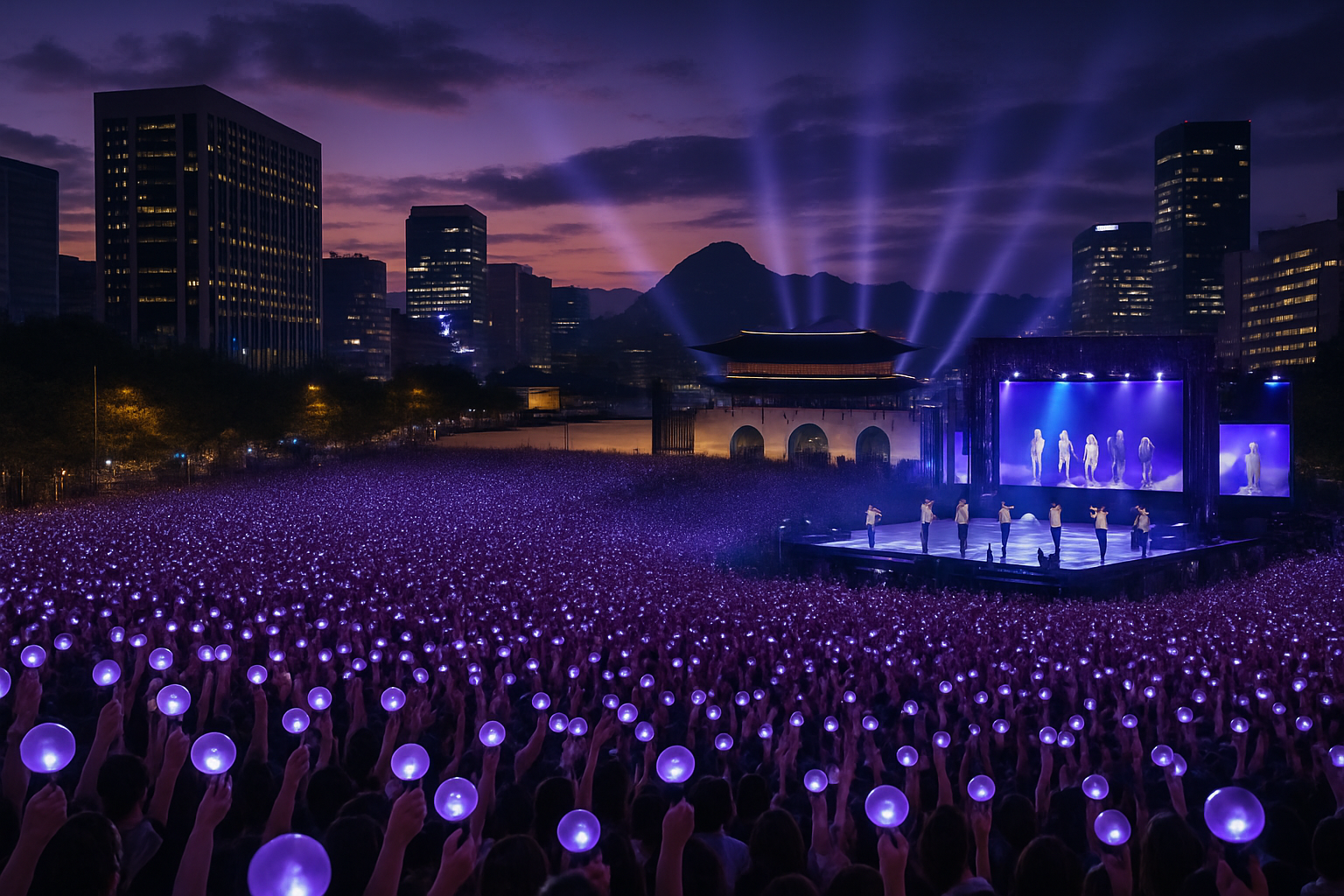
South Korean megastars BTS reunited Saturday for their first show in nearly four years, with an expected 260,000 fans taking over central Seoul for a K-pop extravaganza that was livestreamed to millions more worldwide.
The septet, considered the biggest boy band in the world, marked a historic moment as they returned to the stage after a four-year hiatus during which all seven members—RM, Jin, Suga, J-Hope, Jimin, V, and Jungkook—completed their mandatory military service in South Korea.
The massive free concert took place in Seoul's iconic Gwanghwamun Square, transforming the traditional political and cultural gathering space into an unprecedented entertainment venue. Enormous crowds of fans descended on Seoul from Saturday morning onwards in colorful costumes, taking selfies and clutching BTS Army glowsticks, creating what local media dubbed "BTS City."
A Four-Year Journey to Comeback
The group's hiatus began in 2022 when BTS announced they would take a break to allow each member to complete South Korea's compulsory military service. This marked the end of an era for the group that had achieved unprecedented global success, including multiple Billboard No. 1 albums, Grammy nominations, and speeches at the United Nations.
During their time away, the members served in various military capacities while maintaining their bond as a group. The anticipation for their return has been building steadily, with fans worldwide counting down the days until their reunion.
"Hello Seoul, we are back."
— BTS members addressing the crowd from stage
Seoul Transforms into Entertainment Capital
The city of Seoul underwent a remarkable transformation in preparation for the concert, with coordinated displays across major landmarks including N Seoul Tower, Banpo Rainbow Bridge, and Lotte World Tower. This integration of K-pop culture with urban planning represents a revolutionary approach to entertainment and city identity.
Gwanghwamun Square itself was converted from its traditional role as a venue for democratic protests and cultural gatherings into a massive entertainment complex complete with LED screens and state-of-the-art sound systems. The transformation symbolized the fusion of Korea's democratic heritage with its contemporary cultural achievements.
Economic Impact Beyond Music
The economic impact of BTS's return extends far beyond ticket sales—which weren't applicable as the concert was free. The event generated an estimated economic impact exceeding $500 million across tourism, accommodation, merchandise, and related sectors.
Hotel occupancy in Seoul reached capacity weeks in advance, with rates increasing by 300-400%. International charter flights were added to accommodate fans traveling from around the world. Perhaps most telling of the fan frenzy was the shortage of official BTS light sticks, with "ARMY Bomb" prices surging from the retail price of approximately $34 to over $300 on resale markets—a 900% increase that demonstrated the extraordinary demand.
Global Streaming and Cultural Significance
The concert's reach extended far beyond Seoul's city limits through global livestreaming, allowing millions of international fans to participate in the historic moment. This technological element reinforced BTS's position as a truly global cultural phenomenon rather than merely a Korean export.
The event occurs during what cultural observers have termed the "February 2026 Cultural Renaissance," a period marked by Korean entertainment achieving unprecedented global recognition while maintaining authentic cultural roots. This approach contrasts with earlier Korean Wave strategies that sometimes prioritized commercial appeal over cultural specificity.
Security and International Cooperation
The concert required the most comprehensive security operation in South Korean entertainment history, involving the Seoul Metropolitan Police in coordination with international agencies from over 50 countries. This state-level security planning reflects the recognition of BTS as a global cultural institution requiring unprecedented protection measures.
The international cooperation extended beyond security, with diplomatic missions worldwide reporting increased cultural exchange activities surrounding the event. The concert served as an informal diplomatic gathering, with representatives from multiple countries attending to observe the cultural phenomenon firsthand.
Looking Forward: Global Tour Announcement
Saturday's Seoul concert serves as the launch point for what is expected to be a comprehensive worldwide tour beginning in April 2026. According to Venezuelan media reports, the tour will include 82 dates with several Latin American stops, including Mexico City, Bogotá, Lima, Santiago, Buenos Aires, São Paulo, and Madrid.
This extensive tour represents BTS's evolution from a music group to cultural ambassadors, using their platform to bridge international divides through authentic artistic expression. The Seoul concert has established new benchmarks for how major entertainment events can celebrate cultural heritage while maintaining global accessibility.
Cultural Legacy and Future Impact
The success of BTS's comeback concert demonstrates the entertainment industry's shift toward celebrating authentic cultural expression over homogenized content. Their approach—honoring Korean cultural heritage while embracing international collaboration—provides a template for sustainable international entertainment expansion.
As the lights dimmed on Saturday night's historic performance, it became clear that this was more than just a comeback concert. It was a declaration that authentic cultural expression, when combined with genuine artistic excellence, can achieve both domestic resonance and international success without compromising cultural identity.
For the 260,000 fans who filled Seoul's streets and the millions more who watched worldwide, BTS's return marked not just the end of a four-year wait, but the beginning of a new chapter in global entertainment where cultural diversity enhances rather than diminishes universal appeal.