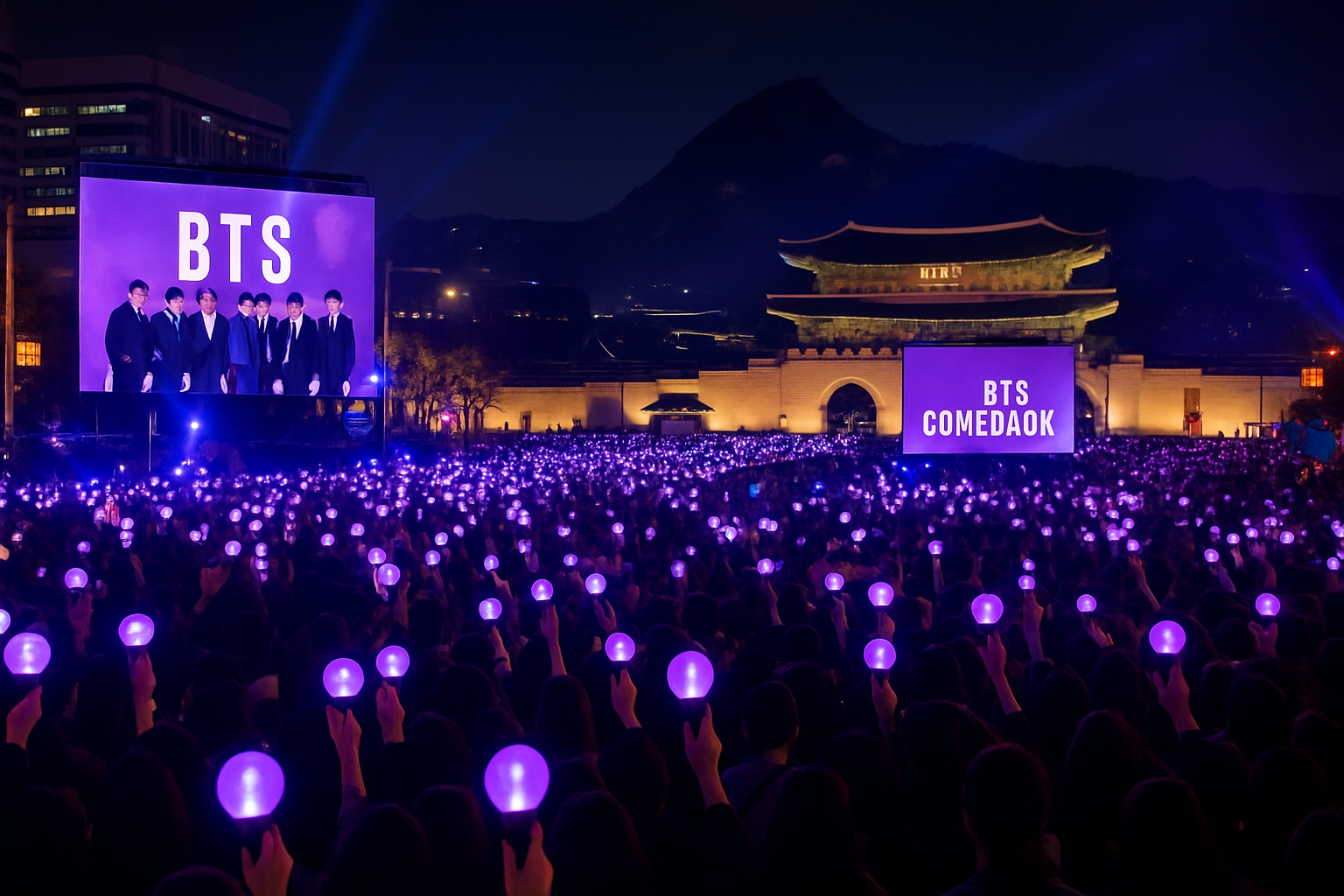
BTS has transformed Seoul's historic Gwanghwamun Square into the epicenter of their long-awaited comeback celebration, marking the global superstars' triumphant return to the music scene following their mandatory military service.
The world-renowned K-pop septet announced their major comeback with spectacular displays across Seoul's most symbolic protest and gathering space, where massive LED screens now showcase promotional content for their highly anticipated return. The location choice carries deep cultural significance, as Gwanghwamun Square has historically served as the heart of South Korea's democratic movements and public celebrations.
A Cultural Renaissance Milestone
The comeback occurs during what experts are calling the "February 2026 Cultural Renaissance," a period of unprecedented global cultural collaboration and Korean entertainment expansion. According to entertainment industry analysis, BTS's return represents more than just a musical comeback—it symbolizes the maturation of K-pop as a permanent global cultural force rather than a temporary trend.
Seoul has been transformed into what fans and media are dubbing "BTS City," with coordinated displays across major landmarks including N Seoul Tower, Banpo Rainbow Bridge, and Lotte World Tower. This unprecedented integration of entertainment with urban planning creates a revolutionary template for cultural tourism and fan engagement.
Military Service Chapter Closes
All seven members—RM, Jin, Suga, J-Hope, Jimin, V, and Jungkook—have now completed their mandatory military service, with the group maintaining their bond and creative vision throughout the hiatus. Their Netflix documentary "BTS: The Return" provides behind-the-scenes insight into their military experience and creative process during the break.
The strategic use of Gwanghwamun Square for their comeback celebration connects their return to broader themes of Korean identity and cultural pride. As BTS fans reflect on how the band's music provided comfort during periods of political unrest and mass protests, the square's selection reinforces their role as cultural ambassadors.
Entertainment Industry Impact
Netflix has emerged as a key partner in BTS's comeback strategy, demonstrating the streaming platform's evolution from content aggregator to comprehensive entertainment ecosystem. The collaboration represents Netflix's continued investment in Korean content during a period of global cultural exchange.
Industry experts note that BTS's approach emphasizes cultural authenticity over commercial homogenization, addressing previous Southeast Asian resistance to Korean cultural expansion by celebrating Korean heritage while maintaining global appeal. Their "Arirang" album explores traditional Korean cultural roots, suggesting a sophisticated evolution in cross-cultural artistic collaboration.
Economic and Cultural Implications
The comeback is expected to generate hundreds of millions in economic impact across tourism, consumer goods, and international collaboration sectors. Hotel bookings in Seoul reached capacity weeks in advance, with rates increasing 300-400%, while special charter flights have been added to accommodate international fans.
The celebration has also sparked a merchandise frenzy, with official BTS light sticks ("ARMY Bombs") experiencing severe shortages, with secondary market prices surging from $34 to over $300—a 900% increase that demonstrates extraordinary fan demand.
Global Streaming Strategy
The comeback aligns with broader trends in entertainment globalization, where streaming platforms serve as cultural bridges fostering international collaboration. BTS's partnership with Netflix for live-streamed events and documentary content represents a new model for artist-platform relationships that prioritizes creative control while democratizing global distribution.
This approach contrasts with traditional Hollywood production models, offering artists greater creative autonomy while leveraging technology for worldwide accessibility. The success validates the entertainment industry's shift toward celebrating diverse voices and authentic cultural expression.
Looking Forward
As Seoul's symbolic protest square becomes the backdrop for K-pop's biggest comeback, the event represents more than entertainment—it embodies South Korea's soft power projection and cultural diplomacy success. The celebration demonstrates how authentic cultural expression can achieve both domestic resonance and international commercial success.
The transformation of Gwanghwamun Square into a concert venue symbolizes the evolution of public spaces in the digital age, where cultural celebrations can simultaneously serve local community needs and global audience engagement. This innovative approach to entertainment and urban planning may establish new precedents for how cities integrate cultural events with civic identity.
BTS's comeback celebration at this historically significant location reinforces their position not just as entertainers, but as cultural institutions bridging Korea's rich heritage with its dynamic contemporary identity on the global stage.