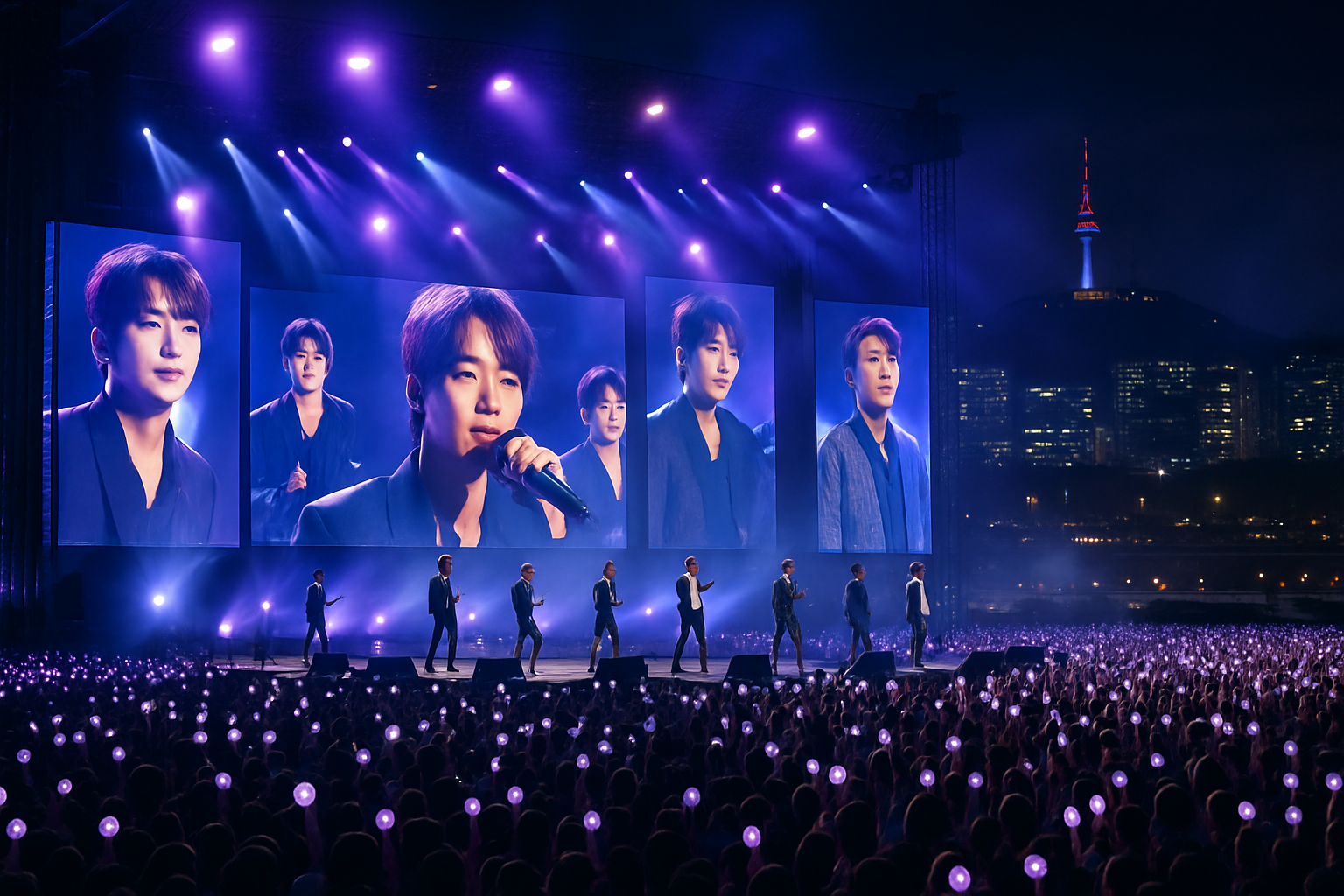
BTS will stage their long-awaited comeback concert Saturday at Seoul's iconic Gwanghwamun Square, marking their first performance as a complete group in nearly four years following the completion of military service by all seven members.
The K-pop megastars released their new album "Arirang" on Friday, generating massive fan response with 1.5 million reproductions of lead single "SWIM" within just one hour of release. The comeback represents a watershed moment for both BTS and the global K-pop industry, with approximately 260,000 fans expected to attend the open-air concert—one of the largest single entertainment events in Korean history.
RM's Injury Casts Shadow Over Comeback
The celebration was tempered by news that BTS leader RM suffered an ankle injury during rehearsals on Thursday evening. According to medical reports, RM was diagnosed with ligament damage and inflammation, including a partial rupture that required immediate hospitalization. The 30-year-old rapper will perform Saturday with a cast and reduced mobility, demonstrating remarkable dedication to the group's historic return.
Despite the injury, RM is determined to participate in the comeback that fans worldwide have eagerly anticipated since the group went on hiatus in 2022 to fulfill South Korea's mandatory military service requirements.
Seoul Transformed Into "BTS City"
The comeback has transformed Seoul into what officials are calling "BTS City," with coordinated displays across major landmarks including N Seoul Tower, Banpo Rainbow Bridge, and Lotte World Tower. The spectacular visual campaign represents an unprecedented fusion of K-pop culture with urban planning and tourism strategy.
Gwanghwamun Square, traditionally associated with political demonstrations and cultural gatherings, has been converted into a massive entertainment venue with LED screens and promotional content. The location choice carries deep cultural significance, connecting BTS's return to Korean democratic heritage and national identity.
"This concert represents more than just music—it's about cultural heritage and Korean identity on a global stage."
— Cultural Ministry Official
Economic Impact and Fan Frenzy
The economic impact of BTS's return is staggering, with estimates exceeding $500 million across multiple sectors including travel, accommodation, and merchandise. Seoul hotel occupancy reached capacity weeks in advance, with room rates increasing by 300-400%. International charter flights have been added to accommodate the massive influx of global fans.
The merchandise shortage has created a secondary market frenzy, with official BTS light sticks "ARMY Bomb" prices surging from the retail price of $34 to over $300 on resale markets—a 900% increase that demonstrates the extraordinary demand surrounding the comeback.
Cultural Significance of "Arirang"
The album title "Arirang" references a traditional Korean folk song, representing BTS's strategic approach to cultural heritage integration with global appeal. This cultural authenticity approach occurs during what historians are documenting as the "February 2026 Cultural Renaissance," a period of unprecedented Korean entertainment global influence.
The collaboration with OneRepublic's Ryan Tedder, who described working on the project as "one of the most crazy things I've ever worked on," demonstrates sophisticated cross-cultural creative partnerships that go beyond simple guest appearances to deeper artistic collaboration.
Netflix Partnership and Global Reach
BTS's return includes a groundbreaking partnership with Netflix, featuring the documentary "BTS: The Return" premiering March 27. The documentary chronicles the behind-the-scenes creative process and the members' experiences during military service, representing Netflix's first major live K-pop broadcast and strategic move into comprehensive entertainment experiences.
This partnership reflects the streaming platform's evolution from content aggregator to comprehensive entertainment ecosystem, prioritizing creative control for artists while democratizing global distribution.
Security Operations on Unprecedented Scale
Seoul authorities have implemented the most comprehensive concert security operation in South Korean history, coordinating with international agencies from over 50 countries. The security measures reflect BTS's recognition as a global cultural institution requiring state-level security planning.
The operation includes crowd control systems, emergency medical provisions, and transportation infrastructure upgrades, demonstrating the event's significance beyond entertainment to encompass cultural diplomacy and international cooperation.
Addressing Global Cultural Tensions
The comeback occurs amid complex regional relationships, with Korean cultural exports facing coordinated resistance campaigns in Southeast Asian countries including Malaysia, Indonesia, and Thailand. BTS's approach emphasizes authentic cultural expression over purely commercial strategies, potentially providing a template for sustainable international entertainment expansion.
The group's cultural authenticity approach—celebrating Korean heritage while maintaining global accessibility—addresses concerns about cultural sensitivity and genuine international partnership versus simple content distribution.
A New Template for Global Entertainment
BTS's return establishes precedents for the entertainment industry's future, demonstrating how authentic cultural expression can achieve both domestic resonance and international commercial success. The sophisticated integration of traditional cultural elements with contemporary global appeal provides a model for other artists seeking to balance cultural identity with worldwide reach.
The success validates the entertainment industry's shift toward celebrating diverse voices and authentic cultural expression over homogenized mainstream content. It demonstrates that audiences prefer genuine cultural experiences that transcend geographic and linguistic boundaries.
As BTS takes the stage Saturday at Gwanghwamun Square, they carry not just the hopes of millions of fans worldwide, but the responsibility of representing Korean culture on the global stage. Despite RM's injury, the group's determination to perform reflects the resilience and dedication that has made them cultural ambassadors bridging Korean heritage with contemporary global identity.