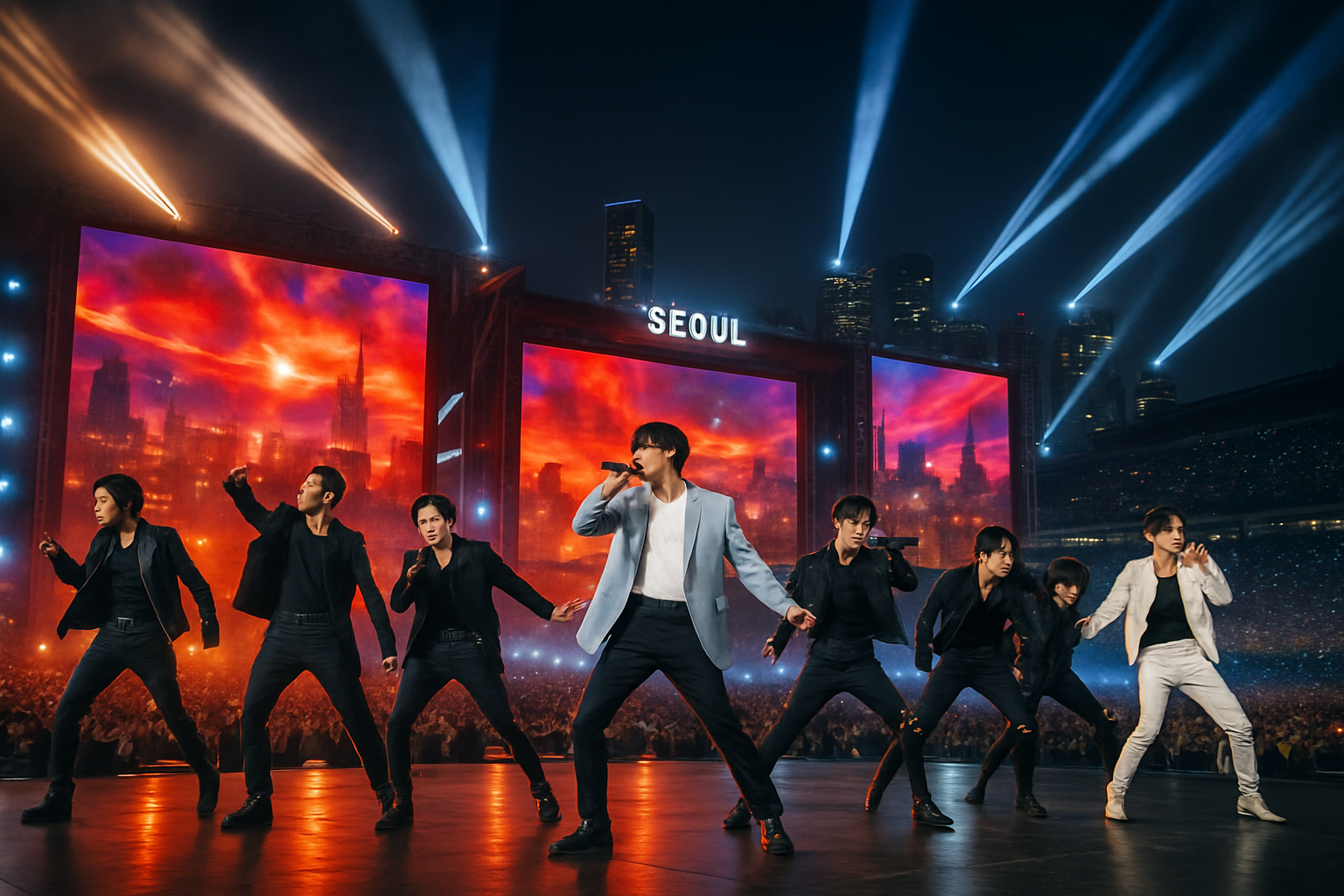
BTS, the global K-pop phenomenon, has officially returned to the music scene after a four-year hiatus, sparking unprecedented excitement among millions of fans worldwide as Seoul transforms into the epicenter of a cultural renaissance that is reshaping the entertainment landscape.
The seven-member group's comeback marks one of the most anticipated returns in music history, with the septet—RM, Jin, Suga, J-Hope, Jimin, V, and Jungkook—having completed their mandatory military service obligations. Their return comes at a pivotal moment for Korean entertainment, coinciding with what cultural analysts are calling the "February 2026 Cultural Renaissance."
Netflix Partnership and Documentary Release
Central to BTS's comeback strategy is their groundbreaking partnership with Netflix, which represents the streaming giant's first major live K-pop broadcast. The documentary "BTS: The Return" premiered on March 27, 2026, offering unprecedented behind-the-scenes footage of the group's creative process during their hiatus.
The Netflix collaboration extends beyond traditional content distribution, with the platform investing heavily in Korean talent partnerships as part of their international content strategy. This approach contrasts sharply with traditional Hollywood production models, providing artists with greater creative control while democratizing global distribution.
"This is more than just a comeback—it's a cultural moment that demonstrates the maturation of Korean entertainment into a sustainable global force," said entertainment industry analyst Kim Min-jun.
— Kim Min-jun, Cultural Industry Expert
The "Arirang" Album: Cultural Roots Meet Global Appeal
At the heart of BTS's return is their new album "Arirang," which explores Korean cultural heritage while maintaining universal appeal. The album title references the traditional Korean folk song "Arirang," signifying the group's commitment to celebrating their cultural identity.
The project features an unexpected collaboration with OneRepublic's Ryan Tedder, who described working on the album as "one of the most crazy things I've ever worked on." This cross-cultural partnership represents a sophisticated evolution in popular music collaboration, moving beyond simple guest appearances toward deeper creative partnerships that respect multiple traditions.
Industry insiders report that the album balances authentic Korean storytelling with internationally accessible production, setting a new template for how K-pop artists can maintain cultural specificity while achieving global appeal.
Global Cultural Impact and Economic Significance
BTS's return occurs during a period of unprecedented Korean cultural influence worldwide. The group's comeback coincides with other major K-pop milestones, including BLACKPINK's historic 100 million YouTube subscribers achievement and the success of Korean content across international streaming platforms.
The economic implications are substantial, with South Korea's tourism and consumer economy poised for significant growth. The group's return is expected to boost cultural tourism, merchandise sales, and international collaboration opportunities across multiple sectors.

Challenges and Regional Dynamics
The comeback occurs amid complex regional cultural dynamics, with Korean entertainment facing coordinated resistance campaigns in some Southeast Asian markets. These challenges stem from cultural tensions and boycott movements in Malaysia, Indonesia, and Thailand, highlighting the paradox of cultural globalization in the digital age.
However, BTS's approach appears to address these concerns by emphasizing authentic cultural exchange over commercial dominance. Their focus on Korean heritage through the "Arirang" project demonstrates a shift toward cultural diplomacy that respects local sensitivities while maintaining artistic integrity.
Technological Innovation and Fan Engagement
The group's comeback leverages cutting-edge technology to enhance fan experiences. Seoul has implemented citywide drone shows, landmark light displays, and interactive pop-up experiences tied to the album release, creating an unprecedented fusion of K-pop culture with urban planning.
This "BTS City" concept represents a revolutionary approach to entertainment franchise integration with urban environments, potentially serving as a template for sustainable cultural tourism initiatives worldwide.
Industry Transformation and Future Implications
BTS's return symbolizes broader transformations in the global entertainment industry. The success of their Netflix partnership, international collaborations, and cultural authenticity approach demonstrates how artists can maintain creative control while achieving massive commercial success.
The streaming platform's investment in international talent, combined with the group's sophisticated approach to cultural preservation, suggests a future where entertainment transcends traditional geographic and linguistic boundaries without sacrificing authenticity.
"BTS has shown that the future of entertainment lies in celebrating cultural diversity while maintaining unique identities, rather than pursuing homogenization for mass appeal."
— Dr. Sarah Chen, Media Studies Professor
Looking Ahead: World Tour and Continued Evolution
As BTS prepares for their upcoming world tour, industry observers anticipate continued evolution in how global entertainment operates. Their success in balancing technological innovation with human authenticity, international collaboration with cultural specificity, and commercial success with artistic integrity provides a roadmap for future entertainers.
The group's comeback represents more than just a return to music—it's a statement about the power of authentic cultural expression in an increasingly connected world. As Seoul buzzes with excitement and fans worldwide celebrate their return, BTS continues to demonstrate why they remain one of the most influential cultural forces of the 21st century.
With their military service completed and their artistic vision refined, BTS's historic comeback promises to define not just their own legacy, but the future of global entertainment itself. The "Arirang" era has begun, and the world is watching as Korean culture continues its remarkable journey from local tradition to global phenomenon.