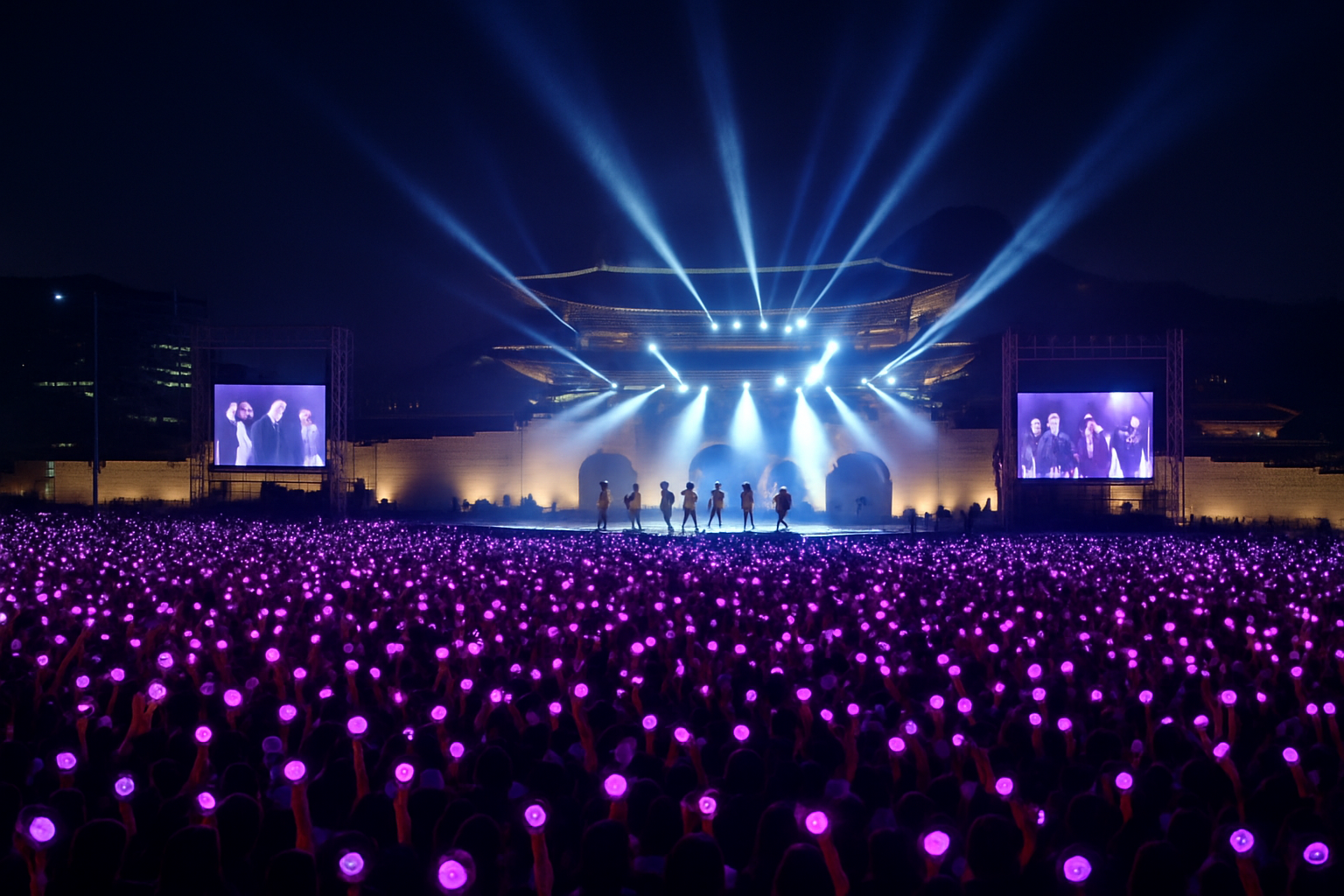
BTS returned to the global stage with their most spectacular performance yet, drawing an estimated 260,000 fans to Seoul's historic Gwanghwamun Square for their first group concert in nearly four years, while their new album "Arirang" achieved record-breaking sales within hours of release.
The seven-member K-pop supergroup—RM, Jin, Suga, J-Hope, Jimin, V, and Jungkook—completed their highly anticipated comeback on Saturday following mandatory military service, transforming central Seoul into what authorities dubbed "BTS City" with coordinated displays across iconic landmarks including N Seoul Tower, Banpo Rainbow Bridge, and Lotte World Tower.
Unprecedented Scale and Security
South Korean authorities implemented the most comprehensive concert security operation in the nation's history, raising terrorism alert levels and coordinating with international agencies from over 50 countries. The Seoul Metropolitan Police worked alongside embassy security teams to manage what officials described as one of the largest entertainment events in Korean history.
The concert's location at Gwanghwamun Square carries deep cultural significance, as the traditional site of political demonstrations and democratic gatherings was transformed into a massive entertainment venue equipped with LED screens and state-of-the-art production equipment. This choice symbolically connected BTS's return to Korea's democratic heritage and evolving cultural identity.
"This represents the fusion of K-pop culture with our democratic traditions and urban identity."
— Seoul City Cultural Affairs Department
Economic Impact Exceeds Expectations
The comeback generated over $500 million in economic impact across multiple sectors, with hotel capacity reached weeks in advance and international charter flights added to accommodate global fans. Hotel rates increased by 300-400% in central Seoul, while merchandise shortages drove secondary market prices to unprecedented levels.
Official BTS light sticks, known as "ARMY Bombs," became virtually unavailable with prices surging from the retail price of $34 to over $300 on resale markets—a 900% increase that demonstrated the extraordinary fan demand surrounding the group's return.
Cultural Heritage Meets Global Appeal
The new album "Arirang" takes its title from a traditional Korean folk song, representing BTS's strategic emphasis on cultural heritage integration rather than purely commercial approaches. This cultural authenticity strategy comes during what industry analysts have termed the "February 2026 Cultural Renaissance," addressing Southeast Asian resistance to Korean cultural expansion through genuine artistic expression.
The album features collaboration with OneRepublic's Ryan Tedder, who described the project as "one of the most crazy things I've ever worked on," highlighting the sophisticated nature of cross-cultural creative partnerships that respect multiple artistic traditions.
Netflix Partnership and Global Reach
The concert was broadcast live globally through Netflix, representing the streaming platform's first major live K-pop event and part of their strategic evolution from content aggregator to comprehensive entertainment ecosystem. This partnership prioritizes artist creative control while providing worldwide technological accessibility.
Netflix's documentary "BTS: The Return," premiering March 27, chronicles the behind-the-scenes reunion planning and the emotional experiences of military service that kept the group apart for nearly four years. The documentary provides intimate insight into the creative process behind "Arirang" and the members' reflections on their mandatory military service.

Urban Planning Revolution
Seoul's transformation into "BTS City" represents a revolutionary approach to entertainment-urban planning integration, creating a template for cultural tourism and fan engagement that combines authentic cultural expression with global commercial success. The coordinated citywide displays and interactive pop-ups established new benchmarks for how major cultural events can integrate with civic identity.
The conversion of Gwanghwamun Square from a traditional political gathering space to a concert venue symbolizes the evolution of public spaces in the digital age, where cultural celebrations can simultaneously serve local community needs and engage global audiences.
International Implications
The comeback occurs against the backdrop of coordinated Southeast Asian boycott campaigns across Malaysia, Indonesia, and Thailand, driven by disputes over K-pop fan behavior and controversial official comments. BTS's emphasis on authentic Korean cultural expression rather than commercial-only strategies provides a potential template for sustainable international entertainment expansion.
The group's approach demonstrates how entertainment can celebrate cultural specificity without sacrificing international appeal, offering a model for artists worldwide seeking to honor their heritage while building meaningful global connections.
Industry Transformation
The success validates the entertainment industry's shift toward celebrating diverse voices and authentic cultural expression over assimilated mainstream content. Streaming platforms are increasingly serving as cultural bridges that foster international collaboration while preserving cultural specificity.
BTS's return establishes new precedents for how major artists can balance authentic artistic expression with commercial success, demonstrating that audiences prefer genuine cultural experiences that transcend boundaries over manufactured universal appeal.
"We wanted to return to our roots while embracing our global family. 'Arirang' represents both our Korean heritage and our journey with ARMY worldwide."
— RM, BTS Leader
Looking Forward
The Seoul concert serves as the launching point for BTS's global tour beginning in April 2026, positioning the group as cultural diplomats bridging international divides through authentic artistic expression. This approach may establish precedents for how major entertainment acts can honor their cultural heritage while building meaningful international connections in an increasingly interconnected world.
The event embodies South Korea's soft power projection success, demonstrating how authentic cultural expression can achieve both domestic resonance and international commercial success. It reinforces BTS's position as cultural institutions rather than purely entertainment acts, serving as bridges between Korean heritage and contemporary global identity.
As the entertainment industry continues its transformation toward truly global, digitally-native ecosystems that celebrate diverse voices while respecting cultural heritage, BTS's historic comeback provides a compelling template for sustainable international success through cultural authenticity and genuine artistic expression.