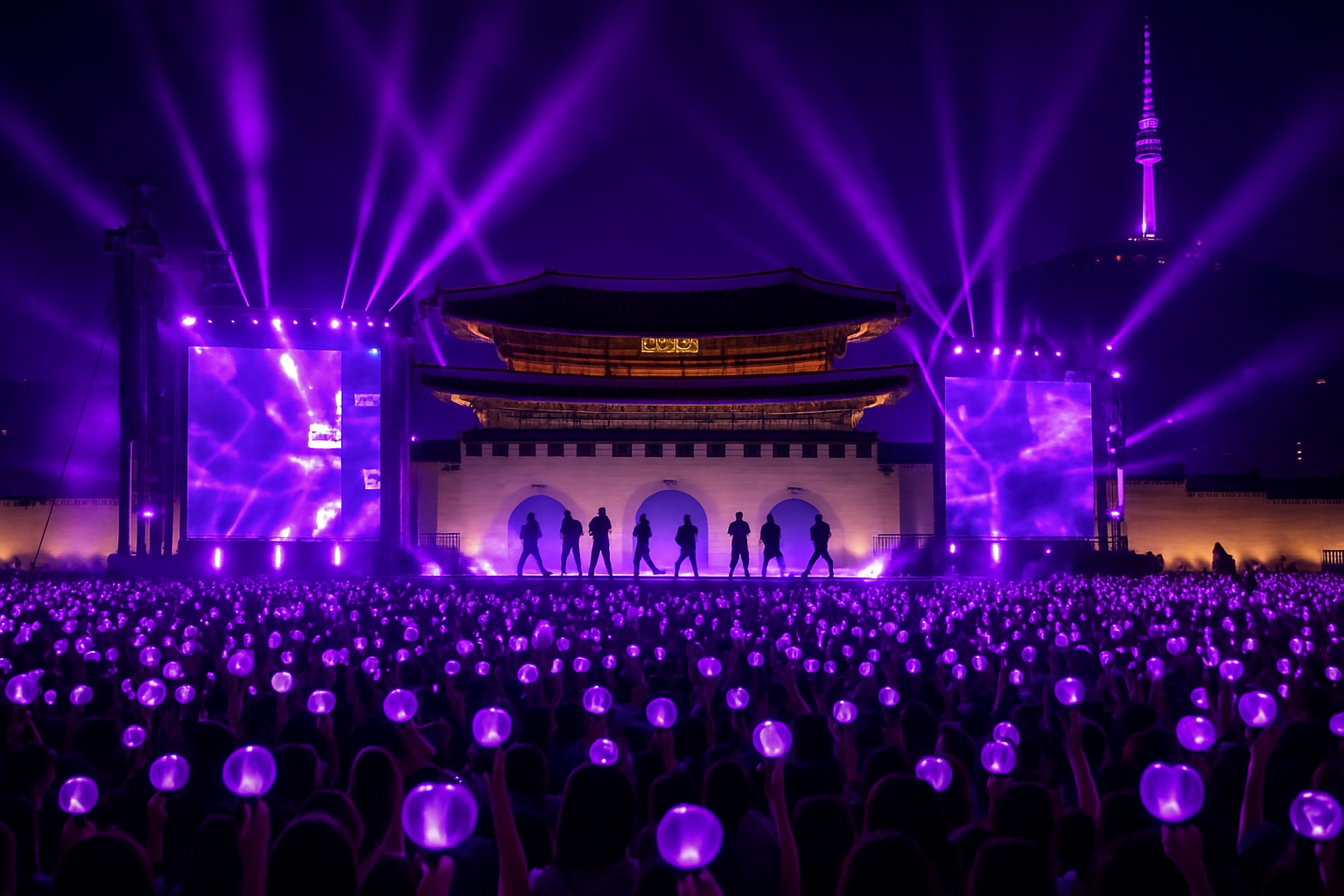
Seoul transformed into "BTS City" on Saturday as the global K-pop phenomenon returned to the stage for their first group performance in nearly four years, drawing an estimated 260,000 fans to Gwanghwamun Square in what organizers are calling one of the largest entertainment events in Korean history.
The seven-member group—RM, Jin, Suga, J-Hope, Jimin, V, and Jungkook—completed their highly anticipated comeback following the completion of mandatory military service by all members. The historic concert coincided with the release of their new album "Arirang," which achieved 1.5 million streams of the lead single "SWIM" within its first hour.
Seoul's Unprecedented Transformation
The South Korean capital underwent a revolutionary makeover for the occasion, with coordinated displays across iconic landmarks including N Seoul Tower, Banpo Rainbow Bridge, and Lotte World Tower. The transformation represented an unprecedented integration of entertainment with urban planning, creating what organizers dubbed the "BTS City" concept.
Gwanghwamun Square, traditionally a space for political gatherings and cultural events, was converted into a state-of-the-art concert venue equipped with massive LED screens and sophisticated sound systems. This transformation symbolized the fusion of Korea's democratic heritage with its contemporary cultural achievements.
"This isn't just a concert—it's a celebration of Korean culture and our journey together with ARMY worldwide. We've missed this connection more than words can express."
— RM, BTS Leader
Cultural Heritage Meets Global Appeal
The "Arirang" album title references a traditional Korean folk song, representing BTS's strategic approach to integrating cultural heritage with international accessibility. This positioning reflects the group's evolution from purely entertainment act to cultural ambassadors during what experts are calling the "February 2026 Cultural Renaissance."
The album features collaboration with Ryan Tedder of OneRepublic, described by the American songwriter as "one of the most crazy things I've ever worked on." This cross-cultural partnership demonstrates sophisticated artistic collaboration while respecting multiple cultural traditions.
Economic Impact and Fan Dedication
The comeback generated over $500 million in economic activity across tourism, accommodation, and merchandise sectors. Hotel occupancy reached capacity weeks in advance, with rates increasing 300-400%. International charter flights were added specifically for global fans traveling to Seoul.
Perhaps most remarkably, ARMY Bomb light stick prices surged from $34 to over $300 on resale markets—a 900% increase—due to complete sellouts. This unprecedented demand demonstrated the extraordinary dedication of BTS's global fanbase, known as ARMY.
Security Operations and International Recognition
The event required the most comprehensive security operation in South Korean entertainment history, involving Seoul Metropolitan Police coordination with international agencies from over 50 countries. This state-level security planning reflects BTS's recognition as a global cultural institution requiring unprecedented protection measures.
The concert was livestreamed globally through Netflix, representing the streaming platform's first major live K-pop broadcast and part of their strategic evolution toward comprehensive entertainment ecosystems prioritizing artist creative control.
Addressing Cultural Diplomacy Challenges
The comeback occurs amid coordinated Southeast Asian resistance to Korean cultural expansion, with boycott campaigns in Malaysia, Indonesia, and Thailand over K-pop fan behavior disputes. BTS's approach of emphasizing authentic cultural expression over purely commercial strategies provides a potential template for sustainable international entertainment expansion.
The group's cultural authenticity strategy contrasts with criticism that some Korean entertainment exports prioritize commercial adaptation over heritage preservation. By celebrating Korean identity while embracing international collaboration, BTS demonstrates how entertainment can transcend cultural boundaries without sacrificing authenticity.
Netflix Partnership and Global Reach
The streaming giant's partnership with BTS extends beyond the live concert to include the documentary "BTS: The Return," premiering March 27. The film chronicles the group's creative process during military service and their emotional reunion planning.
This collaboration represents Netflix's strategic pivot following their withdrawal from the $83 billion Warner Bros Discovery acquisition, focusing instead on original international content and exclusive creative partnerships.
Setting Industry Benchmarks
The Seoul concert launches BTS's worldwide tour beginning in April 2026, featuring 82 dates including Latin American stops in Mexico City, Bogotá, Lima, Santiago, Buenos Aires, and São Paulo. This global reach positions the group as cultural diplomats bridging international divides through authentic artistic expression.
The event has established new benchmarks for the entertainment industry, demonstrating successful integration of cultural heritage with commercial success, transformation of urban spaces for global entertainment, and balance between local cultural expression and international accessibility.
Broader Cultural Significance
The comeback represents more than musical entertainment—it embodies South Korea's soft power projection and demonstrates how authentic cultural expression can achieve both domestic resonance and international commercial success. The group's approach provides a template for entertainment that celebrates cultural diversity while maintaining global connectivity.
Industry experts view the event as validation of the entertainment industry's shift toward celebrating diverse voices and authentic cultural experiences over homogenized content. Success demonstrates that audiences prefer genuine cultural expression transcending geographic and linguistic boundaries.
Looking Forward
As BTS embarks on their global tour, the Seoul concert will be remembered as a watershed moment in both K-pop history and international entertainment. The event proved that authentic cultural expression, when combined with artistic excellence and genuine fan connection, can create experiences that transcend traditional entertainment boundaries.
The group's return reinforces their position not merely as musicians but as cultural institutions capable of fostering international understanding while proudly representing Korean heritage. In an era of increasing cultural tensions, BTS's success offers hope for entertainment as a bridge between nations and communities worldwide.