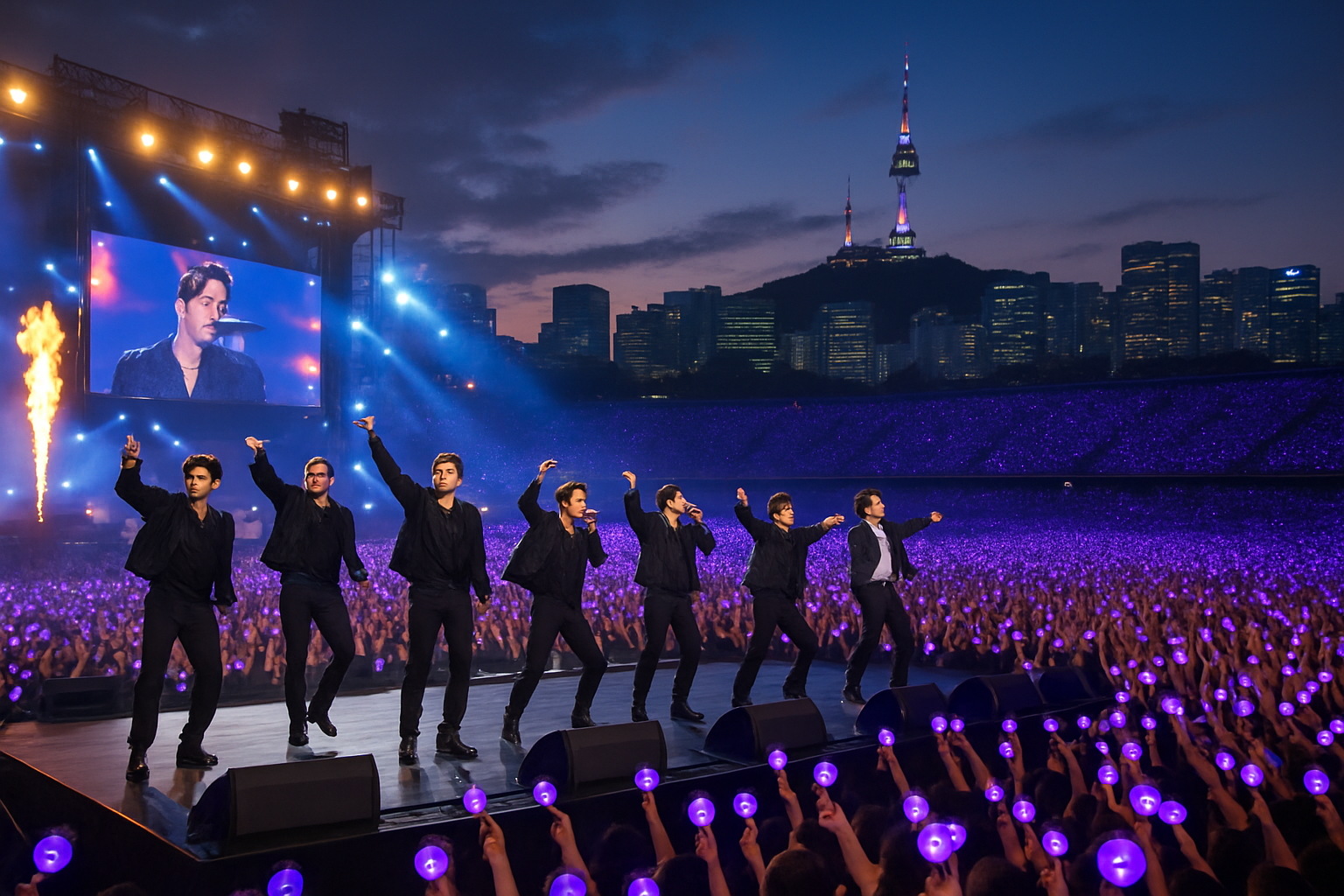
BTS officially returned to the global stage with their new album "Arirang" on March 20, 2026, marking their first group project in nearly four years following the completion of mandatory military service by all seven members, while K-pop's broader cultural impact continues expanding through groundbreaking collaborations and mainstream recognition.
After an almost four-year hiatus, the seven-member group—RM, Jin, Suga, J-Hope, Jimin, V, and Jungkook—delivered their highly anticipated comeback with "Arirang," an album that explores Korean cultural heritage while maintaining global appeal. The release coincided with an elaborate online engagement campaign, including a Google scavenger hunt that had been building anticipation since March 5, with 29 weekly quests culminating in a special surprise unlocked on March 20.
Seoul Transforms into "BTS City"
The comeback celebration transformed Seoul into an unprecedented entertainment spectacle. The city coordinated displays across iconic landmarks including N Seoul Tower, Banpo Rainbow Bridge, and Lotte World Tower, creating what officials dubbed "BTS City"—a revolutionary fusion of entertainment and urban planning that generated an estimated $500 million in economic activity across tourism, accommodation, and merchandise sectors.
The historic Gwanghwamun Square, traditionally associated with democratic movements and cultural gatherings, was converted into a massive entertainment venue with LED screens and promotional content. This symbolic location choice connected BTS's return to Korean democratic heritage and cultural identity, reinforcing their role as cultural ambassadors rather than merely entertainers.
"This represents a fundamental shift in how we think about entertainment as cultural infrastructure. BTS has evolved from a music group to a cultural institution that brings economic and diplomatic benefits to Korea."
— Cultural Industry Analyst, quoted in industry reports
The "Arirang" Cultural Bridge
The album's title references "Arirang," a traditional Korean folk song that has served as an unofficial national anthem for generations. This artistic choice demonstrates BTS's sophisticated approach to balancing authentic Korean cultural expression with international accessibility—a strategy that addresses recent Southeast Asian resistance to Korean cultural exports by emphasizing heritage over commercial manipulation.
The album features a collaboration with OneRepublic's Ryan Tedder, who described working with BTS as "one of the most crazy things I've ever worked on." This partnership represents the evolution of K-pop collaborations beyond simple guest appearances toward deeper creative partnerships that respect multiple cultural traditions.
Netflix and the Streaming Revolution
Netflix's documentary "BTS: The Return," premiering March 27, chronicles the creative process behind "Arirang" and the group's experiences during their military service hiatus. This partnership exemplifies the streaming platform's strategic pivot following their withdrawal from the $83 billion Warner Bros Discovery acquisition, focusing instead on original international content and established talent relationships.
The documentary approach prioritizes authentic storytelling over manufactured content, providing fans unprecedented behind-the-scenes access while maintaining the group's creative control—a model that contrasts with traditional Hollywood production approaches.
K-Pop's Broader Cultural Renaissance
BTS's return occurs within what industry analysts have termed the "February 2026 Cultural Renaissance," a period of unprecedented Korean entertainment global influence. BLACKPINK achieved the historic milestone of 100 million YouTube subscribers—the first entertainment channel to reach this threshold—while Lisa secured a starring role in a Netflix romantic comedy inspired by "Notting Hill."
The cultural impact extends beyond music into mainstream recognition. Netflix's animated film "K-Pop Demon Hunters" won two Academy Awards—Best Animated Feature and Best Original Song for "Golden"—marking K-pop's first major Oscar recognition. The film achieved 482 million views, becoming Netflix's most-watched film ever and demonstrating the commercial viability of culturally authentic content.
Addressing Cultural Tensions
K-pop's global expansion has not been without challenges. Coordinated boycott campaigns across Malaysia, Indonesia, and Thailand emerged over disputes regarding K-pop concert fan behavior and controversial official comments. This resistance highlights the paradox of cultural globalization, where the same digital platforms that enabled Korean cultural success also facilitate organized cultural resistance.
BTS's approach to these challenges emphasizes authentic cultural expression over purely commercial strategies. The "Arirang" album and their cultural heritage focus represent a mature response that celebrates Korean identity while embracing international collaboration—potentially providing a template for sustainable global cultural expansion.
Economic and Diplomatic Impact
The economic multiplier effects of BTS's return extend far beyond direct music sales. Hotel occupancy in Seoul reached capacity weeks in advance, with rates increasing 300-400%. International charter flights were added to accommodate global fans, while official merchandise experienced severe shortages—ARMY Bomb light sticks surged from $34 to over $300 on resale markets due to extraordinary demand.
Security planning for the comeback events involved coordination with agencies from over 50 countries, demonstrating BTS's role in international cooperation and cultural diplomacy. This level of state-level security planning reflects their recognition as a global cultural institution requiring governmental support.
Technology and Tradition Synthesis
The BTS comeback and broader K-pop expansion demonstrate successful integration of cutting-edge technology with traditional cultural values. The Google scavenger hunt, citywide drone shows, and social media engagement created unprecedented global participation while preserving authentic cultural practices.
This technological democratization has enabled K-pop to achieve international recognition without Western assimilation, establishing precedents for culturally specific content achieving global success while maintaining artistic integrity.
Looking Forward: Sustainable Cultural Impact
Industry experts predict that BTS's cultural authenticity approach and K-pop's broader evolution represent a fundamental shift from temporary cultural trends toward permanent global cultural forces. The success of diverse international content indicates audience sophistication and appetite for authentic cultural experiences over homogenized global entertainment.
As BTS prepares for their announced world tour following the comeback activities, and as other K-pop acts continue expanding internationally, the Korean entertainment industry appears positioned for sustained growth through authentic cultural expression rather than commercial adaptation alone.
The template established during this cultural renaissance—combining technological innovation with cultural authenticity, global accessibility with local identity, and commercial success with meaningful artistic expression—may influence entertainment industry development worldwide, demonstrating that celebrating cultural diversity can enhance rather than diminish international appeal in an interconnected world.