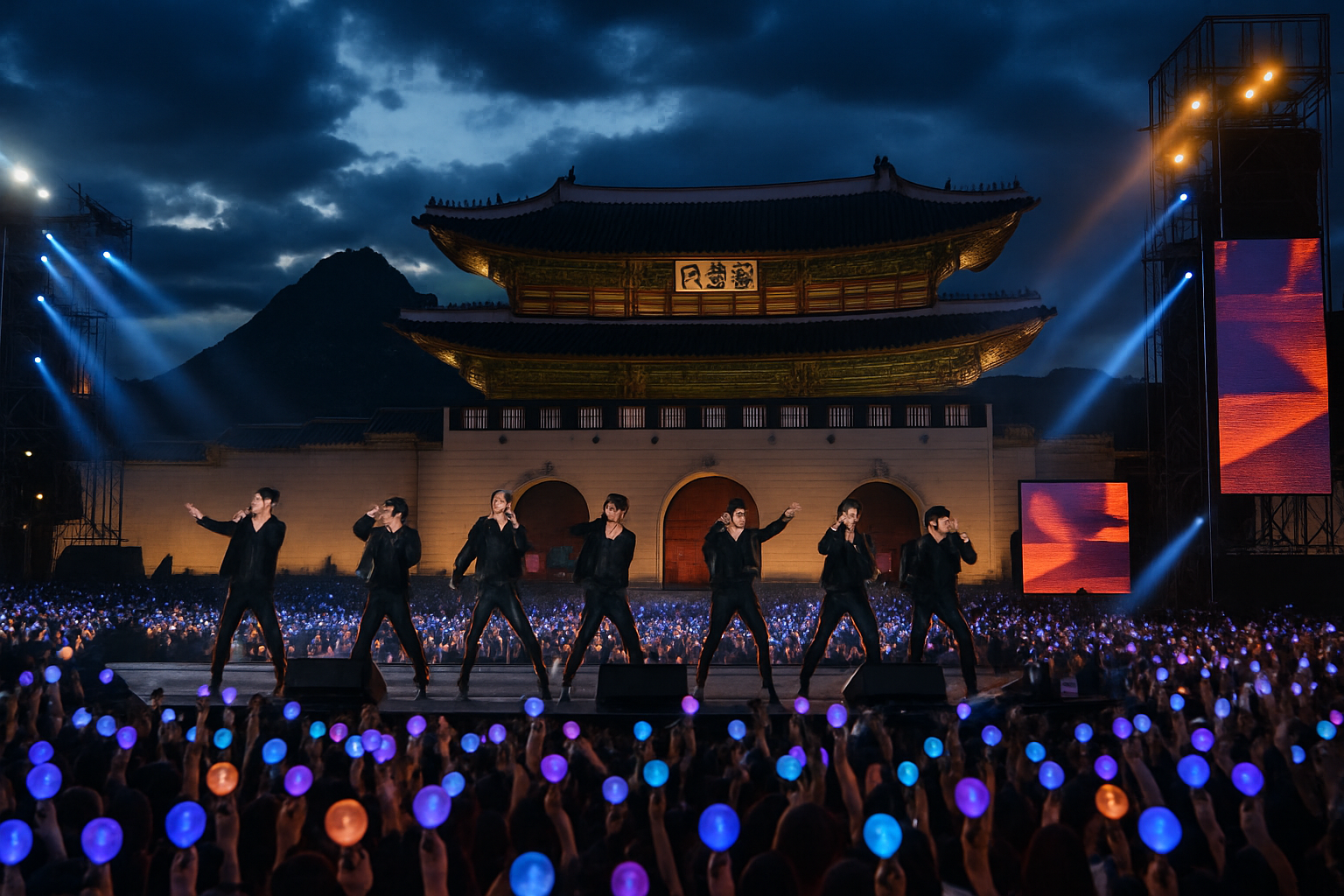
K-pop supergroup BTS successfully completed their highly anticipated return to the stage with a spectacular hourlong outdoor concert at Seoul's iconic Gwanghwamun Square, marking their official comeback as a complete group for the first time in nearly four years.
The historic performance, which drew an estimated 260,000 fans according to Seoul Metropolitan Police, transformed the traditional political and cultural gathering space into a massive entertainment venue, symbolizing the fusion of Korea's democratic heritage with its contemporary global cultural influence. This represented one of the largest entertainment events in Korean history and BTS's first group performance since 2022, following the completion of mandatory military service by all seven members: RM, Jin, Suga, J-Hope, Jimin, V, and Jungkook.
Seoul Transforms Into "BTS City"
The comeback event was far more than a single concert – it represented an unprecedented transformation of Seoul into what officials dubbed "BTS City." The entire metropolitan area coordinated elaborate displays across iconic landmarks including N Seoul Tower, Banpo Rainbow Bridge, and Lotte World Tower, creating a revolutionary fusion of entertainment and urban planning that generated over $500 million in economic activity.
Gwanghwamun Square's conversion from its traditional role as a site for democratic movements and cultural gatherings into a state-of-the-art concert venue required months of planning. The space was equipped with massive LED screens, sophisticated sound systems, and comprehensive security measures, while maintaining respect for its historical significance as the heart of Korean civic life.
"This concert represents more than entertainment – it's a celebration of Korean cultural identity reaching the global stage while honoring our democratic traditions."
— Seoul Metropolitan Government Official
Economic Impact and Fan Dedication
The economic impact of BTS's comeback extended far beyond ticket sales, affecting multiple sectors across the Korean economy. Hotel occupancy reached capacity weeks in advance, with rates increasing 300-400% compared to normal periods. International charter flights were added to accommodate global fans, while merchandise shortages created unprecedented secondary market dynamics.
The most striking example of fan dedication emerged through the ARMY Bomb light stick crisis. Official light sticks, normally priced at approximately $34 (50,000 won), surged to over $300 on resale markets – a staggering 900% increase – due to complete retail sellouts. This merchandise shortage highlighted the extraordinary demand surrounding BTS's return and the lengths to which fans would go to participate in the historic moment.
Cultural Significance and the "Arirang" Album
The timing of this comeback coincides with BTS's release of their "Arirang" album on March 20, 2026, which explores Korean cultural heritage through its title reference to a traditional Korean folk song. This strategic cultural integration represents the group's evolution from purely entertainment act to cultural ambassadors, addressing recent challenges in Korean entertainment's global expansion.
The album features collaboration with OneRepublic's Ryan Tedder, who described the project as "one of the most crazy things I've ever worked on." This partnership exemplifies sophisticated cross-cultural creative collaboration that respects multiple artistic traditions while creating innovative musical expressions.
Security Operations and International Coordination
The concert required the most comprehensive security operation in South Korean entertainment history. Seoul Metropolitan Police coordinated with international agencies from over 50 countries, reflecting BTS's recognition as a global cultural institution requiring state-level security planning. The operation successfully managed crowd control for 260,000 attendees while maintaining public safety and order.
This international security coordination demonstrated the diplomatic dimensions of major cultural events in the contemporary global landscape, where entertainment and cultural diplomacy increasingly intersect. The successful management of such a massive gathering during a time of heightened global tensions showcased Korean organizational capabilities and international cooperation.
Context of the "February 2026 Cultural Renaissance"
BTS's comeback occurs during what cultural analysts have termed the "February 2026 Cultural Renaissance," a period marked by unprecedented global cultural activity and the triumph of authentic cultural expression over homogenized commercial content. This movement has seen Korean entertainment achieve major milestones, including Oscar recognition for K-pop content and BLACKPINK's historic 100 million YouTube subscribers.
The success of the Gwanghwamun concert provides a template for addressing recent challenges Korean entertainment has faced, particularly organized boycott campaigns in Southeast Asian markets. By emphasizing authentic cultural heritage through the "Arirang" album and meaningful community engagement rather than purely commercial strategies, BTS demonstrated how entertainment can celebrate cultural specificity while maintaining international appeal.
Netflix Partnership and Global Reach
The concert was livestreamed globally through Netflix, representing the streaming platform's first major live K-pop broadcast and marking a significant evolution in how international audiences access Korean cultural content. The partnership prioritized artist creative control while democratizing global distribution, contrasting with traditional Hollywood production models.
Netflix's documentary "BTS: The Return," premiering March 27, 2026, will chronicle the behind-the-scenes creative process and the group's experiences during their military service hiatus, providing additional context for this historic comeback moment.
Looking Forward: Global Tour Launch
The Seoul concert serves as the launching point for BTS's worldwide tour beginning April 2026, positioning the group as cultural diplomats bridging international divides through authentic artistic expression. The tour will include 82 dates spanning multiple continents, including significant stops in Latin American markets such as Mexico City, Bogotá, Lima, Santiago, Buenos Aires, and São Paulo.
This global expansion strategy demonstrates how the lessons learned from the Seoul comeback – balancing cultural authenticity with international accessibility – will inform BTS's continued role as pioneers in the global entertainment landscape.
Industry Transformation and Future Implications
The success of BTS's Gwanghwamun Square concert establishes new benchmarks for the entertainment industry's integration of cultural heritage with commercial success, transformation of urban spaces for global entertainment, and balance between authentic artistic expression and international market demands.
The event validates the entertainment industry's shift toward celebrating diverse voices and authentic cultural experiences over homogenized content, proving that audiences worldwide demonstrate sophisticated appreciation for genuine cultural expression that transcends traditional geographic and linguistic boundaries.
As BTS embarks on their global tour, the template established by their Seoul comeback – honoring cultural heritage while embracing international collaboration – offers a sustainable model for entertainment expansion that celebrates cultural diversity while building meaningful international connections through authentic artistic expression.