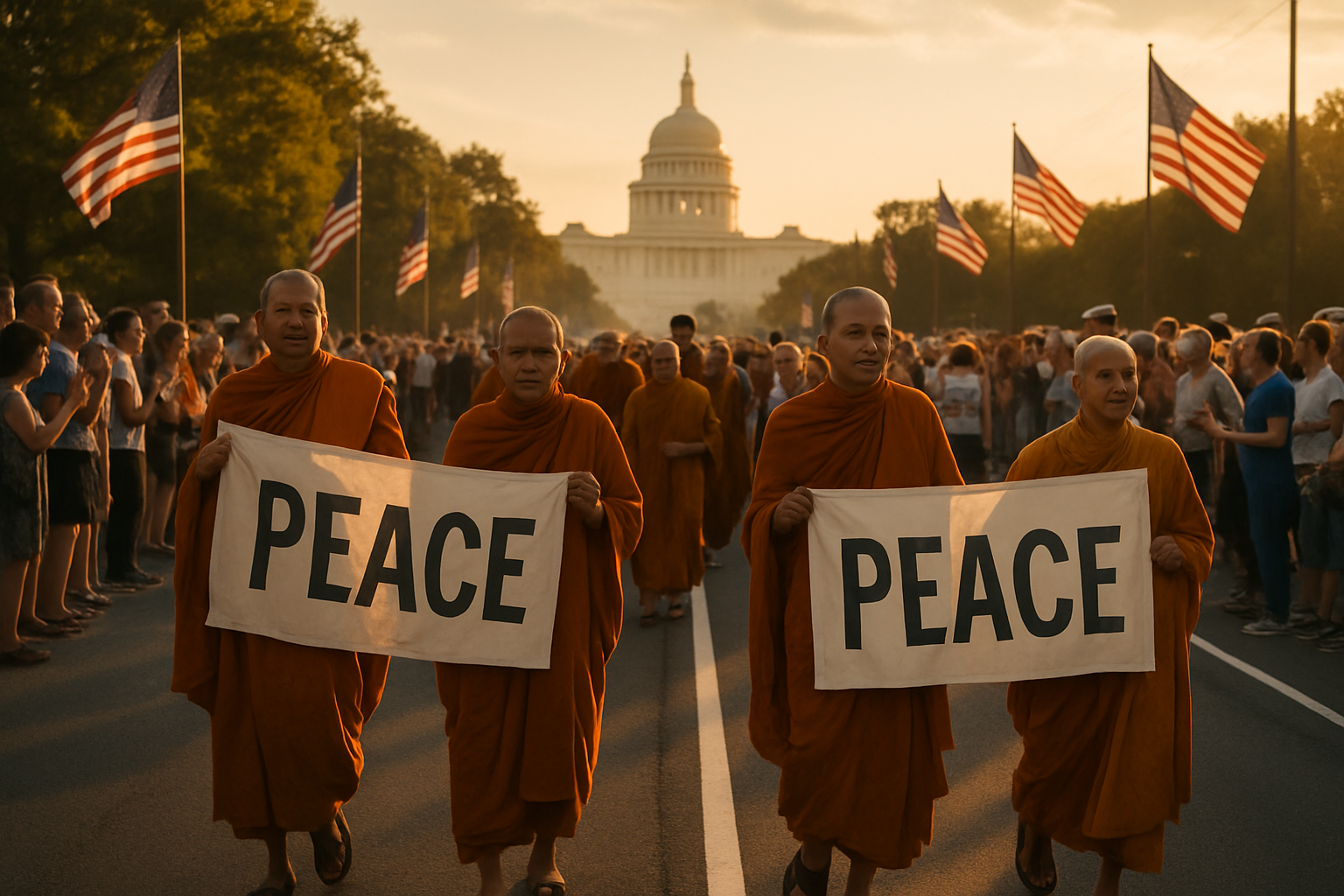
Twenty Buddhist monks draped in burnt-orange robes arrived in Washington D.C. on Tuesday, February 10, 2026, completing an extraordinary 3,700-kilometer (2,300-mile) "Walk for Peace" that captured the hearts of thousands of Americans across nine states during their 108-day spiritual journey.
The remarkable pilgrimage, which began in Texas, represents one of the most significant Buddhist peace demonstrations in modern American history, drawing crowds of supporters and sparking conversations about non-violence, compassion, and unity in a deeply divided nation.
A Message of Peace Resonates Across America
The monks' arrival in the nation's capital marks the culmination of a self-described spiritual journey that has been "cheered on by crowds of thousands," according to international media reports. The 108-day trek, spanning approximately three and a half months, took the monks through diverse American landscapes and communities, from rural Texas to the corridors of power in Washington D.C.
"I feel like in our country and in our world right now that you have to show your support for peace in every possible way you can. And so this is a beautiful way to show that support,"
— Bob Anderson, 74, of Gloucester County, Virginia
Anderson's words, spoken during the monks' stop in Richmond on February 3, capture the sentiment expressed by thousands of Americans who lined the streets to witness this unprecedented demonstration of peaceful determination.
International Movement Gains Global Recognition
The peace walk has achieved what organizers describe as "superstar status" in the United States, with the 19-20 Buddhist monks becoming household names across communities they've visited. The number of participating monks varied slightly between reports, with sources indicating between 19 and 24 participants throughout the journey.
The initiative has drawn significant international attention, with media outlets across Europe, Asia, and the Americas covering the monks' progress. Swiss media noted that the monks have received substantial support "on Social Media and at the roadside," highlighting the grassroots nature of American support for their message.
According to German media reports, the action has been called a "Walk for Peace" or "March for Peace," emphasizing the universal language of their mission that transcends cultural and linguistic barriers.
Spiritual Journey Through Nine States
The monks' route took them through nine American states, creating what observers have called a "diagonal of peace" across the continental United States. Their journey began in Texas and wound through diverse American communities, allowing them to engage with people from vastly different backgrounds, political beliefs, and life experiences.
The visual impact of the monks walking in their traditional saffron and burnt-orange robes has proven particularly powerful. Photographs and videos of the procession, often showing supporters wearing reflective vests alongside casually dressed Americans in winter clothing, have circulated widely on social media platforms.
A Mission of Non-Violence in Troubled Times
The timing of the peace walk carries particular significance, occurring during a period of heightened political tensions and social divisions in American society. The monks' message of non-violence and compassion has provided what many Americans describe as a much-needed reminder of peaceful alternatives to conflict resolution.
The spiritual nature of their journey has attracted supporters from various religious and non-religious backgrounds, suggesting that their message of peace transcends traditional sectarian boundaries. The monks have maintained their traditional Buddhist practices throughout the walk, including regular meditation and adherence to their monastic vows.

Cultural Bridge-Building Through Action
The peace walk has served as an unexpected cultural bridge in American society, bringing together people who might otherwise never interact. Reports indicate that the monks have been welcomed by Americans across the political spectrum, suggesting that their message of peace has universal appeal regardless of partisan affiliation.
The monks' approach has been notably non-confrontational, focusing on positive messaging about peace and non-violence rather than criticism of specific policies or political figures. This strategy appears to have contributed to their broad appeal and the warm reception they've received in communities across the country.
Logistical Achievement and Community Support
Completing a 3,700-kilometer walk across the United States represents a significant logistical achievement that required careful planning and substantial community support. The monks needed accommodation, food that adhered to their dietary requirements, and safety measures throughout their journey.
Local communities have stepped up to provide support, with many Americans opening their homes, businesses, and places of worship to assist the monks. This grassroots support network has become part of the story itself, demonstrating American hospitality and interfaith cooperation.
International Buddhist Community Response
The peace walk has also garnered attention from Buddhist communities worldwide, with many viewing it as a powerful demonstration of engaged Buddhism in action. The monks' willingness to undertake such a physically demanding journey for their beliefs has been praised by Buddhist leaders and practitioners globally.
The initiative reflects broader trends in contemporary Buddhism toward active engagement with social and political issues, moving beyond traditional monastery-based practice to public demonstration of Buddhist principles.
Washington Arrival and Next Steps
The monks' arrival in Washington D.C. on Tuesday represents not just the end of their walk, but potentially the beginning of a new phase in their peace mission. The nation's capital provides a symbolic backdrop for their message, with its concentration of political power and decision-makers.
While specific plans for their time in Washington have not been detailed in available reports, the monks' presence in the capital is likely to generate additional media attention and potentially meetings with political and religious leaders.
Legacy of the Peace Walk
Regardless of what comes next, the Buddhist monks' 3,700-kilometer peace walk has already established itself as a significant moment in both American Buddhist history and contemporary American social movements. Their demonstration that large-scale peaceful protest can capture public imagination and support offers lessons for other advocacy efforts.
The walk has also provided a counter-narrative to prevailing assumptions about American receptiveness to Buddhist teachings and practices, showing that messages of peace and non-violence can find broad support across diverse American communities.
As the monks rest in Washington after their remarkable journey, their achievement stands as a testament to the power of peaceful determination and the universal appeal of messages of compassion and non-violence. Their 108-day walk across America will likely be remembered as a unique moment when ancient Buddhist wisdom met modern American society on the highways and streets of the nation.