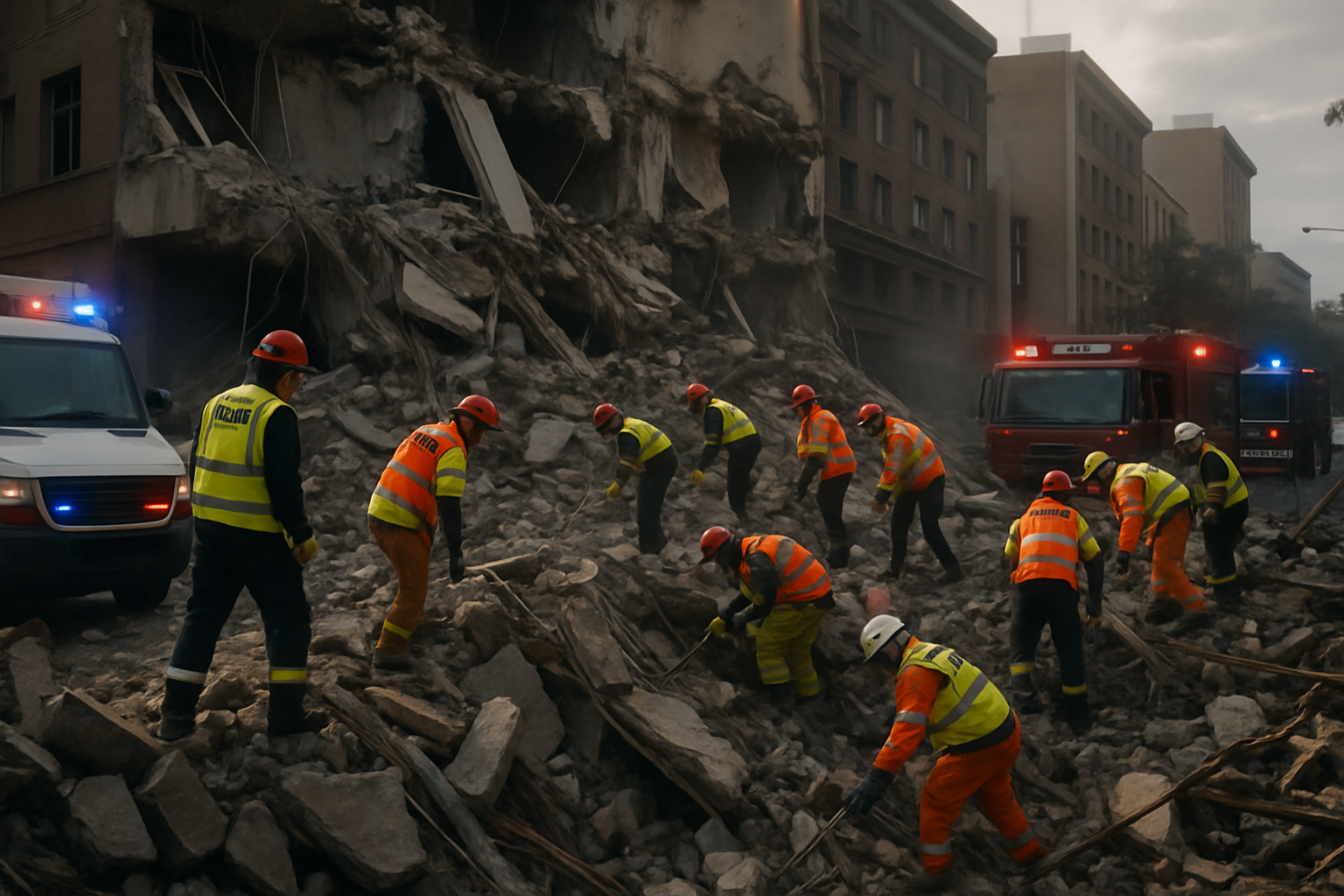
Two devastating building collapses occurring simultaneously in Kenya and Pakistan have resulted in multiple fatalities and dozens of injuries, highlighting critical infrastructure safety concerns across both nations as emergency responders continue rescue operations.
Nairobi Building Collapse Claims Lives
In Nairobi's Shauri Moyo area, scores of people are believed to be trapped under the rubble of a partially demolished building that collapsed while residents were collecting personal items from the structure. The collapse occurred without warning, catching multiple individuals who had entered the unstable building to retrieve belongings.
Emergency services have deployed comprehensive rescue teams to the scene, with operations continuing around the clock to locate and extract survivors from the debris. The partially demolished state of the building has complicated rescue efforts, as the structural integrity was already compromised before the final collapse.
Local authorities have cordoned off the area and are coordinating with the Kenya Red Cross and other emergency response agencies to ensure all possible survivors are reached. The exact number of casualties remains under verification as rescue operations continue.
Rahim Yar Khan Shop Roof Collapse
In Pakistan's Rahim Yar Khan district, a catastrophic roof collapse at a local shop claimed at least five lives and injured multiple others during the distribution of Benazir Income Support Programme (BISP) payments. The tragedy occurred when over 200 women had gathered at a shop in the Chak 125-P area to collect financial aid.
"The roof, built with substandard material, could not bear the load of the women and collapsed,"
— Mohammad Ateeq Khan, District Administration Spokesperson
According to BISP Rahim Yar Khan Director Talha Bin Amman, five women died while 20 were injured during the mishap. The majority of casualties occurred when the ceiling suddenly gave way, trapping those gathered inside for the aid distribution.
Sheikh Zayed Medical College Hospital received 30 injured women for immediate medical treatment, with an emergency declared by the district administration to handle the crisis. Principal medical staff confirmed that rescue operations successfully extracted victims from the debris, though the death toll remains tragically high.
Infrastructure Safety Crisis Exposed
Both incidents have raised serious questions about building safety standards and structural inspection protocols in their respective countries. The Pakistan collapse specifically involved substandard construction materials that failed under normal occupancy loads, while the Kenya incident highlights the dangers of partially demolished structures.
Deputy Commissioner Zaheer Anwar confirmed the Pakistan fatalities and stated that authorities have launched a comprehensive investigation to determine the exact cause of the collapse. Local officials are also coordinating relief efforts to support the victims and their families during this difficult time.
Historical Context of Building Failures
These collapses occur against a backdrop of increasing infrastructure challenges across both regions. Previous incidents have demonstrated the urgent need for stricter building codes, regular inspections, and proper enforcement of safety standards.
The timing of the Pakistan collapse during a government aid distribution adds particular tragedy to the incident, as vulnerable families gathering for essential support became victims of inadequate infrastructure. The incident has prompted calls for enhanced safety protocols at all government program venues.
Emergency Response and Investigation
Emergency services in both locations have been praised for their rapid response, though the scale of both incidents has stretched resources considerably. In Pakistan, Rescue 1122 officials immediately began relief activities and coordinated the transfer of injured victims to medical facilities.
Authorities in both countries have initiated thorough investigations into the structural failures. The findings are expected to inform future building safety regulations and inspection requirements to prevent similar tragedies.
The investigations will examine construction practices, material quality, load-bearing calculations, and whether proper safety protocols were followed during the original construction phases of both structures.
Community Impact and Support
The tragedies have deeply affected local communities, with families anxiously awaiting news of missing relatives. The Pakistan incident particularly impacted women from economically disadvantaged households who were depending on the BISP payments for basic necessities.
Local authorities are providing immediate support to affected families, including emergency accommodation for those displaced and medical care for the injured. Community leaders have called for enhanced building safety measures to prevent future casualties.
The incidents underscore the critical importance of proper building maintenance, regular safety inspections, and adherence to construction standards, particularly in structures that serve vulnerable populations or house essential services.
Long-term Safety Implications
Both collapses highlight systemic issues requiring comprehensive reform of building safety regulations, inspection procedures, and enforcement mechanisms. The tragic loss of life demonstrates the urgent need for proactive measures to ensure structural integrity before buildings become public safety hazards.
As rescue operations continue and investigations proceed, these incidents serve as stark reminders of the critical importance of infrastructure safety and the devastating consequences when building standards fail to protect human life.