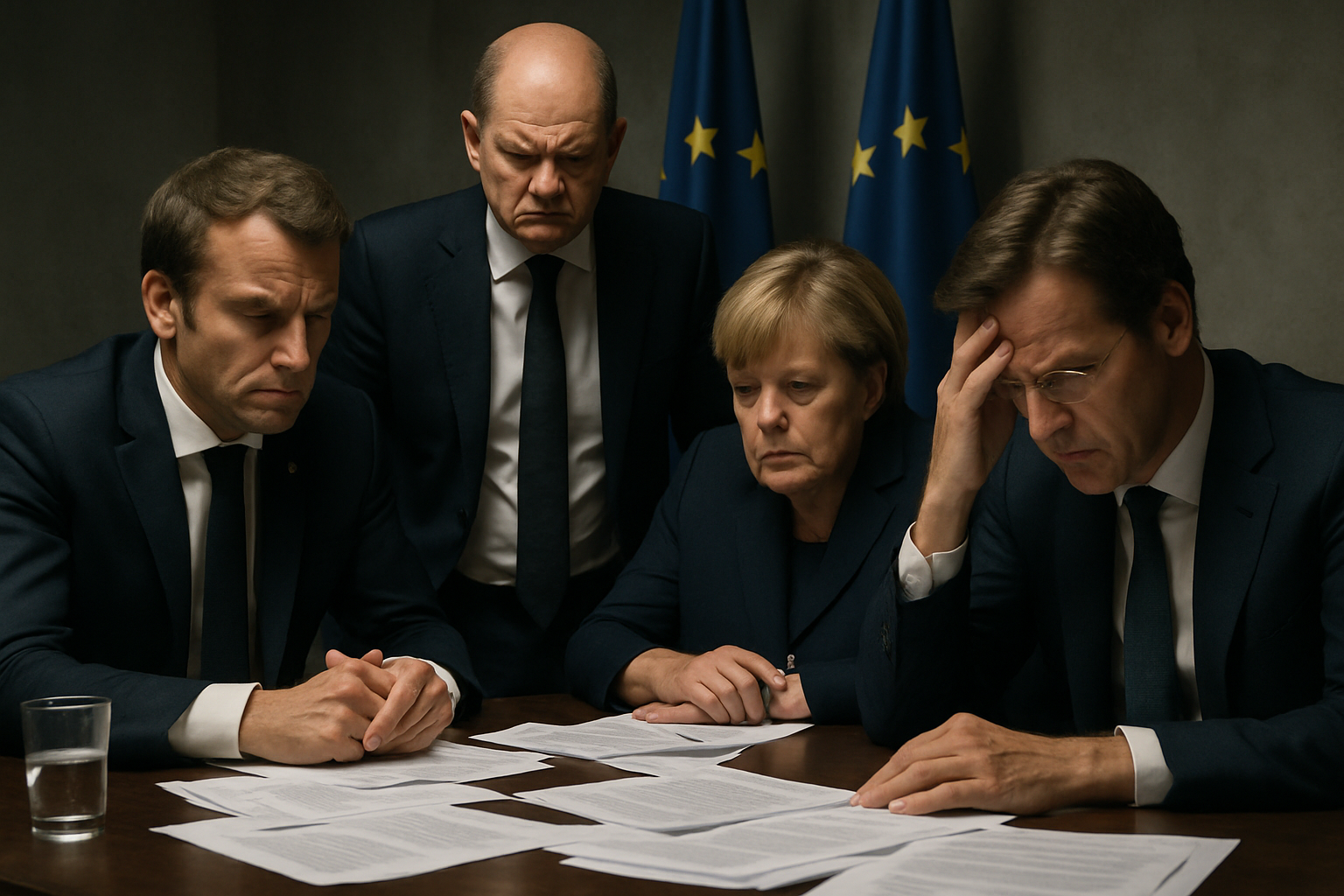
Europe is experiencing its most significant political realignment in decades as multiple nations simultaneously navigate electoral victories, government formations, and coalition crises that could reshape the continent's trajectory for years to come.
The political landscape across Europe shifted dramatically on April 20, 2026, as final results from several key developments emerged, painting a complex picture of democratic governance under pressure and the evolving relationship between national sovereignty and European integration.
Bulgaria's Historic Electoral Mandate
With 100% of protocols counted, Bulgaria's Central Election Commission confirmed that Rumen Radev's Progressive Bulgaria coalition secured a commanding victory with 44.594% of the vote, translating to approximately 135 seats in the 240-member parliament. This represents the first absolute majority achieved by any party since 1997, effectively ending five years of unprecedented political instability that began with the 2020-2021 anti-corruption protests.
The electoral breakdown reveals a dramatic political realignment: GERB-SDS, previously the dominant force under Boyko Borissov, collapsed to just 13.387% of the vote. The Continue the Change-Democratic Bulgaria (PP-DB) alliance secured 12.618%, while the Movement for Rights and Freedoms (DPS) garnered 7.12%. The far-right Vazrazhdane party crossed the parliamentary threshold with 4.257% of votes.
"This is a victory of hope over distrust, freedom over fear, and morality over self-interest," Radev declared in his victory speech.
— Rumen Radev, Progressive Bulgaria Leader
Notably, several previously significant parties fell below the 4% threshold, including the Bulgarian Socialist Party (BSP) with 3.017% - marking the first time in the party's history it failed to enter parliament. This represents a seismic shift in Bulgarian politics, where traditional left-right divisions have been replaced by new political formations focused on anti-corruption and European integration.
Hungary's Government Transition
Meanwhile, Hungary witnessed significant developments as Péter Magyar's Tisza Party announced the first seven ministerial appointments for what they term the "future Tisza government." This announcement follows mounting pressure on Viktor Orbán's administration and comes at a critical juncture for Hungary's relationship with the European Union.
The Tisza Party has positioned itself as a pro-European alternative to Orbán's increasingly confrontational stance with Brussels. Magyar, a former government insider turned opposition leader, has consolidated support behind a platform promising wealth taxes, euro adoption, and stronger EU and NATO ties.
The timing of these announcements coincides with Hungary's ongoing blockade of the €90 billion Ukraine aid package over the Druzhba pipeline dispute, which has created the deepest institutional crisis within the EU since the bloc's formation. The opposition's ministerial announcements signal preparation for potential governance responsibilities amid growing international pressure on the current administration.
Romanian Coalition Under Strain
In Romania, political tensions reached a critical threshold as UDMR parliamentary leader Csoma Botond declared that if the Social Democratic Party (PSD) withdraws its ministers from the government, coalition discussions must restart "from zero" and can no longer be tied to "a single person." This statement reflects deepening fissures within Romania's governing coalition amid disagreements over budget priorities and EU fiscal requirements.
The Romanian political crisis exemplifies broader challenges facing European coalition governments as they attempt to balance domestic political pressures with international obligations. The tension between PSD and other coalition partners over fiscal policy demonstrates the ongoing difficulty of maintaining stable governance in an era of heightened political polarization.
Slovakia's Referendum Decisions
President Peter Pellegrini's decision regarding a proposed referendum has added another dimension to Central European political dynamics. While specific details remain limited, the development represents Slovakia's continued navigation between domestic political pressures and European integration requirements.
The referendum question appears to center on critical issues affecting Slovakia's political future, including questions about judicial independence and the National Anti-Corruption Office (NAKA). However, reports indicate that a key question has been rejected, suggesting internal political tensions over the scope and timing of direct democracy initiatives.
Regional Implications Beyond Europe
The political developments extend beyond traditional European boundaries, with developments in Mauritania providing additional context for understanding contemporary political realignments. The announcement by Mustafa Ould Abeid Rahman, leader of the Democratic Renewal Party, regarding his withdrawal from the ruling Al-Insaf party and merger with the Reform Party, illustrates similar patterns of political realignment occurring globally.
"What drove us to this decision is the strength and comprehensiveness of the Reform Party's political vision, as well as its organizational cohesion," the party stated in their announcement.
— Democratic Renewal Party Statement
European Integration at a Crossroads
These simultaneous political developments occur against the backdrop of broader European integration challenges. Bulgaria's victory represents a potential return to pro-European governance after years of political instability, while Hungary's situation remains fluid with implications for EU decision-making processes.
The historical context is crucial: Europe has experienced what observers describe as "the most challenging period for continental democracy since World War II." Despite 89% of Europeans demanding greater EU unity according to Eurobarometer polling, the political reality demonstrates increasing fragmentation and institutional strain.
Bulgaria's recent eurozone membership (effective January 1, 2026) adds strategic significance to its political stability. As a NATO member hosting the Balkan Stream pipeline, the country plays a crucial role in European energy security. The new government's commitment to European integration could provide stability in a region facing multiple geopolitical pressures.
Challenges and Opportunities Ahead
The convergence of these political developments creates both opportunities and challenges for European governance. Bulgaria's absolute parliamentary majority provides the political stability necessary for implementing comprehensive reforms without the coalition negotiations that have paralyzed previous governments.
However, concerns remain about potential policy directions, particularly regarding relationships with Russia and Ukraine. Some European officials have expressed private concerns about the new Bulgarian leadership's previous positions on EU sanctions and Ukraine military aid, though the campaign platform emphasized accelerated European integration.
Hungary's political transition, whether through electoral change or continued confrontation with Brussels, will significantly impact EU institutional dynamics. The enhanced cooperation discussions that have accelerated in response to Hungarian obstruction could fundamentally alter European decision-making processes for decades.
Romania's coalition tensions reflect broader challenges facing multi-party governance across Europe, where traditional political arrangements are under strain from economic pressures, migration challenges, and questions about national sovereignty within the European framework.
Democratic Resilience and Innovation
Despite the challenges, these developments demonstrate the fundamental resilience of European democratic institutions. The peaceful conduct of elections, constitutional governance maintenance, and orderly political transitions occur even under unprecedented pressures from foreign interference, economic disruption, and institutional strain.
The success of opposition movements in consolidating around clear alternatives, as seen in Bulgaria and Hungary, provides hope for democratic renewal. However, the fragmentation of traditional political parties and the rise of new formations require institutional innovation to maintain effective governance.
European leaders face the challenge of channeling political tensions through electoral competition while preserving the institutional integrity that has underpinned continental success since 1945. The outcomes of current political developments will establish crucial precedents for democratic governance in an increasingly complex global environment.
Looking Forward
The coming months will be decisive for Europe's political trajectory. Bulgaria's new government faces the immediate challenge of forming a cabinet and implementing its ambitious reform agenda while managing relationships with European partners who have expressed concerns about previous policy positions.
Hungary's political future remains uncertain, with the potential for significant changes in both domestic governance and European relations. The resolution of the Ukraine aid blockade and broader EU institutional reforms may depend on developments in Budapest.
Romania's coalition crisis requires careful management to maintain governmental stability while addressing the fundamental policy disagreements that have emerged between coalition partners.
These developments occur as Europe faces multiple simultaneous challenges: ongoing conflict in Ukraine, energy security concerns, climate policy implementation, and the broader question of democratic governance adaptation in the 21st century. Success in navigating these political transitions while maintaining institutional integrity will determine whether Europe emerges stronger from this period of transformation or faces continued fragmentation that undermines the European project's foundational principles.
The stakes extend beyond Europe's borders, as international observers monitor these developments for insights into democratic resilience under pressure. The European experience in managing political change while preserving democratic institutions will influence global governance approaches for years to come, making the current moment truly historic in its implications for both continental and international political development.