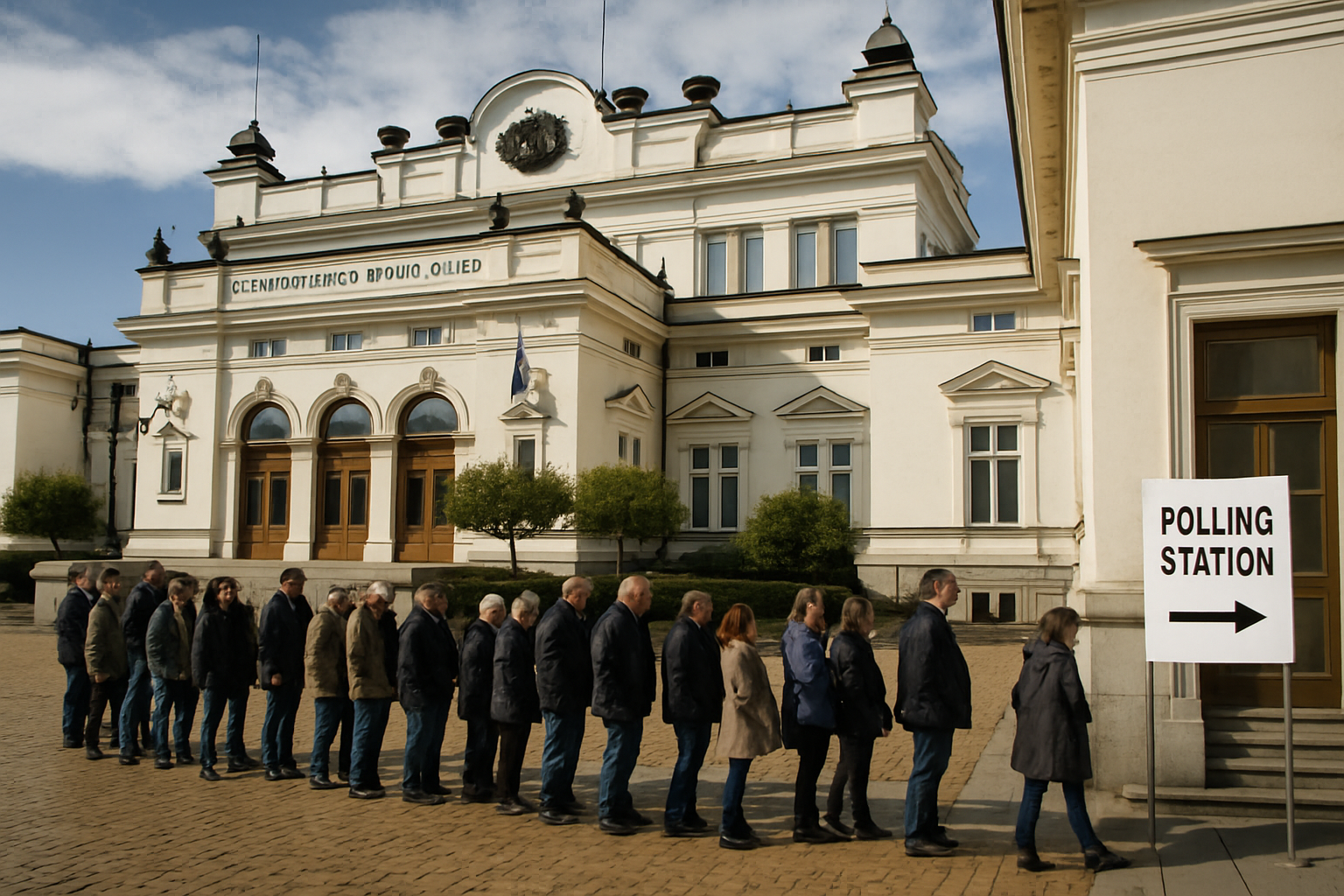
Former Bulgarian President Rumen Radev's Progressive Bulgaria coalition achieved a historic landslide victory in Sunday's parliamentary elections, securing 44.7% of the vote and an absolute majority in parliament, according to near-final results with 97.52% of ballots counted.
The stunning result marks the end of Bulgaria's unprecedented period of political instability that has plagued the EU's poorest member state since 2021, when mass anti-corruption protests toppled the long-dominant GERB government of Boyko Borissov.
Decisive Victory Breaks Political Deadlock
With Progressive Bulgaria capturing between 129 and 135 seats in the 240-member parliament, Radev's coalition has secured the absolute majority needed to govern without coalition partners—a feat not achieved in Bulgarian politics since 1997. This decisive outcome effectively ends the cycle of eight elections held over five years, during which no government managed to complete a full term.
The scale of the victory has shocked political observers, with multiple international sources describing the performance as "exceeding opinion poll forecasts" and representing "one of the strongest results for a single party in a generation." The win puts Progressive Bulgaria far ahead of traditional political forces, with GERB-SDS collapsing to just 13.4% and the pro-European We Continue the Change-Democratic Bulgaria (PP-DB) coalition managing only 12.8%.
"This is a victory of hope over distrust, a victory of freedom over fear, a victory of morality over self-interest."
— Rumen Radev, Progressive Bulgaria Leader
International Reactions and Concerns
The electoral triumph has generated mixed international reactions, with European officials expressing cautious optimism while privately voicing concerns about Radev's past pro-Russian positions. The former president, who stepped down from the presidency in January to lead Progressive Bulgaria, has previously criticized EU sanctions against Russia and opposed military support for Ukraine's war effort against Moscow.
European analysts have drawn comparisons between Radev and Hungary's Viktor Orbán, warning of potential challenges to EU unity. However, Dr. Petia Gueorguieva from New Bulgarian University suggests that Radev has "successfully consolidated a highly heterogeneous electorate, uniting pro-reform citizens with more Eurosceptic and economically vulnerable groups."
A Campaign Built on Anti-Corruption Promises
Radev's electoral success was built on a comprehensive 240-page platform promising to "end oligarchy" and tackle the corruption that has long plagued Bulgarian politics. His campaign pledged judicial independence restoration, media freedom expansion, wealth taxes targeting oligarchs, and accelerated European integration—positions that resonated strongly with voters frustrated by years of governmental paralysis.
The political instability that began with the 2020-2021 mass protests had severely hampered Bulgaria's ability to absorb EU funds and implement necessary reforms, contributing to ongoing brain drain and demographic decline. The repeated elections cost an estimated €150 million while preventing the country from addressing structural challenges ranging from infrastructure needs to wage stagnation.
Electoral Mathematics and Coalition Possibilities
Final results show Progressive Bulgaria with 44.72% of the vote, translating to approximately 135 seats—well above the 121 needed for an absolute majority. This strong showing eliminates the need for the complex coalition negotiations that have stymied previous governments during the crisis period.
The electoral breakdown reveals a dramatic political realignment:
- Progressive Bulgaria: 44.72% (135 seats)
- GERB-SDS: 13.39% (36 seats)
- PP-DB: 12.81% (36 seats)
- DPS: 6.75% (21 seats)
- Vazrazhdane: 4.2% (12 seats)
Geopolitical Implications
Bulgaria's strategic position as a NATO member, EU state, and recent eurozone entrant (joining in January 2026) makes political stability crucial for regional security. The country hosts the Balkan Stream pipeline, critical for European energy security, while its democratic development serves as a template for other Balkan nations seeking EU membership.
Radev's victory comes at a time of heightened European tensions, with the ongoing conflict in Ukraine testing EU unity and democratic resilience across the continent. His past statements opposing military aid to Ukraine and calling for renewed ties with Russia have raised concerns in Brussels about potential challenges to collective EU foreign policy.
However, sources close to the campaign suggest that Radev's platform emphasized European integration acceleration rather than confrontation, indicating a potential evolution in his approach to EU relations. The party's comprehensive reform agenda includes anti-corruption measures and democratic institution strengthening that align with European values.
Economic Challenges Ahead
The new government will inherit significant economic challenges, including the need to address Bulgaria's status as the EU's poorest member state. High inflation, limited wage growth, and pressing infrastructure needs require sustained governance—something the country has lacked during five years of political instability.
The electoral mandate provides Radev with unprecedented legislative authority to implement his agenda without the coalition negotiations that have paralyzed previous governments. His promises to tackle oligarch influence through wealth taxation and restore judicial independence represent ambitious reforms that could transform Bulgaria's economic and political landscape.
European Integration Pathway
Despite concerns about his Russia-friendly rhetoric, Radev's platform explicitly commits to accelerating European integration while addressing domestic inequality and corruption. This dual approach of European alignment combined with addressing voter concerns about economic stagnation may provide a template for other EU member states facing similar challenges.
The eurozone membership Bulgaria achieved in January 2026 creates additional incentives for maintaining European institutional alignment while implementing domestic reforms. Success in this balancing act could influence political developments across Eastern Europe, where similar tensions between sovereignty and integration persist.
Looking Forward
The scale of Progressive Bulgaria's victory—the most decisive Bulgarian electoral outcome since 1997—provides Radev with both unprecedented opportunity and significant responsibility. The mandate enables comprehensive reform implementation while testing whether electoral success can translate into effective governance addressing the accumulated challenges of five years of political paralysis.
International observers will closely monitor whether this electoral breakthrough can provide the democratic stability Bulgaria desperately needs while maintaining its European trajectory. The success or failure of Radev's government could establish important precedents for democratic governance in post-communist EU member states facing similar pressures from political fragmentation and economic challenges.
As Bulgaria emerges from its longest period of governmental deadlock since joining the EU in 2007, the Radev administration faces the critical test of proving that democratic institutions can adapt to 21st-century challenges while preserving both national sovereignty and European integration commitments.