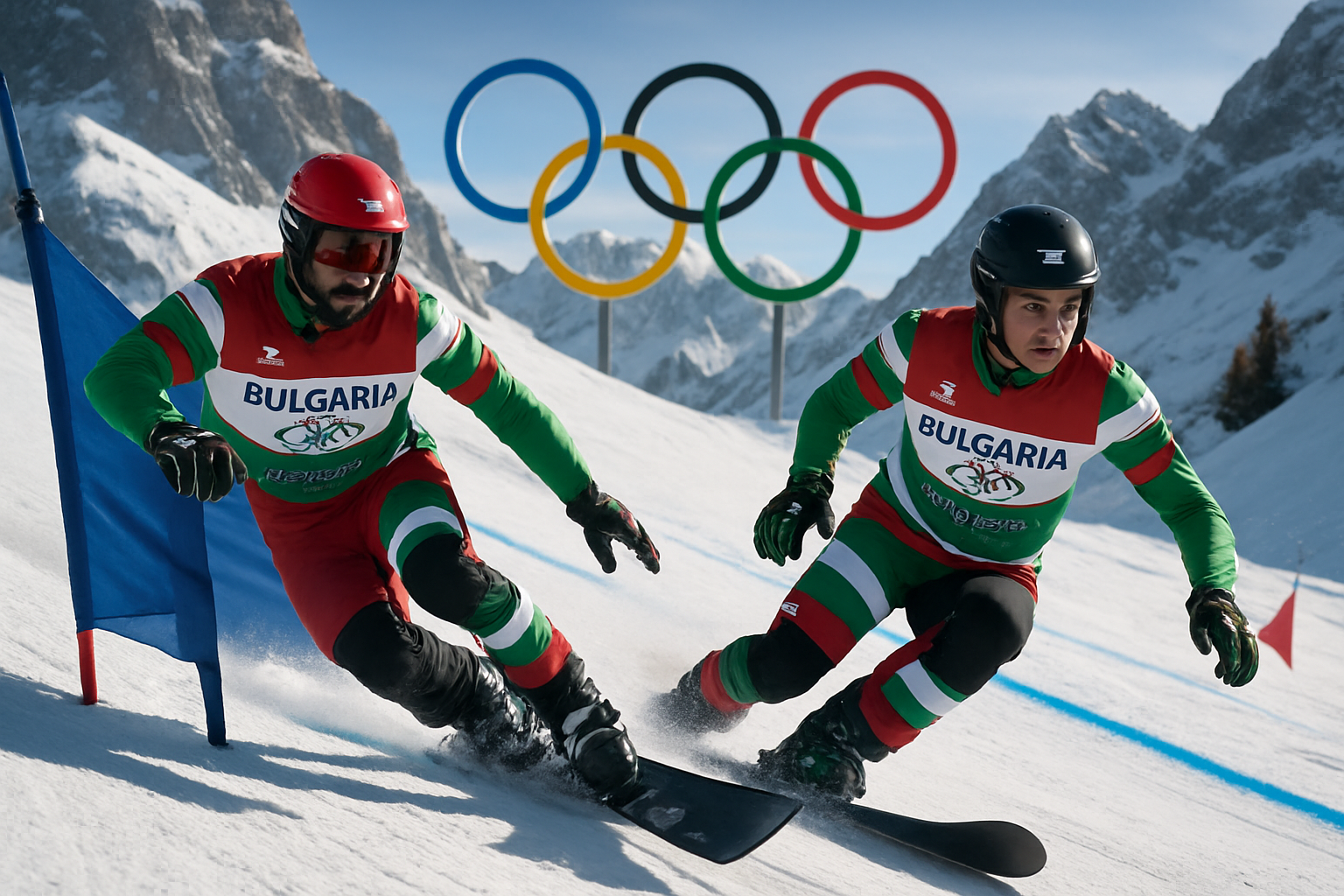
Ten Bulgarian athletes launched their medal campaigns on the second day of the Milano-Cortina 2026 Winter Olympics, leading a diverse slate of competitions across the most geographically dispersed Olympic Games in history.
The Bulgarian contingent, spearheaded by alpine snowboard athletes Radoslav Yankov, Tervel Zamfirov, Aleksandar Krashnyak, and Malena Zamfirova, opened their pursuit of Olympic glory in the parallel giant slalom qualifications at 10:00 AM local time. The top 16 competitors from both genders advanced to the elimination finals beginning at 2:00 PM.
Bulgarian Debut in Multiple Disciplines
At 1:30 PM, cross-country skiers Daniel Peshkov and Mario Matikanov made their Olympic debuts in the demanding skiathlon discipline, representing Bulgaria's expanded presence in Nordic skiing events. The skiathlon combines both classical and freestyle techniques, testing athletes' versatility across the demanding 15-kilometer course for men.
The Bulgarian Olympic team's participation reflects the nation's growing investment in winter sports development, particularly following successful performances in recent World Cup competitions. Team officials expressed optimism about medal prospects across multiple disciplines, with particular confidence in the alpine snowboarding events.
Global Competition Context
Bulgaria's Olympic campaign unfolds within the framework of the Milano-Cortina 2026 Games, officially the most geographically dispersed Winter Olympics in history. Competition venues span over 400 kilometers across northern Italy, from Milan to Cortina d'Ampezzo, representing a revolutionary dual-city hosting model that emphasizes sustainability and existing venue utilization.
The Games feature nearly 3,000 athletes from 92 countries competing in 116 medal events across 16 sports through February 22. Historic participations include Saudi Arabia's Winter Olympic debut and first-time Caribbean bobsleigh teams from Jamaica and Trinidad & Tobago, demonstrating the global reach of winter sports development.
"The geographic distribution of these Games creates unique challenges but also opportunities for athletes to showcase their skills across Italy's most iconic winter sports venues."
— IOC President Kirsty Coventry
Technological Innovation and Sustainability
The Milano-Cortina Games mark several technological firsts, including Alibaba Cloud's deployment of the first Olympic Large Language Model (LLM) integration through their Qwen AI system, providing enhanced broadcasting and spectator services. OMEGA has introduced AI-powered figure skating analysis to assist judges and viewers in understanding complex technical elements.
Cultural innovations include bilingual place names in Alto Adige/South Tyrol region, accommodating the area's German-speaking population, and the introduction of Milo and Tina, dubbed the first "Gen Z" Olympic mascots. Sustainable Olympic villages feature greenhouse spaces and wood materials, reflecting the Games' environmental consciousness.
Infrastructure and Weather Challenges
Despite successful competition launches, organizers continue addressing infrastructure challenges, including incomplete cable car systems in Cortina that have forced local school closures for transportation management. However, competition venues have proven ready for Olympic-level events, with NHL-quality ice surfaces prepared by experienced ice masters Don Moffatt and Mark Messer.
Europe's harshest winter in decades, with temperatures reaching -30°C in some regions, has created ideal natural snow conditions while presenting logistical challenges. The extreme weather has paradoxically benefited competitions by reducing reliance on artificial snow systems.
Security and International Cooperation
The Games proceed under extensive security measures following pro-Russian cyberattacks on Olympic venues and Italian diplomatic facilities hours before the opening ceremony. Italian Foreign Minister Antonio Tajani confirmed that security services successfully countered these attacks, demonstrating international cooperation in protecting Olympic integrity.
Political tensions have emerged over the presence of U.S. Vice President J.D. Vance and Secretary of State Marco Rubio, whose ICE agents' presence sparked criticism from Italian politicians and raised concerns about potential anti-American demonstrations during the opening ceremony.
Notable Early Results
Competition began February 5 with mixed doubles curling, despite power outages that temporarily darkened scoreboards at the Cortina venue. Italy defeated South Korea 8-4, while Sweden overcame Czech Republic 7-4, establishing early momentum for host nation and traditional winter sports powers.
The Swiss delegation achieved the first gold medal of the Games, with Franjo von Allmen winning men's alpine skiing downhill in a spectacular performance on the Stelvio course in Bormio. Italy celebrated a double podium finish with Giovanni Franzoni claiming silver and Dominik Paris securing bronze in his fifth Olympic attempt.
Looking Ahead
Bulgarian athletes face intensifying competition as the Games progress, with traditional winter sports powerhouses Norway, Netherlands, and Germany deploying strong delegations across multiple disciplines. Norway's cross-country skiing legend Johannes Høsflot Klæbo and the Netherlands' speed skating team are expected to dominate their respective events.
The Bulgarian team's performance will be closely monitored by national sporting officials as the country continues developing its winter sports infrastructure and athlete development programs. Success at Milano-Cortina 2026 could catalyze increased investment in winter sports facilities and youth development programs.
As competition continues across the seven Olympic venues, Bulgaria's ten athletes represent not just their nation's Olympic aspirations but the broader democratization of winter sports participation beyond traditional alpine nations. Their performances in the coming days will help determine whether this Olympics marks a breakthrough for Bulgarian winter sports on the global stage.