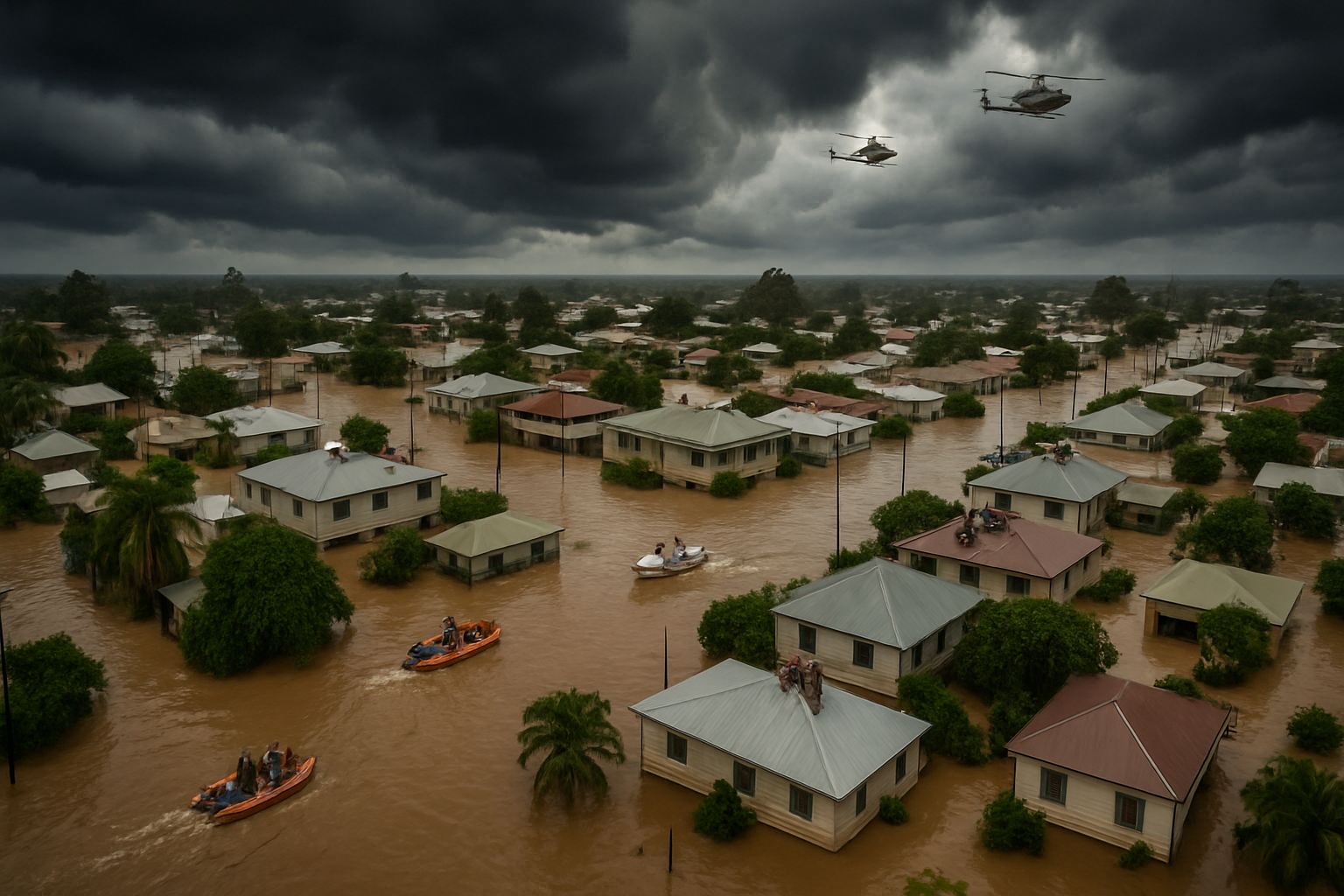
The Queensland city of Bundaberg is experiencing dangerous flood conditions reminiscent of the catastrophic 2010 disaster, with emergency authorities issuing urgent evacuation orders as residents are warned to "leave immediately" while floodwaters continue to rise across the central coast region.
Emergency alerts issued this afternoon have escalated the crisis as the Burnett River approaches the major flood level of 7 metres, anticipated to be reached by 3pm AEST. The local disaster management group has warned that critical bridges connecting north and south Bundaberg will be forced to close once this threshold is breached, effectively cutting the city in half and severely hampering rescue operations.
Historic Flooding Returns to Bundaberg
Social media footage posted early Tuesday morning showed Targo Street in Bundaberg Central already underwater by 8am AEST, marking the beginning of what authorities fear could become one of Queensland's most severe flooding emergencies in over a decade. The scenes eerily echo the devastating 2010 floods that claimed lives and caused billions of dollars in damage across the region.
The emergency comes amid broader flooding chaos affecting nearly 1,000 residents evacuated across the Northern Territory, marking the worst flooding conditions seen since the catastrophic 1998 levels. This pattern of simultaneous disasters reflects a concerning trend that has challenged emergency services throughout 2026, with Australia experiencing what meteorologists describe as "apocalyptic rain" conditions.
"This is a critical moment for our community. We're seeing water levels that haven't been recorded since the 2010 disaster, and residents must take immediate action to protect themselves and their families."
— Local Disaster Management Group Official
Emergency Response Mobilization
Queensland emergency services have activated comprehensive response protocols, with rescue teams positioned strategically across the region as evacuation orders remain in effect. The response builds on extensive experience gained from previous flooding emergencies, including the dramatic March 2026 rescue operation in nearby Bargara where police officers waded through thigh-deep floodwaters to save a schoolboy trapped in a submerged vehicle.
The current emergency represents a significant test for Queensland's disaster management systems, which have been under extraordinary pressure throughout 2026. Earlier this year, the state recorded its wettest conditions since 2010, with some areas receiving unprecedented rainfall totals that overwhelmed traditional flood defenses.
Climate Context and Infrastructure Challenges
The Bundaberg emergency occurs during what climate scientists describe as a period of unprecedented weather volatility. January 2026 marked the 20th consecutive month that global temperatures exceeded 1.5°C above pre-industrial levels, creating atmospheric conditions that enable more intense and frequent extreme weather events.
Queensland's infrastructure faces mounting challenges as traditional flood management systems, designed for historical weather patterns, struggle to cope with current precipitation intensities. The state has experienced a troubling pattern where the driest regions simultaneously record their wettest conditions in decades, highlighting the unpredictable nature of Australia's evolving climate.
Emergency management experts note a fundamental shift from sequential to concurrent disasters, with multiple regions facing simultaneous emergencies that stretch response capabilities beyond traditional limits. This pattern has required unprecedented coordination between agencies and communities across vast geographical areas.
Community Response and Resilience
Local communities have demonstrated remarkable resilience through neighbor assistance and volunteer mobilization, echoing the community spirit that helped Bundaberg recover from previous disasters. Social media has played a crucial role in emergency communications, with local Facebook groups like "Bargara Facebookers" becoming vital coordination hubs for rescue efforts and community support.
Mental health services report increased demand as residents face the psychological impact of repeated extreme weather events. Many families are confronting the possibility of losing generational homes for the second time in just over a decade, placing enormous strain on community support systems.
Economic and Agricultural Impact
The flooding threatens significant economic disruption across the Wide Bay-Burnett region, with agricultural operations facing potential crop losses during critical growing seasons. The area's sugar industry, tourism sector, and transportation networks all face substantial impacts that could extend recovery timelines well beyond the immediate emergency period.
Previous flooding experiences have shown that recovery requires not just immediate rescue operations but months or years of rebuilding efforts. Local businesses question their ability to withstand repeated disasters, particularly smaller operations that lack the resources for rapid recovery.
Lessons from Global Patterns
The Bundaberg emergency reflects broader global patterns of extreme weather that have challenged emergency response systems worldwide throughout 2026. From European storm successions that claimed dozens of lives to devastating floods across South America and Africa, the international community has witnessed an unprecedented convergence of climate disasters.
This global context underscores the importance of enhanced climate adaptation strategies and improved emergency preparedness systems. Australia's experience provides valuable lessons for other nations preparing for similar challenges as extreme weather events become more frequent and intense.
Recovery and Future Preparedness
As Bundaberg confronts its current emergency, attention is already turning to long-term recovery strategies that emphasize "building back better" with climate-resilient infrastructure. This approach recognizes that traditional reconstruction methods may prove inadequate for future climate conditions.
The emergency highlights the critical importance of early warning systems, community preparedness programs, and enhanced emergency response capabilities. Success in managing these challenges requires unprecedented coordination between government agencies, infrastructure providers, and local communities building resilience for an uncertain climate future.
Recovery efforts will likely extend for months, with some infrastructure damage potentially requiring years to fully address. The emphasis on climate adaptation rather than simple restoration reflects growing recognition that Australia's emergency management strategies must evolve to address permanent climate volatility rather than treating extreme weather as exceptional events.