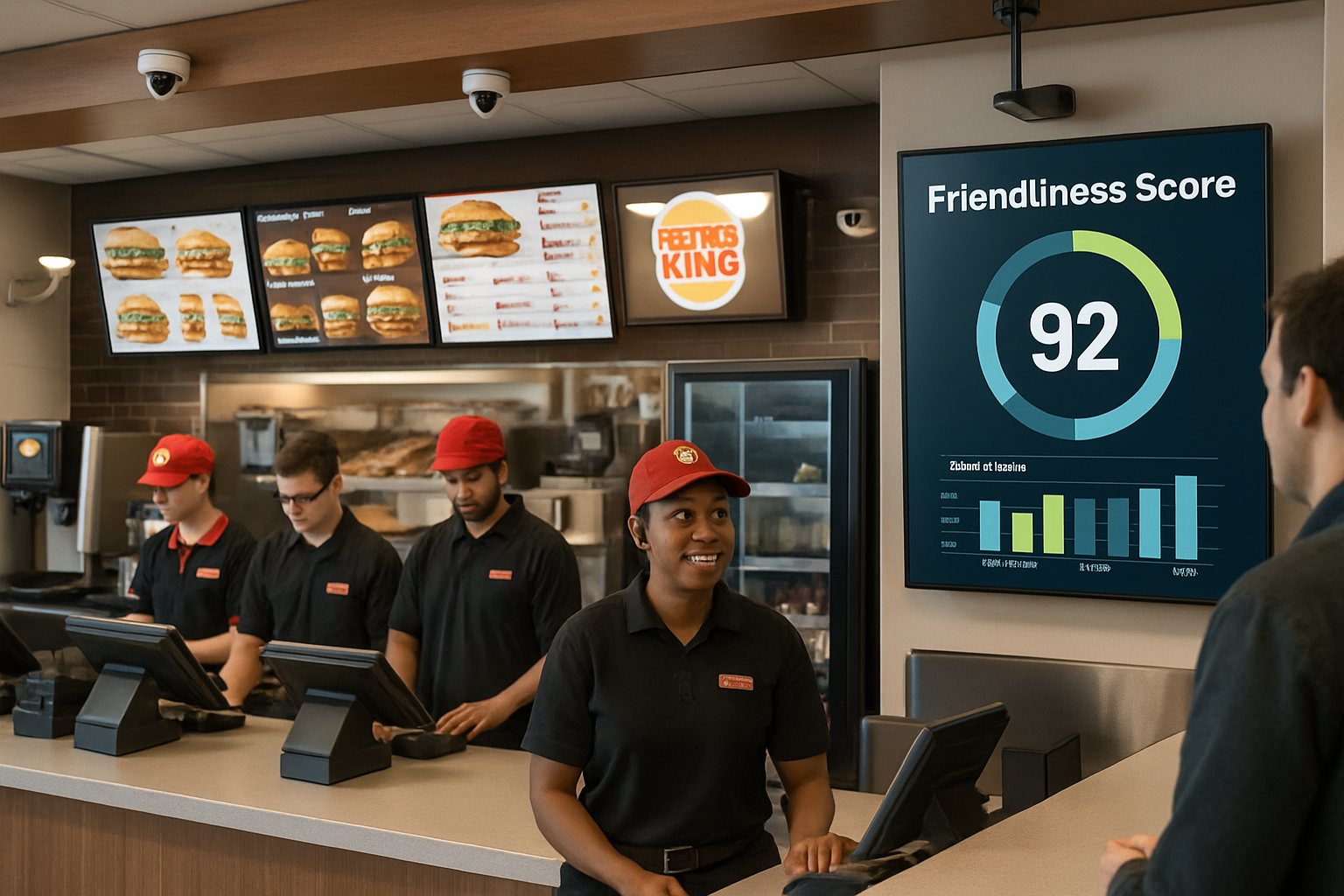
Burger King has rolled out artificial intelligence-powered employee monitoring systems across 500 restaurants, using OpenAI technology to analyze staff speech patterns and generate "friendliness ratings" for management oversight, marking a significant expansion of workplace surveillance in the fast-food industry.
The AI monitoring system, implemented throughout Burger King's Austrian and broader European operations, represents one of the most comprehensive workplace surveillance programs deployed by a major fast-food chain. The technology continuously analyzes employee conversations with customers, processing speech patterns, tone, and communication style to produce quantified assessments of staff performance.
AI-Powered Performance Analysis
According to reports from Austrian media outlet Der Standard, the system utilizes OpenAI's advanced language processing capabilities to monitor real-time interactions between employees and customers. The AI creates detailed "friendliness evaluations" that are automatically delivered to restaurant management for performance review and potential disciplinary action.
The implementation affects hundreds of thousands of customer interactions daily across the 500 participating locations. The system monitors not only what employees say but how they say it, analyzing vocal inflections, response times, and adherence to prescribed customer service protocols.
"The system provides restaurant managers with unprecedented insights into customer service quality at the individual employee level."
— Industry Technology Analyst
OpenAI Technology Integration
The choice of OpenAI technology places Burger King at the forefront of workplace AI implementation, leveraging the same underlying systems that power ChatGPT for employee surveillance. This represents a significant expansion of OpenAI's reach beyond consumer applications into workplace monitoring, occurring during a period of intense scrutiny over AI deployment in employment settings.
The implementation comes as OpenAI faces increasing pressure over its military partnerships and civilian oversight protocols. The company's ChatGPT platform already serves over 800 million weekly users across various sectors, including controversial military applications that have sparked debate about AI safety and governance.
Privacy and Workplace Rights Concerns
The deployment of AI monitoring systems raises significant questions about employee privacy and workplace rights in the digital age. Legal experts note that while employers have traditionally monitored customer service quality, the granular nature of AI analysis creates unprecedented levels of employee surveillance.
The system's capability to analyze speech patterns and emotional tone represents a new frontier in workplace monitoring, potentially capturing information about employee mood, stress levels, and personal communication styles that extends beyond traditional performance metrics.

Industry Context and Trends
Burger King's AI deployment occurs within a broader transformation of workplace monitoring technology across industries. The fast-food sector, facing persistent labor challenges and pressure to standardize customer experiences, has become an early adopter of AI-powered employee oversight systems.
The implementation follows broader trends in AI workplace integration, with various industries experimenting with artificial intelligence for performance monitoring, scheduling optimization, and customer service enhancement. However, the scope of Burger King's deployment represents one of the most extensive implementations to date.
Global AI Workplace Monitoring Expansion
The Austrian deployment reflects a global trend toward AI-powered workplace surveillance that extends far beyond the fast-food industry. Recent surveys indicate that 29% of workers report being monitored by AI systems, with 24% having AI-managed schedules, highlighting the rapid expansion of artificial intelligence into employment oversight.
This expansion occurs amid growing regulatory scrutiny, with European authorities implementing new frameworks for AI governance, including Spain's criminal executive liability provisions for technology platforms and France's cybercrime raids on AI companies. The regulatory environment creates complex compliance challenges for companies deploying AI monitoring systems.
Technology Infrastructure Requirements
The implementation requires substantial technological infrastructure, including continuous audio processing, real-time language analysis, and secure data transmission systems. This deployment occurs during a global semiconductor crisis, with memory chip prices surging sixfold, making advanced AI implementations more expensive and technically challenging.
The system's reliance on OpenAI's cloud-based processing means that employee conversations are analyzed through external servers, raising additional questions about data security and international data transfer protocols under European privacy regulations.
Employee Response and Adaptation
While Burger King has not publicly detailed employee training protocols for the AI monitoring system, industry experts suggest that such implementations typically require significant workforce adaptation. Employees must adjust to working under constant AI surveillance while maintaining natural customer interactions.
The psychological impact of continuous AI monitoring on employee well-being and job satisfaction remains largely unstudied, though preliminary research suggests that intensive workplace surveillance can increase stress levels and reduce job performance paradoxically.
Management Decision-Making Integration
The AI-generated friendliness ratings integrate directly into management decision-making processes, potentially affecting employee scheduling, performance reviews, and advancement opportunities. This represents a significant shift from human-based performance evaluation to algorithm-driven assessment of interpersonal skills.
The system's recommendations could influence hiring decisions, training priorities, and even termination procedures, making AI assessment a central component of employment management in affected locations.
Competitive Implications for Fast Food
Burger King's comprehensive AI deployment may pressure competitors to implement similar monitoring systems to remain competitive in customer service quality and operational efficiency. The fast-food industry's adoption of AI monitoring could establish new standards for employee oversight across the sector.
The implementation occurs during broader industry challenges, including labor shortages, rising wages, and increased competition for workers, making AI-powered performance optimization attractive to restaurant chains seeking operational advantages.
Regulatory and Legal Considerations
The deployment raises complex legal questions about employee consent, data protection compliance, and workplace rights under European employment law. Austria's implementation of the EU's General Data Protection Regulation (GDPR) requires explicit consent for personal data processing, creating potential compliance challenges for AI monitoring systems.
Legal experts note that the intersection of AI monitoring with employment law remains largely untested in European courts, potentially setting precedents for workplace surveillance regulations across the continent.
Future Workplace Surveillance Trends
Burger King's implementation may represent an early glimpse into the future of workplace monitoring, where AI systems continuously evaluate employee performance across multiple dimensions. The success or failure of this deployment could influence AI monitoring adoption across numerous industries.
The integration of AI surveillance into routine employment practices reflects broader technological trends toward automated decision-making in human resources, scheduling, and performance management that could reshape the fundamental nature of work supervision.
Implications for Worker Rights Movement
The deployment occurs during a period of increased labor organizing and worker advocacy, particularly around digital rights and workplace privacy. The comprehensive nature of AI monitoring may accelerate discussions about technological limits in employee oversight and worker protection in the digital economy.
Trade unions and worker advocacy groups are likely to scrutinize the implementation closely, potentially leading to new collective bargaining demands around AI monitoring and technological workplace rights that could influence industry practices beyond fast food.
Looking Ahead: The Future of AI at Work
Burger King's AI employee monitoring system represents a significant milestone in the integration of artificial intelligence into workplace oversight. As the technology proves its effectiveness or reveals limitations, other major employers will likely evaluate similar implementations, potentially transforming employment practices across industries.
The long-term implications extend beyond individual workplace monitoring to fundamental questions about human dignity, privacy rights, and the balance between operational efficiency and employee autonomy in an increasingly AI-integrated economy. The outcome of this implementation may help define the boundaries of acceptable AI surveillance in the workplace for years to come.