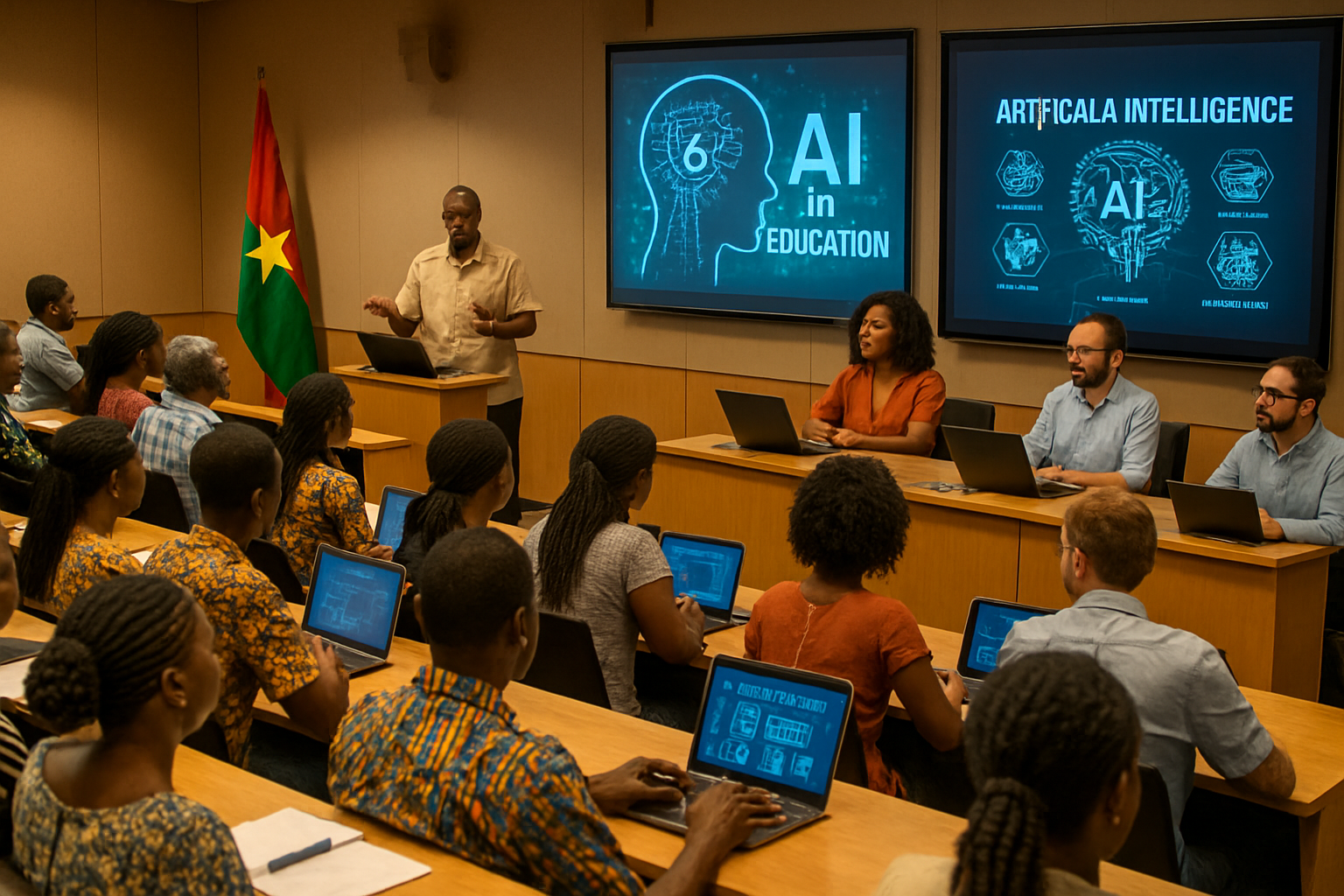
Burkina Faso has emerged as a surprise leader in Africa's artificial intelligence education revolution, with École supérieure des techniques avancées (ESTA) hosting the nation's inaugural "72 Hours of ESTA Engineers" conference focused on integrating AI technologies into higher education curricula.
The three-day event, running from April 2-4, 2026, in Ouagadougou, brings together educators, students, and industry leaders under the theme "Sciences and Technologies in the Era of Artificial Intelligence: Issues and Perspectives." The timing positions Burkina Faso within the global "2026 Educational Technology Renaissance" - a coordinated international movement toward thoughtful AI integration in education.
Strategic Vision for African AI Education
According to ESTA Director General Innocent Ludovic Bouda, the forum represents more than just technological adoption. "This event was born from ESTA's desire to create a framework for expression, valorization, and advancement of engineering education in the AI era," Bouda explained during the opening ceremony. The initiative demonstrates Burkina Faso's commitment to becoming an active participant rather than passive recipient of global AI development.
The conference addresses critical challenges facing African educational institutions: how to integrate cutting-edge technology while preserving cultural authenticity, maintaining human-centered learning approaches, and preparing students for an AI-integrated global economy. This approach aligns with successful international models, including Malaysia's world-first AI-integrated Islamic school and Singapore's WonderBot 2.0 heritage education program.
"We are not just adopting AI technologies; we are adapting them to serve our educational values and cultural context. This is how developing nations can lead rather than follow in the AI revolution."
— Innocent Ludovic Bouda, ESTA Director General
Global Context: Africa's Growing AI Influence
Burkina Faso's initiative occurs amid unprecedented African engagement with AI development. The African Development Bank's historic $10 billion AI mobilization initiative, launched in March 2026, targets creating 40 million AI-related jobs across the continent by 2035. This represents the most ambitious technology-focused development program in African history, positioning the continent as an active AI revolution participant rather than a technology recipient.
The timing is particularly significant given the global semiconductor crisis, which has driven memory chip prices sixfold higher, creating infrastructure bottlenecks that won't resolve until 2027. These constraints have paradoxically spurred innovation in memory-efficient algorithms and sustainable AI deployment strategies, potentially democratizing access to advanced AI capabilities for developing nations like Burkina Faso.
Educational Technology Renaissance
ESTA's forum contributes to what experts term the "2026 Educational Technology Renaissance" - a global phenomenon characterized by thoughtful digital tool integration with traditional educational values. Unlike previous technology waves focused solely on access or infrastructure, this transformation addresses multiple challenges simultaneously: technological integration, teacher development, student welfare, and fiscal sustainability.
Successful models emerging worldwide share common characteristics that ESTA appears to be adopting:
- Technology serves educational goals rather than replacing fundamental human relationships
- Sustained political commitment beyond electoral cycles
- Comprehensive stakeholder engagement including educators, students, and communities
- Cultural sensitivity in adapting global innovations to local contexts
- AI as amplification tools serving human goals versus wholesale replacement mechanisms
Addressing Continental Challenges
The forum tackles practical challenges specific to African educational contexts. With over 800 languages spoken across the continent and diverse cultural traditions, AI integration requires sophisticated approaches that preserve local knowledge while enabling global competitiveness. Burkina Faso's multilingual society provides an ideal laboratory for developing AI systems that respect linguistic diversity.
Research presented at the conference addresses critical issues including:
- Developing AI systems that function effectively in resource-constrained environments
- Creating educational content that bridges traditional knowledge with digital innovation
- Training educators to use AI as enhancement tools rather than replacement technologies
- Establishing ethical frameworks for AI use in educational settings
International Cooperation and Innovation
The conference demonstrates how smaller nations can achieve global influence through strategic educational focus. Burkina Faso joins a growing network of countries leveraging international partnerships while maintaining educational sovereignty. The country's approach mirrors successful strategies from Estonia's digital education leadership and Singapore's systematic AI integration.
Educational cooperation is evolving beyond traditional financial assistance toward comprehensive support including cultural integration, technical assistance, and ongoing development systems. Regional frameworks emerging across Africa enable smaller nations to access expertise while contributing innovations to global knowledge bases.
Human-Centered AI Approaches
Perhaps most significantly, ESTA's forum emphasizes human-centered AI approaches that enhance rather than replace traditional educational relationships. This philosophy aligns with research showing that the most successful AI implementations treat technology as sophisticated amplification tools serving specific human goals.
As documented in recent studies, effective AI integration in education requires maintaining human creativity, critical thinking, and cultural knowledge while preparing students for an interconnected global economy. The "productivity paradox" identified by researchers shows that AI often creates more work rather than increased efficiency when implemented without proper change management and workforce training.
Looking Ahead: Strategic Implications
Burkina Faso's initiative arrives at what experts identify as a critical March 2026 inflection point determining global AI trajectories for the remainder of the decade. The convergence of supply chain constraints, regulatory intensification, massive corporate investments, and international cooperation requirements creates unprecedented coordination challenges.
Success depends on resolving infrastructure constraints while maintaining innovation momentum, developing sustainable business models that prioritize human welfare, and fostering international cooperation that balances competitiveness with stability. Countries implementing comprehensive, culturally-sensitive AI education reforms are already reporting improved community resilience and enhanced international competitiveness.
The Path Forward
ESTA's 72-hour forum represents more than an academic conference; it symbolizes Africa's determination to shape rather than simply adopt AI technologies. By emphasizing cultural preservation alongside technological advancement, Burkina Faso provides a template for developing nations seeking to participate meaningfully in the global AI revolution.
The most promising path forward involves sophisticated human-AI collaboration that amplifies capabilities while preserving creativity, cultural understanding, and ethical reasoning that define human potential. As educational systems worldwide grapple with AI integration, Burkina Faso's approach offers valuable insights into balancing innovation with authenticity, global competencies with local identity, and technological advancement with human development priorities.
The window for effective coordinated action is narrowing rapidly as technological change accelerates. Burkina Faso's proactive stance demonstrates that geographic size or economic status need not limit a nation's influence in shaping the future of AI education. Through thoughtful implementation and international cooperation, the country is positioning itself as a regional leader in educational innovation while preserving the human elements that make learning meaningful and culturally relevant.