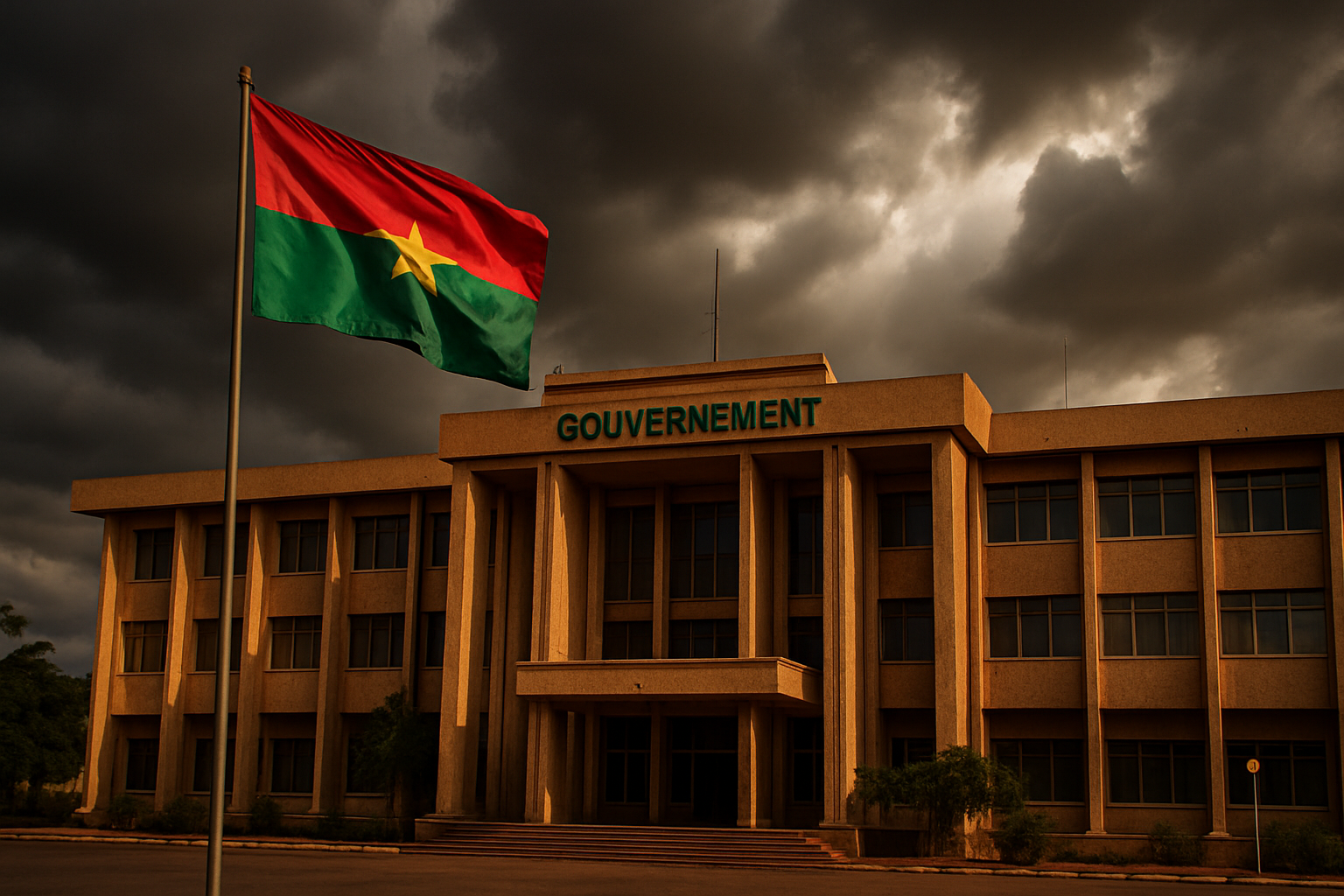
Burkina Faso's military junta has dissolved all political parties in the country and scrapped the laws governing them, according to a government decree approved on Thursday, January 29, 2026, marking a dramatic escalation in the military's consolidation of power since taking control in 2022.
The dissolution decree, announced by the government-run news agency, requires all assets belonging to political parties to be transferred to the state. This sweeping measure follows similar authoritarian steps taken by neighboring Mali, reflecting a troubling trend toward military rule across West Africa's Sahel region.
Minister of Territorial Administration Emile Zerbo justified the dissolution by claiming that authorities found political parties had "deviated from their founding principles" and were causing divisions within Burkinabé society. The decree effectively eliminates what remained of organized political opposition in the landlocked West African nation.
Political Parties Already Under Severe Restrictions
Political parties in Burkina Faso had already faced significant restrictions under the military government. They were previously banned from holding public events but could still operate internally. The new decree goes much further, dissolving them entirely and requiring the surrender of all party assets, logos, symbols, and emblems to the state.
Eddie Komboigo, former president of the Congress for Democracy and Progress (CDP), one of Burkina Faso's major opposition parties, issued a statement on Saturday acknowledging the government's decision. In his communique dated January 31, 2026, Komboigo urged former party members to "receive this decision with serenity and submit scrupulously to the terms of the decree."
"To all you former militants of the ex-CDP, I invite you to welcome this decision with serenity and to submit scrupulously to the terms of the decree. I know I can count on your high sense of responsibility by prohibiting any use of the logo, acronym and emblem of the dissolved party."
— Eddie Komboigo, Former CDP President
Escalating Authoritarian Measures
The dissolution of political parties represents the latest in a series of measures that human rights activists say have systematically targeted civic freedoms and opposition voices since the military seized power in a September 2022 coup. The junta, led by Captain Ibrahim Traoré, has progressively tightened its grip on power while promising an eventual return to civilian rule.
This move mirrors similar actions taken by Mali's military government, which has also dissolved political parties and suspended democratic institutions since its own military coup. The parallel developments suggest coordination between the military governments in the Alliance of Sahel States (AES), which also includes Niger.
International observers have expressed growing concern about the deteriorating democratic space across the Sahel region. The dissolution of political parties eliminates formal channels for political opposition and public debate, leaving civil society organizations and independent media as the primary remaining voices for dissent.
Regional Pattern of Democratic Backsliding
Burkina Faso's decision follows a broader pattern of democratic backsliding across West Africa, where military coups have become increasingly common. The country has experienced two military takeovers since 2022, with Captain Traoré seizing power from an earlier military government that had itself ousted elected President Roch Marc Christian Kaboré.
The military government has justified its actions by citing the need for national unity and security in the face of ongoing jihadist insurgencies that have plagued the region. However, critics argue that dismantling democratic institutions weakens rather than strengthens the country's ability to address its security challenges.
The dissolution decree comes at a time when Burkina Faso, along with Mali and Niger, has distanced itself from traditional Western partners, particularly France, while seeking closer ties with Russia. The three countries have also withdrawn from the Economic Community of West African States (ECOWAS), further isolating themselves from regional democratic norms.
Impact on Civil Society and Opposition
With political parties now dissolved, opposition figures and civil society activists face an increasingly restricted environment for expressing dissent or organizing alternative political movements. The transfer of party assets to the state effectively eliminates the financial independence that political organizations need to operate effectively.
Human rights organizations have warned that the dissolution of political parties could be a precursor to further restrictions on civil liberties. The move effectively consolidates the military government's control over political discourse and eliminates institutional checks on its power.
The international community has largely condemned the military government's actions, with several countries and international organizations calling for a return to constitutional order. However, the junta has shown little inclination to heed these calls, instead deepening its authoritarian control.
Uncertain Future for Democracy
The dissolution of political parties raises serious questions about Burkina Faso's political future and the prospects for an eventual return to democratic governance. While the military government has made vague promises about organizing elections, the elimination of political parties makes it unclear how such a process would unfold or whether it would be meaningful.
Regional analysts worry that Burkina Faso's actions could inspire similar moves by military governments elsewhere in Africa, contributing to a broader erosion of democratic norms across the continent. The coordination between the AES countries suggests that this trend may continue to spread.
As Burkina Faso joins Mali in dissolving its political parties, the Sahel region appears to be moving further away from democratic governance and closer to permanent military rule, despite ongoing security challenges that many argue require democratic legitimacy and popular support to effectively address.