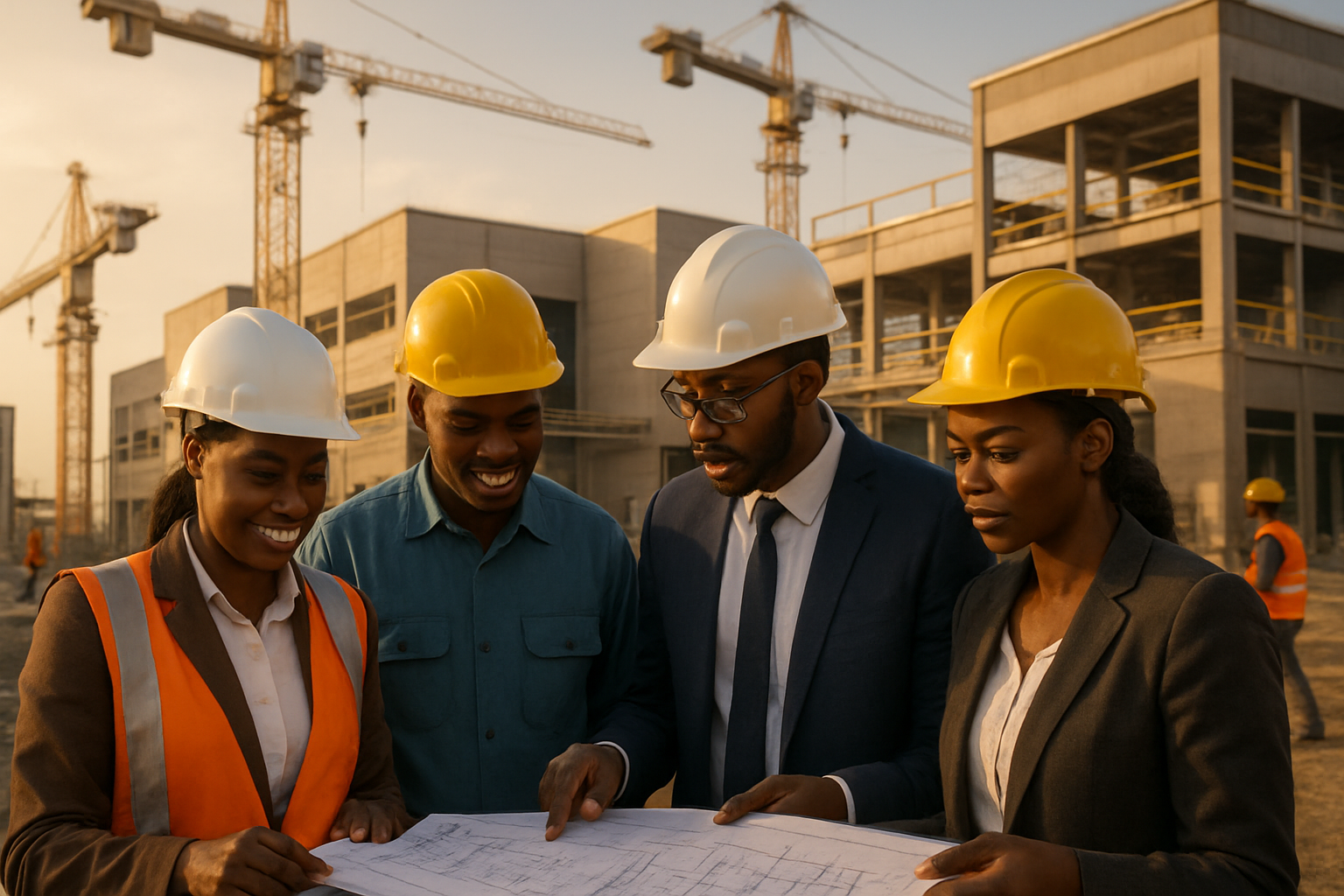
Burkina Faso's industrial transformation takes center stage as metallurgical engineer Daniel Nassa calls for a comprehensive "quality revolution" and technical mastery, while social solidarity initiatives prepare to support the nation's most vulnerable populations through coordinated charitable programs.
The West African nation continues to demonstrate remarkable development momentum across multiple sectors, building on its record-breaking $6 billion gold production achievements under Captain Ibrahim Traoré's sovereignty-focused administration. These latest developments represent a sophisticated dual approach to national progress—combining industrial modernization with social welfare initiatives.
Industrial Self-Sufficiency Vision
Daniel Nassa, a metallurgical construction engineer trained in Germany and France, has emerged as a leading voice advocating for Burkina Faso's complete industrial independence. In an exclusive interview with Burkina24, Nassa outlined his vision for transforming the country's industrial capacity through comprehensive domestic factory construction capabilities.
"Burkina Faso cannot succeed in its industrial ambitions without complete mastery of building its own factories," Nassa emphasized, calling for a decisive break from dependence on imported industrial infrastructure. His approach represents a fundamental shift from traditional development models that rely heavily on foreign technical assistance and imported manufacturing facilities.
Nassa's expertise, gained through advanced training in Europe's industrial heartlands, positions him as a uniquely qualified advocate for technology transfer that genuinely empowers local capacity. His call for a "quality revolution" extends beyond mere construction to encompass comprehensive technical mastery across all aspects of industrial development—from initial design through ongoing maintenance and optimization.
Social Solidarity Strengthens Foundation
Parallel to these industrial ambitions, Burkina Faso's civil society demonstrates remarkable organizational capacity through coordinated charitable initiatives. The Association "La Charité du Communicateur" announced the third edition of their "48 Hours of Charity" program, scheduled for April 18-19, 2026, in Ouagadougou.
This initiative specifically targets support for widows and orphans—populations particularly vulnerable amid ongoing regional security challenges. The program represents sophisticated community organizing that addresses immediate humanitarian needs while building social cohesion essential for broader national development.
During a press conference on March 14, 2026, organizers outlined their comprehensive approach to supporting vulnerable populations through coordinated community action. The timing of these initiatives reflects growing recognition that industrial development must be accompanied by robust social support systems ensuring no segments of society are left behind during economic transformation.
Continental Context and Strategic Positioning
These developments occur within a broader African industrial renaissance that has seen unprecedented coordination across multiple nations. Burkina Faso's approach aligns with continental trends toward greater resource sovereignty and value-addition strategies, as documented in recent African Union summit deliberations and regional cooperation initiatives.
The nation's industrial ambitions build on substantial financial resources generated through record gold production, which reached 94 tons in 2025—generating over $6 billion in revenue. This financial foundation provides the capital necessary for ambitious industrial infrastructure projects while supporting extensive social programs.
Regional integration through the African Continental Free Trade Agreement (AfCFTA) creates opportunities for Burkina Faso's emerging industries to serve broader West African markets, potentially transforming the nation from a raw material exporter into a regional manufacturing hub.
Technology Transfer and Local Capacity
Nassa's emphasis on technical mastery reflects lessons learned from decades of industrial development projects across Africa. Traditional approaches that focused on importing complete industrial systems often failed to build sustainable local capacity, leaving countries dependent on foreign expertise for maintenance and upgrades.
The proposed approach emphasizes comprehensive technology transfer that enables Burkinabé engineers and technicians to design, construct, operate, and maintain industrial facilities independently. This represents a fundamental shift toward industrial sovereignty that could serve as a model for other African nations pursuing similar development objectives.
"Complete technical mastery means we can build our own factories, maintain them, improve them, and adapt them to our specific needs without external dependence," Nassa explained, outlining the comprehensive scope of his industrial vision.
— Daniel Nassa, Metallurgical Engineer
Community Ownership and Social Development
The charitable initiatives demonstrate sophisticated community organizing that extends beyond immediate aid provision toward comprehensive social development. Programs targeting widows and orphans address specific vulnerabilities while building broader social solidarity networks essential for national cohesion.
These initiatives reflect traditional African values of community support adapted to contemporary challenges. The 48-hour format creates intensive community engagement that generates both immediate assistance and lasting social connections among participants.
Community-based approaches to development have proven particularly effective in African contexts, where traditional governance structures often provide more responsive and culturally appropriate frameworks than top-down government programs alone.
Regional Integration and Economic Multiplier Effects
Burkina Faso's dual approach to development—combining industrial modernization with social support systems—creates multiple economic multiplier effects. Industrial development generates employment opportunities and export revenues, while social programs ensure broad-based participation in economic growth.
The nation's strategic position within the Alliance of Sahel States (AES), alongside Mali and Niger, provides additional opportunities for coordinated industrial development across the sub-region. Resource pooling and market coordination could enable industrial projects that individual nations might struggle to implement independently.
Success in these initiatives could establish Burkina Faso as a regional model for balanced development that achieves both economic growth and social inclusion—addressing criticism that African development programs often benefit elites while neglecting vulnerable populations.
Implementation Challenges and Success Factors
Despite ambitious goals, significant implementation challenges remain. Technical capacity building requires sustained investment in education and training programs. Industrial infrastructure development demands substantial capital investment and sophisticated project management capabilities.
Security concerns in the Sahel region continue to affect development planning, requiring adaptive approaches that maintain progress despite ongoing challenges. International cooperation remains important for accessing specialized expertise while maintaining national ownership of development priorities.
Success factors identified through analysis of similar African development initiatives include sustained political commitment, transparent governance frameworks, community engagement, and strategic international partnerships that respect national sovereignty while providing necessary technical and financial support.
Future Implications for West African Development
Burkina Faso's comprehensive approach to development—balancing industrial modernization with social solidarity—provides a potential template for other West African nations facing similar challenges. The emphasis on complete technical mastery rather than dependent relationships offers a pathway toward genuine economic sovereignty.
The coordinated timing of industrial planning and social support initiatives suggests sophisticated development strategy that recognizes the interconnection between economic growth and social cohesion. This holistic approach addresses criticism of development programs that focus exclusively on economic indicators while neglecting social outcomes.
Regional implications extend beyond Burkina Faso's borders, as successful implementation could inspire similar approaches across the Sahel and broader West Africa. The combination of resource sovereignty, technical mastery, and social solidarity provides a distinctly African model for 21st-century development.
Strategic Significance for Continental Development
These initiatives represent more than national development projects—they contribute to broader African conversations about development models that work for African contexts and priorities. The emphasis on complete technical mastery challenges traditional development assistance approaches that maintain dependency relationships.
Social solidarity programs demonstrate community organizing capacity that complements government initiatives while maintaining independence. This multi-sector approach to development builds resilience against economic shocks and political transitions while ensuring broad-based participation in national progress.
Success in Burkina Faso's dual development approach could influence regional cooperation frameworks, continental development strategies, and international development assistance approaches throughout Africa. The emphasis on community ownership and technical sovereignty provides alternatives to traditional development models that have shown limited long-term effectiveness.
As Africa enters a critical decade for development and climate adaptation, Burkina Faso's combination of industrial ambition and social solidarity offers hope that comprehensive development approaches can achieve both economic growth and social justice simultaneously.