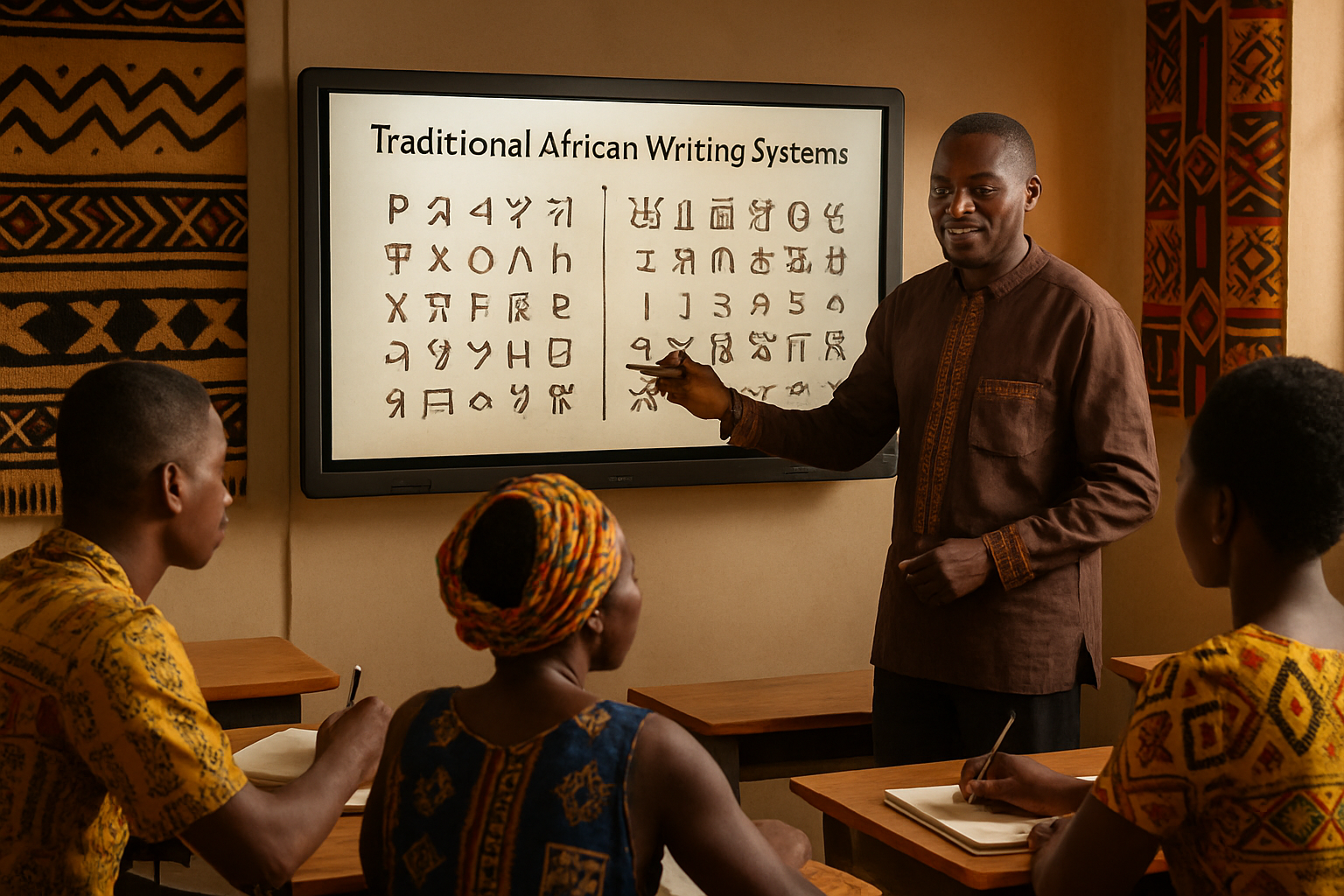
A Burkinabé educator has unveiled a revolutionary writing system and numerical framework specifically designed for African languages, marking a significant milestone in the continent's quest for linguistic sovereignty and cultural preservation.
On Tuesday, April 21, 2026, certified professor Waoudem Ouédraogo presented his groundbreaking innovations at the Lycée scientifique de Ouagadougou, introducing what he calls the "Unified Writing System for African Languages" alongside a complementary numerical system. This initiative represents a transformative step toward indigenous literacy development and cultural identity strengthening across the continent.
Breaking Down Linguistic Barriers
The presentation, focused on linguistic sovereignty, addresses a critical gap in African education and communication systems. For decades, African languages have relied on adapted versions of European alphabets, often inadequately representing the unique phonetic structures and tonal variations that characterize many indigenous languages.
Ouédraogo's unified system promises to provide a more authentic and culturally appropriate framework for written communication in African languages. The innovation comes at a time when linguistic diversity across the continent faces increasing pressure from globalization and the dominance of colonial languages in formal education and official communications.
"This represents far more than just a new way of writing – it's about reclaiming our intellectual heritage and providing our children with tools that truly reflect their linguistic reality."
— Educational expert commenting on the initiative
Continental Context of Linguistic Renaissance
The development occurs within a broader African renaissance of cultural and intellectual sovereignty. Burkina Faso, under Captain Ibrahim Traoré's administration, has emerged as a leader in promoting African-centered development models. The country's record $6 billion gold production revenue in 2025 has provided the financial foundation for strategic investments in education and cultural preservation initiatives.
This linguistic innovation aligns with continental efforts to strengthen indigenous knowledge systems and reduce dependency on foreign educational frameworks. The African Union has increasingly emphasized the importance of mother-tongue education as a cornerstone of authentic development and cultural preservation.
The timing is particularly significant as Africa experiences unprecedented economic growth and political transformation. The Alliance of Sahel States, comprising Burkina Faso, Mali, and Niger, has championed sovereignty-focused policies that prioritize indigenous solutions to continental challenges.
Technical Innovation and Cultural Preservation
The unified writing system addresses several technical challenges that have long hindered the development of written African languages. Many African languages feature tonal variations, complex vowel systems, and consonant clusters that existing alphabets struggle to represent accurately. Ouédraogo's system appears designed to capture these linguistic nuances more effectively.
The accompanying numerical system represents equally significant innovation. While Arabic numerals have become globally dominant, they may not reflect the mathematical concepts and counting systems inherent in African cultures. Indigenous numerical frameworks could provide more culturally resonant approaches to mathematical education and scientific communication.
The initiative builds on growing recognition that authentic education must reflect local linguistic and cultural realities. Research increasingly shows that children learn more effectively when instruction begins in their mother tongues before transitioning to additional languages.
Regional and Global Implications
If successfully implemented, Ouédraogo's innovations could influence educational policies across West Africa and beyond. The Economic Community of West African States (ECOWAS) has long grappled with balancing linguistic unity and diversity in educational planning. A unified system for indigenous languages could provide practical solutions to these challenges.
The development also positions Burkina Faso as a leader in educational innovation, potentially attracting international partnerships and technical cooperation. The African Continental Free Trade Agreement (AfCFTA) creates opportunities for educational innovations to spread across national boundaries, benefiting multiple countries simultaneously.
From a global perspective, the initiative contributes to broader efforts to preserve linguistic diversity in an increasingly homogenized world. UNESCO estimates that approximately half of the world's 7,000 languages could disappear within a century without active preservation efforts.
Implementation Challenges and Opportunities
Despite its promise, implementing a new writing system faces substantial challenges. Teacher training represents the most immediate hurdle – educators across the region would need comprehensive preparation to effectively use and teach the new systems. Publishing infrastructure would require updating to accommodate different script requirements.
Technology integration presents both challenges and opportunities. Digital platforms and software would need updates to support the new writing systems, but successful implementation could position African languages more prominently in digital spaces. Mobile technology, already transformative across Africa, could facilitate rapid adoption of new linguistic tools.
Government support will prove crucial for widespread adoption. Educational ministries across the region would need to coordinate policy changes, curriculum updates, and resource allocation to support implementation. International development partners could provide technical assistance and funding, but maintaining African ownership of the innovation remains essential.
Educational Transformation Potential
The broader implications for African education could be transformative. Mother-tongue instruction has proven more effective for early childhood development, and appropriate writing systems could extend these benefits through higher education levels. Scientific and technical education could become more accessible when conducted in indigenous languages with appropriate written frameworks.
The initiative aligns with global trends toward culturally responsive education that recognizes local knowledge systems as valid and valuable. Rather than replacing international languages, indigenous writing systems could complement multilingual education approaches that prepare students for both local and global engagement.
Higher education institutions across Africa have increasingly emphasized the importance of indigenous knowledge systems in research and innovation. Appropriate writing systems could facilitate the documentation and transmission of traditional knowledge while supporting contemporary academic work.
Cultural Identity and Sovereignty
Beyond practical educational benefits, Ouédraogo's innovation carries deep cultural significance. Language serves as a repository of cultural values, historical memory, and traditional knowledge. Providing indigenous languages with robust written frameworks strengthens their status and ensures their continued vitality.
The development reflects broader African efforts to assert intellectual and cultural sovereignty. Rather than adapting foreign systems, African innovators are creating solutions that emerge from and serve continental needs. This approach builds confidence in African problem-solving capabilities while addressing specific local challenges.
The initiative could inspire similar innovations across the continent, creating a renaissance of linguistic and educational creativity. Each region could develop systems appropriate to local linguistic families while participating in broader continental educational coordination.
International Recognition and Support
The presentation has attracted attention from educational researchers and development practitioners worldwide. African diaspora communities have expressed particular interest, seeing potential applications for heritage language education in international contexts.
International academic institutions have begun exploring research partnerships to study the implementation and effectiveness of indigenous writing systems. These collaborations could provide valuable data on best practices for linguistic innovation and educational transformation.
Development organizations focused on education and cultural preservation have indicated interest in supporting pilot programs and broader implementation efforts. However, ensuring that external support enhances rather than undermines African ownership remains a key consideration.
Future Directions and Scaling
The success of Ouédraogo's innovation will depend on careful pilot implementation, comprehensive evaluation, and gradual scaling across appropriate contexts. Beginning with specific languages and regions could provide valuable lessons for broader application while minimizing disruption to existing educational systems.
Regional coordination through institutions like the West African Economic and Monetary Union (WAEMU) could facilitate systematic implementation across multiple countries. Burkina Faso's position within regional integration frameworks positions it well to lead such coordination efforts.
Technology companies focused on African markets have expressed interest in developing software and applications that support indigenous writing systems. These partnerships could accelerate digital adoption while ensuring that African languages gain stronger representation in global digital spaces.
A New Chapter for African Languages
Waoudem Ouédraogo's presentation at the Lycée scientifique de Ouagadougou represents more than an academic exercise – it signals a new chapter in African linguistic development and cultural assertion. The unified writing system and numerical framework offer practical tools for educational transformation while affirming the value and vitality of indigenous African languages.
As Africa continues its remarkable political and economic transformation, innovations like these provide the cultural and intellectual foundations for authentic development. Rather than abandoning tradition in pursuit of modernity, initiatives like Ouédraogo's demonstrate how indigenous knowledge can inform and enrich contemporary solutions.
The ultimate measure of success will be the extent to which these innovations genuinely serve African communities – improving education, preserving culture, and strengthening the continent's capacity for self-directed development. Early indications suggest that this initiative could make significant contributions to all these goals.
As the African Union's Agenda 2063 emphasizes the importance of cultural renaissance alongside economic transformation, developments like the unified African writing system provide concrete tools for achieving these ambitious but essential objectives. The path from presentation to implementation will require sustained commitment, but the potential benefits justify the effort required to realize this linguistic and educational vision.