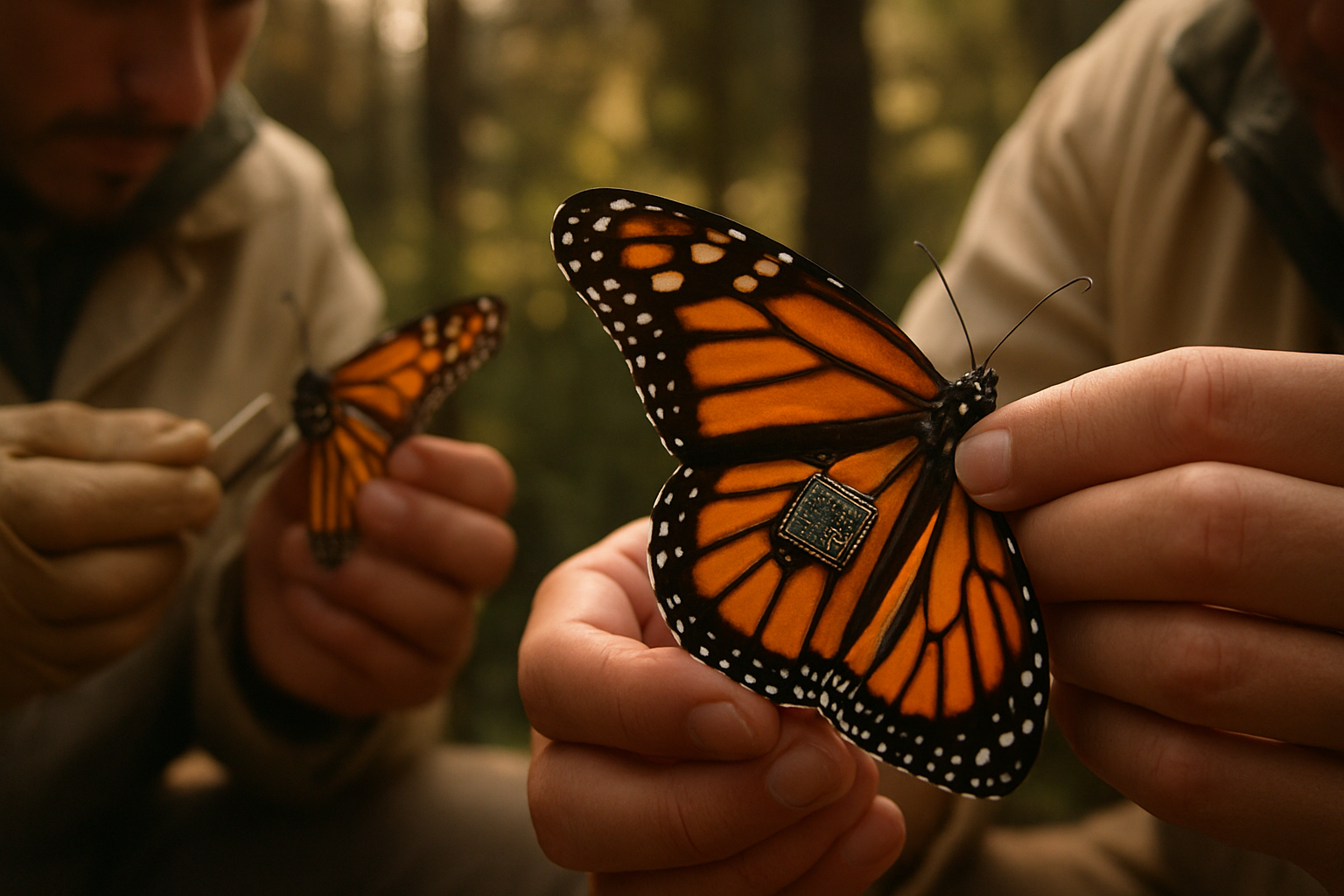
In a groundbreaking scientific initiative that merges cutting-edge technology with conservation biology, researchers in Mexico's El Rosario butterfly sanctuary are attaching miniature microchips to monarch butterflies as they begin their epic migration journey north to Canada.
The innovative project, documented by CBC's Jorge Barrera at the renowned El Rosario sanctuary in Mexico, represents a quantum leap in understanding one of nature's most enigmatic phenomena. For generations, scientists have marveled at the monarch butterfly's incredible 3,000-mile migration journey, but the precise mechanisms guiding this epic voyage have remained largely mysterious.
Technological Breakthrough in Butterfly Tracking
The revolutionary microchip technology being deployed represents years of miniaturization research and engineering innovation. Each chip weighs less than a grain of rice and is carefully attached to the butterfly's wing using specialized biocompatible adhesives that don't interfere with flight patterns or natural behavior.
"We're essentially giving each butterfly a tiny passport that allows us to follow their journey in unprecedented detail," explains Dr. Maria Gonzalez, lead researcher at the Institute for Monarch Migration Studies. "These chips contain unique identifiers that can be detected by networks of receivers positioned along known migration routes."
The timing of this research is particularly significant, as monarch butterfly populations have declined by over 80% in the past two decades due to habitat loss, climate change, and pesticide use. Understanding their migration patterns has become crucial for developing effective conservation strategies.
Unlocking Migration Mysteries
The El Rosario sanctuary serves as one of the monarchs' most important overwintering sites, hosting millions of butterflies that have completed an extraordinary journey from as far north as Canada. What makes this migration particularly fascinating is that no individual butterfly completes the entire round trip – it takes three to four generations to complete the cycle.
The microchip data is already revealing surprising insights about butterfly navigation and behavior. Early results suggest that monarchs use a combination of solar positioning, magnetic field detection, and landscape recognition to navigate – a biological GPS system far more sophisticated than previously understood.
"We're discovering that these butterflies have navigation abilities that rival modern technology," notes Dr. James Peterson, a migration specialist from the University of Toronto who is collaborating on the project. "They can compensate for wind patterns, adjust for geographic obstacles, and even modify their routes based on environmental conditions."
Conservation Renaissance in Wildlife Research
This butterfly microchip initiative is part of a broader global conservation renaissance occurring during 2026, a period that has seen unprecedented environmental protection efforts across multiple continents. From Zimbabwe's DNA wildlife crime forensics to Kazakhstan's Przewalski's horse reintroduction programs, the integration of advanced technology with traditional conservation methods is transforming species protection worldwide.
The monarch research specifically builds on successful technology-tradition integration models that have emerged across conservation programs globally. Indigenous knowledge from local communities in Mexico, combined with satellite monitoring and environmental DNA sampling, creates comprehensive frameworks that respect cultural heritage while leveraging cutting-edge scientific capabilities.
Economic and Ecological Implications
The economic implications of this research extend far beyond academic curiosity. Monarch butterflies serve as crucial pollinators for numerous crop species, contributing billions of dollars annually to agricultural productivity across North America. Understanding their migration patterns helps farmers optimize planting schedules and pesticide applications to minimize impact on butterfly populations.
Furthermore, the research is attracting significant eco-tourism interest to the El Rosario sanctuary and surrounding communities. Visitors from around the world are eager to witness this technological marvel applied to one of nature's most spectacular phenomena, generating sustainable revenue for local conservation efforts.
"This project represents the perfect marriage of high technology and natural wonder. We're not just studying butterflies – we're preserving one of the planet's most remarkable migration spectacles for future generations."
— Dr. Sofia Martinez, Director of El Rosario Sanctuary
Climate Change Adaptation Strategies
The research is taking on added urgency given the current climate context. January 2026 marked the 21st consecutive month of global temperatures exceeding 1.5°C above pre-industrial levels, creating unprecedented environmental pressures on migratory species. Traditional migration routes are being disrupted by changing weather patterns, shifting vegetation zones, and altered flowering schedules of crucial nectar sources.
The microchip data is helping researchers identify which migration corridors remain viable and which alternative routes butterflies are developing in response to environmental changes. This information is proving invaluable for conservation organizations working to establish protected pathways and restore critical habitat along migration routes.
International Cooperation Framework
The success of the monarch microchip project depends on unprecedented international cooperation spanning Mexico, the United States, and Canada. Receiver networks must be maintained across three countries, requiring coordinated policy frameworks, shared monitoring systems, and collaborative data analysis protocols.
This trinational approach serves as a model for addressing other transboundary conservation challenges. Wildlife migrations, atmospheric systems, and ecosystem services cross political boundaries, making unilateral conservation efforts insufficient for long-term species protection.
The project has already inspired similar initiatives worldwide. Australian researchers are adapting the technology for fruit bat migration studies, while European scientists are developing microchip applications for tracking migratory bird populations across the Mediterranean.
Technical Innovation and Future Applications
The microchip technology being deployed in the monarch study represents just the beginning of potential applications. Researchers are developing even smaller chips that could be used on smaller butterfly species, bees, and other critical pollinators. Solar-powered versions are being tested that could provide multi-year tracking capabilities.
Advanced data analytics are revealing patterns invisible to traditional observation methods. Machine learning algorithms process thousands of migration data points to identify subtle environmental factors influencing butterfly behavior, from magnetic field variations to atmospheric pressure changes.
Future iterations of the technology may include sensors capable of measuring environmental conditions from the butterfly's perspective – temperature, humidity, and air quality data that could provide unprecedented insights into the microenvironments experienced during migration.
Community-Based Conservation Success
The El Rosario sanctuary project exemplifies successful community-based conservation, combining scientific innovation with traditional ecological knowledge. Local communities have protected these butterfly overwintering sites for generations, and their participation is essential for the microchip project's success.
Community members serve as trained observers, monitoring tagged butterflies and maintaining receiver networks. This provides sustainable employment while building local capacity for long-term conservation stewardship. The model is being studied across Mexico and Latin America as a template for scaling community-driven conservation efforts.
Looking Toward Migration Season 2026
As the 2026 migration season approaches, researchers are expanding the microchip program to tag thousands of additional monarchs. The goal is to create the most comprehensive migration dataset in history, providing insights that could revolutionize understanding of animal navigation, ecosystem connectivity, and climate adaptation strategies.
Early results suggest that this year's migration may follow altered patterns due to changing environmental conditions. The microchip data will provide real-time information about how butterflies are adapting to these challenges, informing conservation strategies across the continent.
The success of this innovative research demonstrates that even in an era of environmental crisis, remarkable scientific breakthroughs are possible when cutting-edge technology is combined with traditional knowledge, international cooperation, and community engagement. For the magnificent monarchs beginning their journey north from El Rosario, each tiny microchip represents humanity's commitment to understanding and protecting one of nature's most extraordinary phenomena.