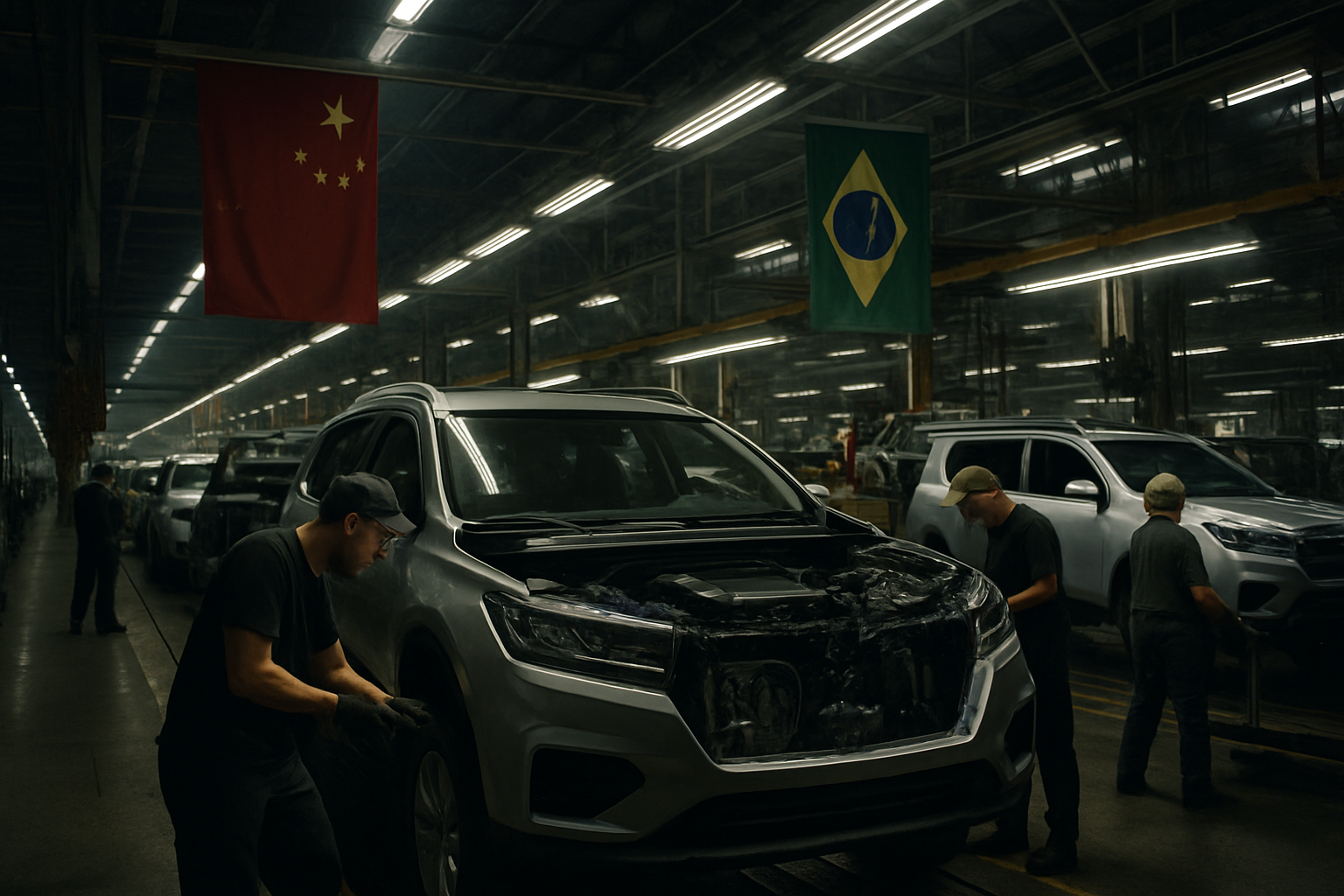
Brazil's Ministry of Labor and Employment has officially added Chinese electric vehicle manufacturer BYD to its registry of employers found to have subjected workers to conditions analogous to slavery, dealing a severe blow to the company's reputation in its most important market outside China.
The Ministry published the updated Cadastro de Empregadores, commonly known as the "dirty list," on Tuesday, adding 169 employers in the latest semi-annual revision. BYD Auto do Brasil Ltda. was among the companies included, following an investigation into working conditions at its largest manufacturing facility outside China.
This development represents a dramatic turn for BYD, which has been aggressively expanding its global footprint while positioning itself as a leader in electric vehicle technology and sustainable transportation solutions. The blacklisting limits the company's access to state financing and significantly increases reputational risks in Brazil, a crucial market for Chinese automotive expansion.
Investigation Reveals Serious Labor Violations
The inclusion of BYD on Brazil's "dirty list" follows a comprehensive investigation by labor inspectors who found conditions at the company's Brazilian manufacturing operations that met legal criteria for work analogous to slavery. Brazilian labor law defines such conditions broadly to include situations where workers face degrading conditions, excessive working hours, debt bondage, or restrictions on freedom of movement.
The investigation focused on BYD's primary production facility in Brazil, where the company manufactures electric vehicles for both the domestic market and export throughout Latin America. Sources familiar with the investigation indicate that inspectors documented multiple violations of Brazilian labor standards, though specific details of the findings have not been publicly released.
This marks a significant escalation in labor enforcement against foreign manufacturers operating in Brazil, as the government has intensified efforts to ensure international companies comply with domestic worker protection standards.
Impact on BYD's Latin American Strategy
The blacklisting poses serious challenges for BYD's ambitious expansion plans across Latin America. Brazil represents the company's largest market outside China, and the facility in question serves as a manufacturing hub for the entire region. The company has invested heavily in Brazilian operations as part of its strategy to compete with established automakers in the growing electric vehicle segment.
Beyond vehicle manufacturing, BYD has been expanding its presence in Brazil's infrastructure sector. The company recently launched the SkyRail monorail system for São Paulo Metro Line 17-Ouro, marking its first monorail operation in Latin America. CEO Tyler Li had emphasized the company's commitment to "transforming challenges into efficient solutions" through integrated transportation infrastructure approaches.
The labor violations scandal threatens to undermine these broader expansion efforts, as Brazilian authorities may scrutinize all of BYD's operations more closely. The blacklisting could also influence other Latin American governments' attitudes toward Chinese investments in their automotive sectors.
Context of China's Global Automotive Expansion
BYD's labor issues in Brazil emerge against the backdrop of China's unprecedented dominance in the global electric vehicle supply chain. Chinese companies control approximately 60% of critical materials production and 90% of refining capacity for lithium, cobalt, and rare earth elements essential for EV manufacturing.
The company has achieved remarkable technological breakthroughs, including its Megawatt Flash Charging system capable of providing 400km range in just 5 minutes and the Blade Battery 2.0 that functions in temperatures as low as -30°C. These innovations have positioned BYD as a formidable competitor to established automotive giants like Tesla and traditional European manufacturers.
However, the rapid global expansion has raised questions about whether Chinese companies are maintaining consistent labor standards across different jurisdictions. While BYD has built a reputation for innovation and efficiency in China, the Brazilian investigation suggests that international operations may not have received equivalent attention to worker welfare.
Broader Implications for Corporate Accountability
The Brazilian government's action reflects growing international scrutiny of corporate labor practices, particularly as companies rapidly expand global operations. Brazil's "dirty list" system serves as a powerful enforcement mechanism, as inclusion limits access to government financing and creates significant reputational damage that can affect private sector partnerships.
The timing is particularly sensitive given the global push toward electric vehicle adoption driven by climate change concerns. As governments worldwide implement policies to accelerate EV transitions, they face the challenge of ensuring that the companies leading this transformation maintain ethical labor practices.
This situation also highlights the complexity of global supply chains in the automotive industry. As companies like BYD expand rapidly to meet growing demand for electric vehicles, maintaining consistent labor standards across multiple countries with different regulatory frameworks becomes increasingly challenging.
Response and Remediation Efforts
BYD has not yet issued a public statement regarding its inclusion on Brazil's "dirty list." The company will now face pressure to demonstrate concrete steps to address the identified labor violations and prevent future occurrences. Brazilian law typically requires companies to remediate violations and implement monitoring systems before they can be removed from the registry.
The remediation process could involve significant investments in worker accommodation, wage adjustments, improved working conditions, and enhanced oversight systems. Companies must also demonstrate sustained compliance over an extended period before Brazilian authorities will consider removal from the blacklist.
For BYD, the challenge extends beyond immediate compliance to rebuilding trust with Brazilian authorities, workers, and the broader international community. The company's response to this crisis could significantly influence its ability to continue expanding in other markets where labor standards are closely monitored.
Industry-Wide Implications
The BYD case may signal increased scrutiny of labor practices across the rapidly expanding electric vehicle industry. As Chinese manufacturers continue to establish operations worldwide, governments may implement more rigorous monitoring systems to ensure compliance with local labor standards.
This development occurs as the automotive industry undergoes its most significant transformation in over a century, with traditional manufacturers competing against new entrants while navigating supply chain challenges, semiconductor shortages, and changing consumer preferences. The integration of labor standards enforcement into this competitive landscape adds another layer of complexity for companies seeking global expansion.
Other Chinese automotive companies operating internationally may now face increased scrutiny from labor inspectors, potentially affecting the broader Chinese automotive expansion strategy that has been central to the country's industrial policy objectives.
Looking Forward
The inclusion of BYD on Brazil's "dirty list" represents a watershed moment for corporate accountability in the global electric vehicle industry. As the sector continues to expand rapidly to meet climate goals, the Brazilian action demonstrates that governments will not compromise labor standards for the sake of technological advancement or investment attraction.
The resolution of this case could establish important precedents for how multinational corporations are held accountable for labor practices across their global operations. For BYD, the path forward requires not only addressing the specific violations identified in Brazil but also implementing comprehensive systems to ensure consistent labor standards across all international operations.
As the electric vehicle revolution continues to accelerate, the industry must grapple with ensuring that the transition to sustainable transportation is built on sustainable and ethical labor practices. The BYD case serves as a critical reminder that technological innovation cannot come at the expense of worker welfare and human dignity.