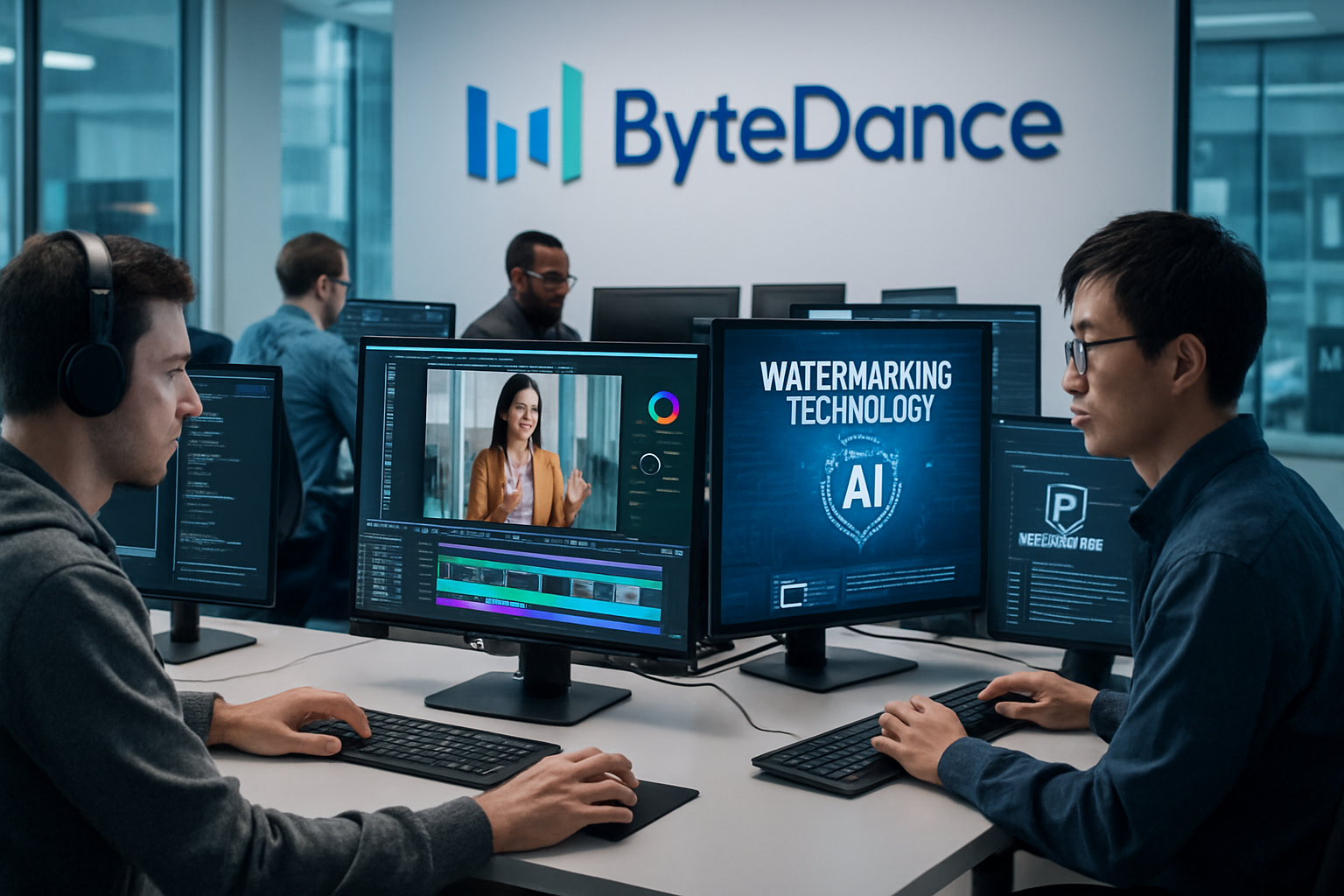
ByteDance has substantially enhanced its controversial video-generation AI model Seedance 2.0 with advanced watermarking technology and comprehensive intellectual property protection systems, as the TikTok owner prepares for a global rollout amid mounting scrutiny from Hollywood studios over alleged copyright infringement.
The much-anticipated international expansion comes after intense regulatory pressure and legal challenges that have shaped the AI video generation landscape throughout early 2026. ByteDance's strategic pivot toward enhanced content protection represents a critical response to the entertainment industry's growing concerns about unauthorized use of copyrighted material in AI-generated content.
Enhanced Security Architecture
According to sources familiar with the development, ByteDance's global safety team has implemented what the company describes as "advanced" watermarking technology that embeds imperceptible digital signatures into all generated video content. This system creates a comprehensive audit trail linking every piece of AI-generated material back to its creation parameters and user account.
The enhanced IP protection framework includes real-time scanning capabilities that cross-reference input prompts against a vast database of copyrighted characters, scenes, and distinctive visual elements from major entertainment properties. When potential copyright violations are detected, the system either blocks content generation entirely or applies significant modifications to ensure compliance with intellectual property laws.
Industry experts describe the implementation as technically sophisticated, requiring substantial computational resources during an ongoing global semiconductor crisis that has driven memory chip prices sixfold higher than previous years. The infrastructure investment demonstrates ByteDance's commitment to addressing regulatory concerns while maintaining competitive positioning in the rapidly evolving AI video generation market.
Hollywood Studio Pressures Mount
The enhanced security measures directly address mounting pressure from major entertainment companies, particularly Disney and Paramount, which have issued formal warnings about unauthorized use of their copyrighted properties in AI-generated content. The controversy intensified in February 2026 when ByteDance's Seedance 2.0 created viral videos featuring recognizable Hollywood actors and characters, generating millions of views before being removed.
Motion Picture Association representatives have expressed particular concern about the system's ability to generate cinema-quality content that closely replicates copyrighted characters and scenes. The organization has characterized AI video generation as presenting fundamental challenges to traditional entertainment business models, particularly regarding intellectual property protection and revenue attribution.
"The sophistication of these AI systems has reached a point where they can create content virtually indistinguishable from professionally produced material using our copyrighted properties."
— Senior Motion Picture Association Official
The entertainment industry's concerns have been amplified by the broader "2026 AI Revolution in Cinema," which has seen multiple companies developing increasingly sophisticated video generation capabilities. ByteDance's Seedance 2.0 has emerged as particularly controversial due to its ability to create feature-film quality content from simple text prompts, raising questions about the future relationship between human creativity and artificial intelligence.
Technical Implementation Challenges
The global rollout faces significant infrastructure constraints due to the ongoing semiconductor shortage affecting Samsung, SK Hynix, and Micron, which has created what industry analysts describe as a "critical vulnerability window" lasting until 2027 when new fabrication facilities come online. Despite these challenges, ByteDance has committed substantial resources to ensure the enhanced security systems function effectively across international markets.
The watermarking technology requires sophisticated computational processes that must operate in real-time during video generation without significantly impacting quality or generation speed. Technical documentation indicates the system employs hybrid processing approaches that distribute computational load between on-device processing and secure cloud infrastructure, optimizing efficiency while maintaining security standards.
ByteDance engineers have also developed memory-efficient algorithms designed to operate within current infrastructure constraints while providing comprehensive content protection. The approach demonstrates the company's adaptation to supply chain challenges that have affected the broader AI industry throughout 2026.
Regulatory Landscape Evolution
The enhanced Seedance 2.0 platform emerges within an increasingly complex regulatory environment where governments worldwide are implementing unprecedented oversight measures for AI-generated content. Spain has introduced the world's first criminal executive liability framework for technology platforms, creating personal legal risks for company executives whose platforms violate safety regulations.
European authorities have coordinated enforcement efforts to prevent jurisdictional arbitrage, with France conducting cybercrime raids on AI companies and the European Commission pursuing Digital Services Act violations with potential penalties reaching 6% of global revenue. The regulatory intensity has prompted technology companies to prioritize compliance measures and proactive content protection systems.
ByteDance's proactive approach to IP protection reflects industry recognition that voluntary compliance measures may be necessary to avoid more restrictive regulatory interventions. The UN has established an Independent Scientific Panel with 40 global experts to provide the first fully independent international AI impact assessment, signaling continued international attention to AI governance frameworks.
Competitive Market Positioning
The global launch occurs within a rapidly evolving competitive landscape where multiple technology companies are developing video generation capabilities. OpenAI's recent shutdown of its Sora application in March 2026, ending a $1 billion Disney partnership, has created market opportunities for competitors like ByteDance to establish market leadership in AI video generation.
Industry analysts note that ByteDance's emphasis on IP protection and watermarking technology could provide competitive advantages in markets where content creators and entertainment companies require assurance about copyright compliance. The approach contrasts with some competitors who have faced criticism for insufficient content protection measures.
The global semiconductor crisis has paradoxically benefited companies like ByteDance that invested early in memory-efficient technologies and comprehensive infrastructure planning. While competitors struggle with hardware constraints, ByteDance's vertical integration and strategic partnerships provide operational advantages during the current supply chain disruptions.
Industry Integration Models
Successful AI implementation models across other sectors provide insights into potential trajectories for video generation technology. Canadian universities have successfully deployed AI teaching assistants that maintain critical thinking standards while providing personalized learning support. Malaysia has launched the world's first AI-integrated Islamic school, demonstrating how advanced technology can coexist with traditional values and cultural preservation.
These examples suggest that the most promising AI implementations treat technology as sophisticated amplification tools serving specific human goals rather than wholesale replacements for human creativity and judgment. ByteDance's enhanced IP protection measures align with this approach by enabling creative professionals to leverage AI capabilities while maintaining ownership and control over their intellectual property.
Economic and Cultural Implications
The global launch represents a significant moment in what industry experts characterize as the "March 2026 Critical Inflection Point" — a watershed moment when AI transitions from experimental applications to essential infrastructure across multiple sectors simultaneously. The success or failure of enhanced content protection systems could influence regulatory approaches and industry standards for years to come.
ByteDance's approach addresses fundamental questions about the relationship between AI development and human creativity, particularly regarding how technology companies can develop sophisticated capabilities while preserving the rights and livelihoods of creative professionals. The enhanced watermarking and IP protection systems represent attempts to balance innovation with responsibility.
Economic implications extend beyond ByteDance to the broader entertainment industry, which faces questions about how AI-generated content will integrate with traditional production methods and revenue models. The company's success in addressing Hollywood concerns could establish precedents for industry collaboration rather than adversarial relationships between technology companies and content creators.
Future Development Trajectory
Industry observers characterize the enhanced Seedance 2.0 launch as a critical test of whether AI companies can develop sophisticated capabilities while maintaining meaningful accountability to content creators and intellectual property holders. The outcome could influence global standards for AI content generation and establish templates for responsible innovation in creative technologies.
ByteDance's investment in comprehensive security systems demonstrates recognition that long-term success in AI video generation requires stakeholder trust and regulatory compliance alongside technical capabilities. The approach suggests industry maturation toward more sustainable business models that serve multiple constituencies rather than prioritizing rapid capability development over stakeholder concerns.
The global launch timeline remains subject to ongoing negotiations with regulators and content industry representatives, but ByteDance officials have indicated confidence that the enhanced systems address the primary concerns raised by entertainment companies and government oversight bodies. Success could establish ByteDance as a leader in responsible AI development while providing a pathway for continued innovation within appropriate oversight frameworks.