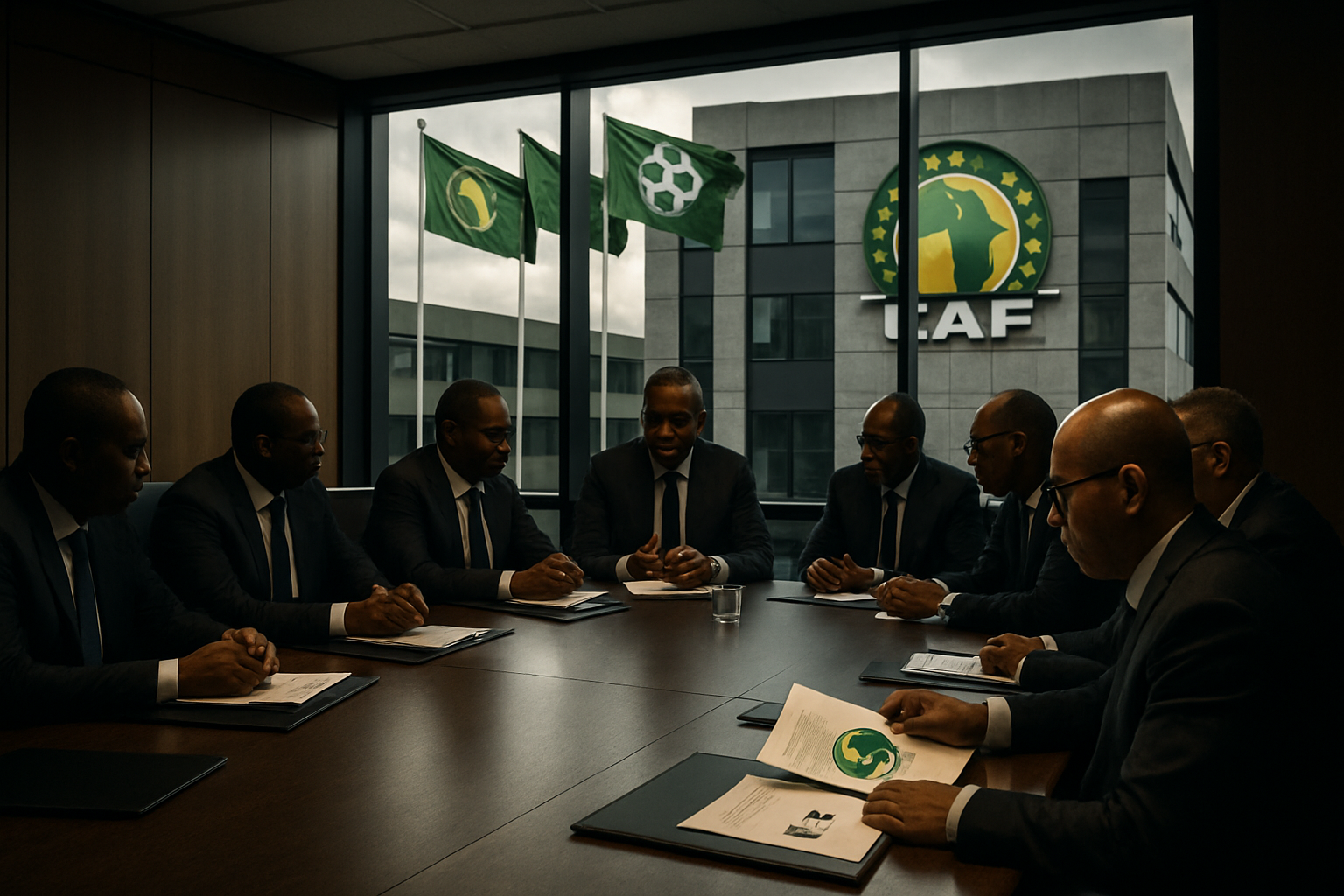
African football finds itself at the center of an unprecedented governance crisis as the Confederation of African Football (CAF) Appeals Committee decision creates a continental divide, with Morocco diplomatically acknowledging the verdict while allegations of the "greatest scandal in African football history" reverberate across the continent.
The Royal Moroccan Football Federation (FRMF) issued a measured statement on March 18, 2026, reaffirming that its appeal "was never aimed at contesting the sporting merit or performance of the teams involved in this tournament, but solely to ensure the proper enforcement of competition regulations." The federation emphasized its commitment to "respecting the regulations, ensuring the clarity of the competitive framework."
However, this diplomatic response stands in stark contrast to the explosive allegations emerging from other quarters of African football. Former Egyptian international Ahmed Hossam Mido has vigorously denounced what he describes as the "greatest scandal in African football history," referring to the controversial decision by the Confederation of African Football to strip Senegal of the AFCON 2025 trophy.
Historical Context of Continental Crisis
The current controversy represents the culmination of a crisis that began with the AFCON 2025 final in January 2026, when Senegal defeated Morocco 1-0 after extra time. However, the CAF Appeals Committee subsequently declared Senegal lost the match by a 3-0 forfeit, citing Articles 82 and 84 of AFCON regulations following a 14-minute player walkoff protest during a late penalty award.
This decision marked the first time in continental competition history that an AFCON title was stripped months after the tournament's completion. The precedent-setting nature of the ruling has sent shockwaves throughout African football governance circles and beyond.
"The world knows who is the true champion."
— Sadio Mané, Senegalese Football Star
The Senegalese government has responded with unprecedented vigor, formally accusing CAF of corruption in an official communique expressing "vive consternation" and calling the decision "grossièrement illégale" (grossly illegal). This represents the first time an African government has formally accused the continental football body of corruption regarding a title decision.
Diplomatic and Legal Ramifications
The crisis has escalated beyond traditional sporting dispute resolution, with Prime Minister Ousmane Sonko's administration backing a comprehensive legal challenge while demanding an international investigation into CAF's decision-making process. Senegalese Federation President Augustin Senghor has maintained a defiant stance, declaring he "will not surrender the trophy" and has initiated immediate CAS appeal proceedings.
Sports law expert Me Moustapha Kamara, with 25 years of experience, has identified "irregularities" in declaring a team forfeit two months post-completion. The virtual hearing process has been criticized for transparency and representation concerns, raising questions about the legitimacy of the entire proceedings.
International solidarity has been unprecedented, with Spanish club Cádiz CF expressing support with "Todos con vosotros" (We are all with you). French media called the decision the "joke of the century," while Swedish outlets noted this is "a story world football has never experienced." Portuguese media confirmed that comprehensive government corruption investigation demands extend beyond traditional sporting dispute resolution mechanisms.
CAF's Institutional Credibility Crisis
CAF President Patrice Motsepe has acknowledged the "deep controversy," admitting that events have "damaged trust in African football." While emphasizing that "Senegal has the right to appeal" and claiming "no country will be favoured," the crisis represents a fundamental challenge to continental football governance credibility during a critical period of expanded World Cup participation and increased global scrutiny.
The controversy has exposed questions about CAF's institutional integrity at a time when the confederation faces multiple challenges. The recently reconstituted Peace and Security Council, which includes Morocco among new members, now faces immediate regional security challenges while this football governance crisis unfolds.
Historical precedent raises consistency questions, particularly regarding Morocco's 2019 walkoff incident where the team "never returned to finish the encounter" without facing similar sanctions, highlighting potential irregularities in CAF's application of regulations.
Broader Implications for African Sports Governance
This crisis occurs against the backdrop of broader African development initiatives, including the implementation of the African Continental Free Trade Area (AfCFTA) and major infrastructure projects like Algeria's Gara Djebilet railway and Angola's Lobito Corridor revival. The football controversy threatens to overshadow these positive continental developments and raises questions about governance standards across African institutions.
The timing is particularly significant as seven African countries (Angola, DRC, Guinea, Kenya, Morocco, Sierra Leone, and Zambia) participate in the US-EU-Japan Critical Minerals Partnership, demonstrating Africa's growing strategic importance in global supply chains. The football scandal risks undermining the continent's reputation for transparent governance just as it seeks to position itself as a reliable international partner.
International Sports Law Precedent
The resolution of this case will establish templates for post-tournament administrative reversals globally, determining how sporting achievement preservation balances against institutional interpretation in modern football. The success or failure of Senegal's legal challenge will influence international sports law, continental competition governance, and federation accountability standards worldwide.
The case represents a test of democratic institutions' capacity to address sophisticated administrative challenges spanning multiple jurisdictions, diplomatic immunity, and institutional protection. Future mechanisms for preventing elite administrative network impunity in continental sports governance depend on the outcome of this precedent-setting dispute.
Commercial and Sporting Disruption
The controversy has disrupted both teams' 2026 World Cup preparation campaigns. Senegal's campaign faces disruption from the legal battle and diplomatic crisis, while Morocco gains momentum through controversial circumstances affecting team morale and international perception. Commercial implications include prize money redistribution and sponsorship complications requiring urgent resolution.
The crisis also affects broader African football development, with potential impacts on youth programs, infrastructure investment, and international partnerships. The reputation damage could affect future tournament hosting rights and commercial agreements across the continent.
Path Forward
As investigations continue and legal proceedings advance, the African football community faces a watershed moment that will determine the future of continental sports governance. The outcome will influence whether African football emerges with strengthened institutions and enhanced credibility, or faces prolonged crisis that undermines decades of development efforts.
The international sports law community is closely monitoring this case, recognizing its potential to reshape sporting achievement preservation versus administrative authority balance in modern continental competition. The resolution will establish precedents affecting worldwide football federation governance approaches and determine whether democratic institutions can successfully challenge sophisticated administrative networks when sporting integrity is at stake.
With CAS proceedings ongoing and diplomatic pressure mounting, the coming weeks will prove decisive in determining not only who holds the AFCON 2025 title, but also the future credibility of African football governance in an increasingly interconnected global sporting landscape.