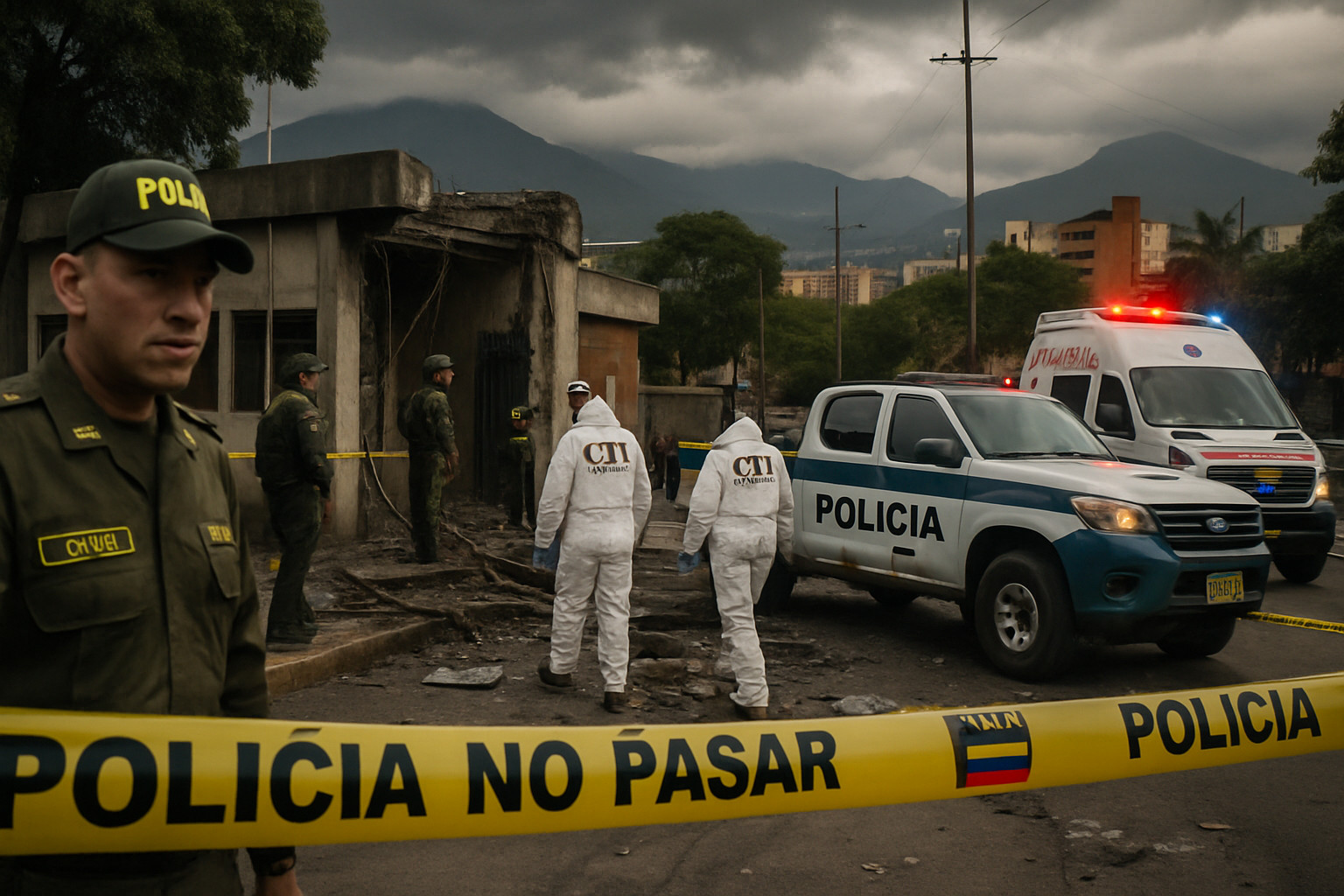
A devastating bombing attack outside the Third Brigade military facility in Cali on Thursday has reignited urgent debates about Colombia's deteriorating security situation, as criminal organizations demonstrate unprecedented operational sophistication challenging the state's authority.
The attack occurred around 10:00 AM when a school bus rigged with explosives detonated near the Pichincha Battalion, part of Colombia's Third Army Brigade. Video footage captured the precise moment the vehicle exploded, sending flames skyward and injuring at least one civilian woman who was passing nearby. Mayor Alejandro Eder has increased the reward for information leading to arrests from 50 million to 200 million pesos.
Pattern of Escalating Violence
The Cali bombing represents the latest in a series of increasingly sophisticated attacks that have plagued Colombia's security forces. According to official records, the city has experienced 11 deaths in five separate terrorist actions over the past year, perpetrated by FARC dissidents and ELN guerrillas. The broader regional picture is even more alarming: over the past four years, more than 20 people have died in at least 80 attacks using car bombs, motorcycle bombs, and drones across Cali, Jamundí, and Cauca departments.
Mayor Eder attributed the attack to the criminal structure known as "Jaime Martínez," emphasizing that Cali is experiencing what he termed a "criminal offensive." The mayor has formally requested assistance from President Gustavo Petro's administration, underlining the magnitude of the security challenge facing local authorities.
Historical Context of Security Failures
Troublingly, sources revealed that security vulnerabilities at the Pichincha Battalion had been previously identified and reported. A legal expert had documented the military garrison's vulnerabilities through video evidence and filed formal complaints, but received no response from authorities. This pattern of ignored warnings has become a recurring theme in Colombia's security landscape, contributing to the success of criminal operations.
"We are witnessing criminal organizations that now possess state-like capabilities, including advanced surveillance networks, encrypted communications, and military-grade technology that often outpaces our institutional responses."
— Colombian Security Analyst
Broader Security Crisis Under Petro Administration
The Cali attack occurs within the context of an unprecedented assault on Colombia's democratic institutions since February 2026. President Petro himself survived an assassination attempt when his helicopter was forced to remain airborne for four hours over the Caribbean Sea due to surface-to-air threats. The same period saw the kidnapping and rescue of Indigenous Senator Aida Quilcué in Cauca province, demonstrating the coordinated nature of these attacks.
These incidents have occurred despite Petro's "Total Peace" strategy, which aims to negotiate with various armed groups. The strategy faces mounting challenges as some criminal organizations reject dialogue in favor of territorial expansion and increased violence against state institutions.
Criminal Sophistication Evolution
Security experts note that criminal organizations in Colombia have evolved beyond traditional drug trafficking operations. They now demonstrate:
- Advanced intelligence networks capable of tracking government movements
- Encrypted communication systems that exceed law enforcement monitoring capabilities
- Sophisticated weapons acquisition, including military-grade drone technology
- Coordinated multi-regional attack capabilities
- Strategic targeting of democratic institutions and social leaders
Regional and International Implications
The deteriorating security situation extends beyond Colombia's borders, affecting regional stability throughout Latin America. The attacks follow a pattern documented across the continent, where criminal organizations demonstrate increasing sophistication and territorial control ambitions. International cooperation through initiatives like the Shield of the Americas coalition has been enhanced, but criminal adaptation continues to outpace institutional responses.
The violence affects multiple sectors of Colombian society, with over 100 municipal ombudsmen declared targets by armed groups according to the Public Ministry in Cali. This systematic assault on local governance creates vacuums that criminal organizations exploit to expand their territorial control.
Economic and Social Impact
The ongoing violence significantly impacts Colombia's economic development and international reputation. Educational institutions, healthcare facilities, and infrastructure projects face constant threats, undermining long-term development goals. The psychological trauma extends far beyond direct victims, affecting entire communities and altering family routines throughout affected regions.
Tourism confidence has been particularly affected, with some national parks closing due to armed group threats. The closure of Tayrona National Park on the Caribbean coast earlier this year demonstrated how criminal organizations are willing to disrupt legitimate economic activities to maintain operational control.
Government Response and International Cooperation
The Petro administration maintains a dual approach of peace negotiations combined with enhanced security measures. Defense Minister Pedro Sánchez has overseen increased security protocols for government officials, while military operations continue against criminal organizations. However, the success of attacks like the Cali bombing suggests that purely reactive approaches have limitations.
International cooperation remains crucial, with Colombian authorities working closely with Spanish police, Interpol, and regional partners to track criminal networks operating across jurisdictions. Recent joint operations have successfully captured high-profile criminal leaders, demonstrating the importance of coordinated international efforts.
Looking Forward: Challenges and Solutions
The Cali bombing underscores the need for comprehensive strategies that address both immediate security threats and underlying conditions that enable criminal recruitment. Success requires enhanced security measures alongside economic opportunities, educational programs, and community engagement that addresses the root causes criminal organizations exploit.
As Colombia faces this critical juncture, the international community watches closely. The country's ability to address sophisticated criminal challenges while preserving democratic governance will serve as a template for other nations facing similar threats from transnational organized crime.
The stakes extend beyond Colombia's borders, influencing broader questions about democratic resilience, international cooperation mechanisms, and the balance between security imperatives and civil liberties in the 21st century. The effectiveness of responses to incidents like the Cali bombing will determine whether democratic institutions can successfully adapt to counter criminal organizations that possess resources and capabilities previously associated with state actors.