Eight backcountry skiers were confirmed dead and a ninth remains missing after a catastrophic avalanche swept through California's Castle Peak area on Tuesday morning, marking the deadliest US avalanche disaster in 45 years and devastating a guided skiing expedition in the Sierra Nevada mountains.
The massive avalanche, described as "football-field-sized," struck at approximately 11:30 AM Pacific Time on Tuesday in the rugged Castle Peak area near Truckee, California, about 10 miles (16 km) northwest of Lake Tahoe. The disaster engulfed a group of 15 experienced backcountry skiers who were returning from a three-day expedition with Blackbird Mountain Guides when the snow mass overwhelmed their party.
Heroic Rescue Operation in Treacherous Conditions
Six survivors were rescued after an extraordinary search and rescue operation that saw teams battle through blinding snow, darkness, treacherous terrain, and gale-force winds to reach the stranded skiers. The survivors had constructed makeshift shelters using tarpaulin sheets and communicated their location to rescuers using emergency beacons and text messaging.
Nevada County Sheriff Shannan Moon confirmed at a Wednesday news conference that eight bodies had been located in the avalanche debris field, though they remain trapped in the snow and cannot yet be recovered due to "pretty horrific" conditions and ongoing avalanche dangers. The search for the ninth missing skier continues, though that person is presumed dead given the magnitude of the avalanche and extreme weather conditions.
"The bodies of the eight dead skiers are still trapped in the snow and can't yet be recovered due to pretty horrific conditions. This ranks as the deadliest single avalanche in the US in 45 years."
— Nevada County Sheriff Shannan Moon
The rescue operation has been particularly challenging emotionally for teams, as officials confirmed that one of the deceased was the spouse of someone on one of the search-and-rescue teams, making continued rescue efforts "challenging emotionally" according to authorities.
Experienced Skiers Caught in Extreme Weather
The group consisted of 11 clients and four professional guides from Blackbird Mountain Guides, all described as experienced backcountry enthusiasts equipped with proper safety equipment including avalanche transceivers. They were on the final day of a three-day backcountry skiing expedition and were heading back to a trailhead when the avalanche struck.
The incident occurred during a powerful winter storm that had brought several meters of fresh snow to the Sierra Nevada region over recent days. The same storm system that triggered the avalanche created dangerous conditions that limited helicopter access and visibility for rescue operations, forcing ground teams to navigate treacherous terrain on skis.
Deadliest US Avalanche in Nearly Half a Century
The Castle Peak tragedy represents the most significant avalanche disaster in California's modern history and ranks among the deadliest single US avalanche incidents on record. The death toll surpasses typical annual US avalanche fatalities, which average 27 victims per winter according to avalanche safety data. Prior to this incident, the 2025-2026 season had reported only six avalanche deaths.
The disaster occurs against the backdrop of a broader global avalanche crisis, with European Alps recording over 60 deaths this winter season alone, including recent incidents in Austria where three people died in separate avalanches on the same day as the California tragedy.
Complex Search and Recovery Operation
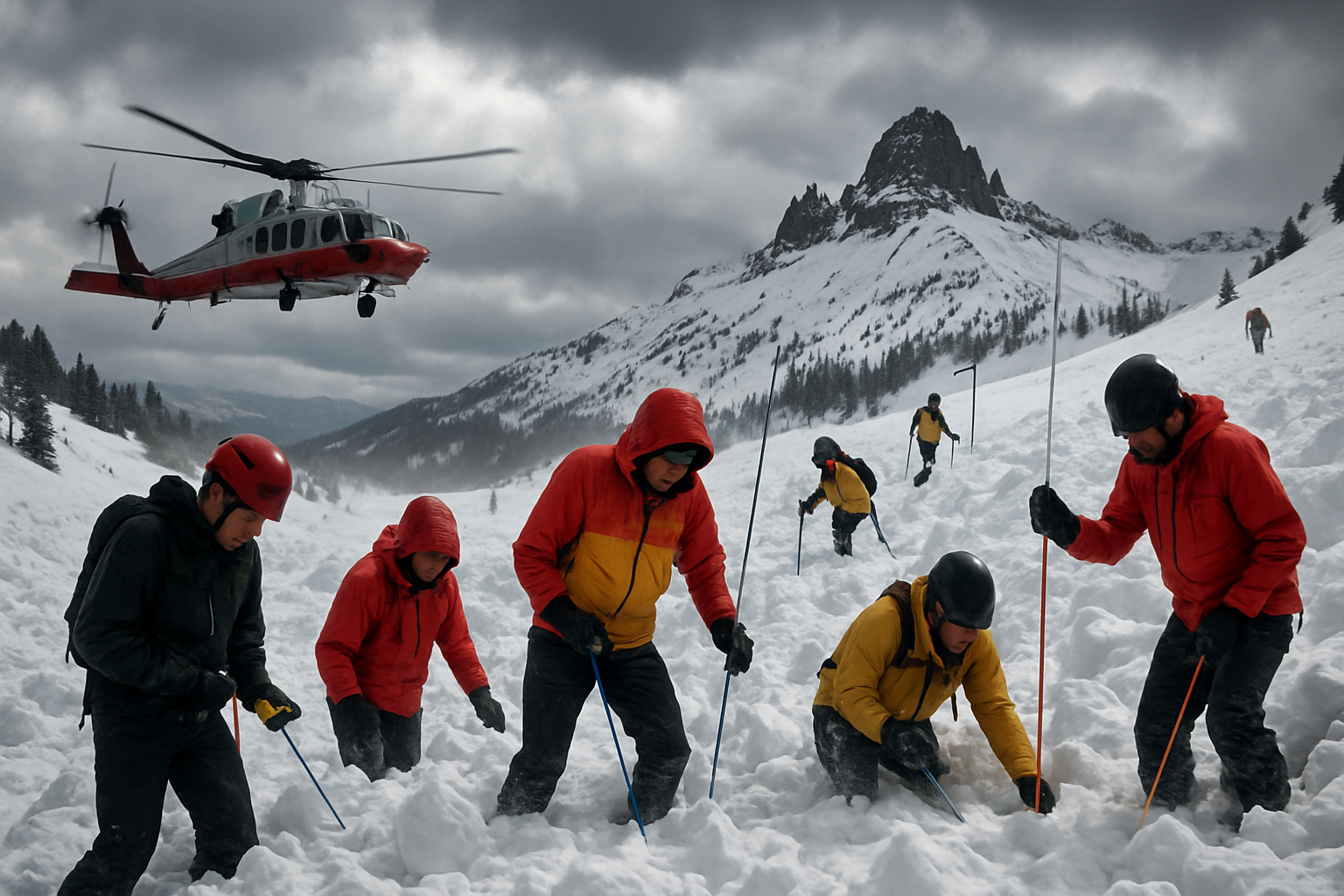
Multiple agencies are involved in the ongoing search and recovery operation, utilizing avalanche transceivers, probe poles, and trained rescue dogs to systematically search the extensive debris field. The operation involves coordination between Nevada County Sheriff's Office, Placer County Sheriff's Office, and various mountain rescue organizations.
Weather complications from the same storm system that triggered the avalanche continue to hamper recovery efforts. Heavy snow, high winds, and limited visibility have restricted helicopter operations, while continued avalanche risks from fresh snow loading make the debris field dangerous for recovery teams.
Growing Backcountry Skiing Popularity Increases Risk Exposure
The tragedy highlights the growing popularity of backcountry skiing in the post-COVID era, which has significantly increased the number of people exposed to avalanche terrain. While the Castle Peak area is known for challenging backcountry terrain and significant avalanche risks during heavy snow periods, the sport's expansion has brought more enthusiasts into dangerous mountain environments.
Despite proper safety equipment, professional guides, and extensive experience among the group, the incident demonstrates that even well-prepared parties cannot eliminate the inherent risks of backcountry skiing. The massive scale of Tuesday's avalanche overwhelmed all safety measures and protocols.
Community Response and Investigation
The Northern California outdoor community has rallied support for rescue efforts and affected families, while the broader skiing community grapples with one of the sport's most devastating tragedies in recent memory. The incident has sent shockwaves through the backcountry skiing world, which prides itself on risk management and safety education.
A comprehensive investigation is pending the completion of rescue operations and will examine snow conditions, weather factors, terrain characteristics, and safety procedures. The findings will likely influence future backcountry skiing safety protocols and guide training recommendations.
Climate and Weather Context
The avalanche occurred during what experts describe as one of Europe's harshest winters in decades, with similar extreme conditions affecting mountain regions across the Northern Hemisphere. The powerful storm systems that have created ideal skiing conditions have also generated the unstable snow layers that contribute to avalanche risks.
January 2026 was confirmed as the 18th consecutive month exceeding 1.5°C above pre-industrial levels globally, demonstrating the climate volatility that can produce both extreme regional cold and overall global warming simultaneously. These conditions create complex snowpack dynamics that can increase avalanche dangers in mountain regions.
Legacy and Lessons
As the search for the final missing skier continues and recovery efforts persist, the Castle Peak avalanche serves as a sobering reminder of the risks inherent in backcountry recreation. The tragedy underscores the importance of avalanche safety education, proper equipment maintenance, and constant vigilance regarding snow conditions and weather forecasts.
However, it also demonstrates that in extreme mountain environments, even the highest levels of preparation and professional guidance cannot completely eliminate risk. The backcountry skiing community now faces the difficult task of processing this loss while continuing to pursue the sport that, despite its dangers, connects enthusiasts with some of nature's most spectacular and challenging environments.
The Castle Peak avalanche will likely be remembered as a watershed moment in American avalanche safety, prompting enhanced safety protocols, improved training standards, and renewed emphasis on risk assessment in backcountry recreation. As the mountain community mourns this devastating loss, the focus remains on supporting affected families and learning from this tragedy to prevent future disasters.