Rescue crews have successfully recovered the bodies of all nine backcountry skiers killed in Tuesday's devastating avalanche near Castle Peak, concluding a harrowing multi-day operation that ranks among the deadliest avalanche incidents in California's modern history.
The final victim was located Saturday morning "relatively close" to the eight other skiers whose bodies had been recovered earlier in the week, according to Nevada County Sheriff's Lt. Dennis Hack. White-out conditions had initially prevented crews from spotting the ninth victim during Tuesday's initial search efforts.
"We were unable to see them because there were white-out conditions on Tuesday when the others were located," Lt. Hack explained during a press briefing. The completion of the recovery operation brings closure to families and the tight-knit backcountry skiing community while highlighting the extreme risks associated with winter mountain recreation.
Challenging Recovery Operation
The multi-agency search and rescue operation faced unprecedented challenges from the same severe winter storm system that triggered the original avalanche. Intense snowfall, high winds, and continued avalanche dangers severely hampered helicopter access and ground operations throughout the week.
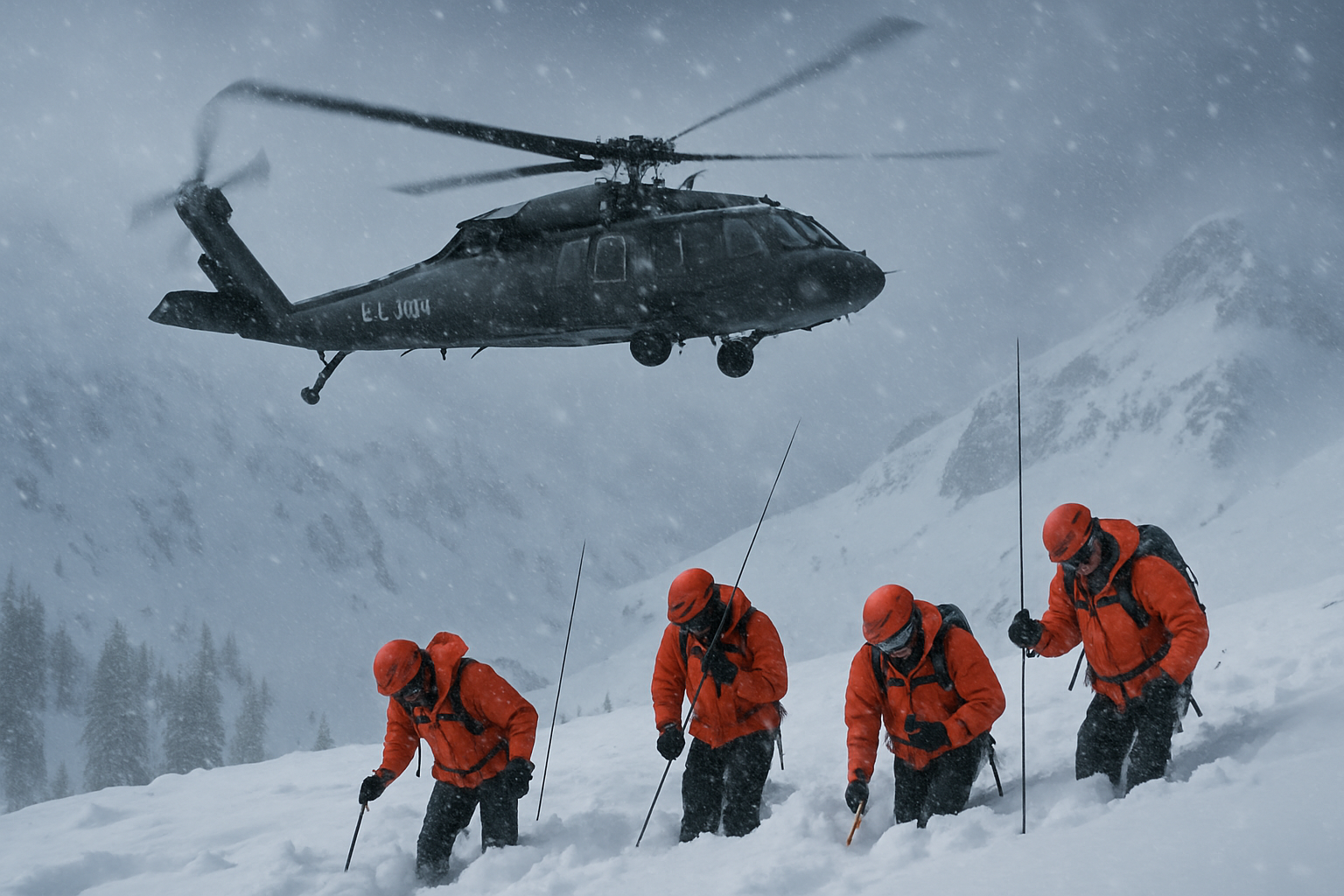
Search teams utilized avalanche transceivers, probe poles, and specially trained rescue dogs to systematically search the massive debris field on Castle Peak, located northwest of Lake Tahoe. The operation required coordination between multiple agencies and involved dozens of specialized mountain rescue personnel working in treacherous conditions.
U.S. Army Blackhawk helicopters provided crucial support when weather conditions permitted, transporting rescue teams and equipment to the remote avalanche site. The challenging terrain and ongoing severe weather created what officials described as "horrific" working conditions for rescue crews.
Deadliest California Avalanche in Decades
Tuesday's avalanche at Castle Peak represents one of the most significant avalanche tragedies in California's recent history. The incident occurred around 11:30 AM Pacific time when a massive slide struck a group of 15 experienced backcountry skiers who were on the final day of a three-day expedition with professional guides from Blackbird Mountain Guides.
Six skiers survived the avalanche by constructing makeshift shelters and using emergency beacons to communicate their location to rescue teams. The survivors were successfully evacuated on Tuesday despite the challenging conditions.
The tragedy adds to what has become a devastating winter season across the Northern Hemisphere. Castle Peak is known for its challenging backcountry terrain and significant avalanche risks, particularly during periods of heavy snowfall like the powerful storm system that struck the Sierra Nevada this week.
Global Avalanche Crisis Context
The California tragedy occurs amid an unprecedented global avalanche crisis that has claimed over 60 lives across the European Alps this winter season alone. Recent incidents include multiple fatalities in Austria, France, and Italy, with the Val d'Isère tragedy in France killing three skiers just days before the Castle Peak incident.
The frequency and severity of avalanche incidents this winter have overwhelmed traditional mountain rescue services across multiple continents. Enhanced international cooperation between rescue agencies has become crucial as extreme winter conditions strain national response capabilities.
Climate scientists note that while January 2026 marked the 18th consecutive month of global temperatures exceeding 1.5°C above pre-industrial levels, regional extreme weather events like the severe winter conditions in mountainous areas demonstrate the complex relationship between global warming and localized climate volatility.
Investigation and Safety Implications
A comprehensive investigation into the Castle Peak avalanche is expected to begin once rescue operations are fully concluded. The investigation will examine snow conditions, weather factors, terrain characteristics, and safety procedures to better understand the circumstances that led to this tragedy.
The incident underscores the inherent risks associated with backcountry skiing, even when undertaken by experienced skiers with proper safety equipment and professional guidance. The group was properly equipped with avalanche transceivers, probes, and other standard safety gear, and was accompanied by certified mountain guides.
Safety experts emphasize that while proper equipment and training significantly reduce risks, the dangers of avalanche terrain cannot be entirely eliminated. The growing popularity of backcountry skiing, particularly following the COVID-19 pandemic, has increased exposure to avalanche hazards across mountain regions.
Community Response and Support
The Northern California outdoor recreation community has rallied to support rescue efforts and provide assistance to affected families. Local mountain rescue organizations, ski clubs, and outdoor gear retailers have contributed resources and volunteers to support the operation.
Nevada County Sheriff Shannan Moon acknowledged the emotional toll on rescue personnel, noting that one of the deceased was the spouse of a search-and-rescue team member, creating additional challenges for the operation.
The tragedy has prompted renewed discussions about avalanche safety education, risk assessment procedures, and emergency response protocols as the backcountry skiing community grapples with the loss of nine experienced mountain enthusiasts.
Looking Forward
The successful completion of the recovery operation marks the end of the immediate emergency response but represents the beginning of a longer process of investigation, analysis, and community healing. The incident will likely influence future avalanche safety protocols and training standards throughout the backcountry skiing community.
As extreme weather patterns continue to create challenging conditions in mountain regions worldwide, the Castle Peak tragedy serves as a sobering reminder of the power of natural forces and the importance of respecting mountain environments while pursuing outdoor recreation.
The families of the nine victims, the surviving skiers, and the broader mountain community now face the difficult process of recovery and reflection as they honor the memory of those lost while working to prevent similar tragedies in the future.